

Release Date: January 24 2014 Developer: Daedalic Entertainment
Get It On: GOG
Before Daedalic Entertainment threw their hat into the tactical strategy ring, they were universally known as the masterminds behind whimsically tragic point-and-click adventure games. So, when they decided to take the notoriously complex ruleset of The Dark Eye—Germany’s premier pen-and-paper role-playing system—and forge a brutal, hex-based tactical RPG, people were naturally a little skeptical. The result of that experiment was Blackguards, a game that trades the traditional righteous knights in gleaming armor for a raggedy band of absolute degenerates, murderers, and untrustworthy outlaws. It is ugly, it is incredibly difficult, and it is easily one of the most unapologetically hardcore strategy games to come out of the mid-2010s.
The narrative kicks off with a massive subversion of classic fantasy storytelling. Your custom protagonist does not wake up in a cozy village ready to fulfill an ancient prophecy. Instead, you are immediately framed for the horrific murder of a princess who happened to be your lifelong childhood friend. After a desperate prison break, you find yourself on the lam across the dark world of Aventuria. Your only allies are the scumbags who happened to be sharing the dungeon cells next to yours, including a highly lecherous, narcissistic mage named Zurbaran and a bad-tempered dwarf warrior named Naurim.
The story works so well because it fully leans into this dark fantasy setting. The dialogue bounces between grim gravity and pitch-black, cynical humor. You never really feel like you are saving the world out of noble altruism. You are basically doing it because staying alive on the run requires you to cut deals with gambling rings, drug smugglers, and corrupt merchants.
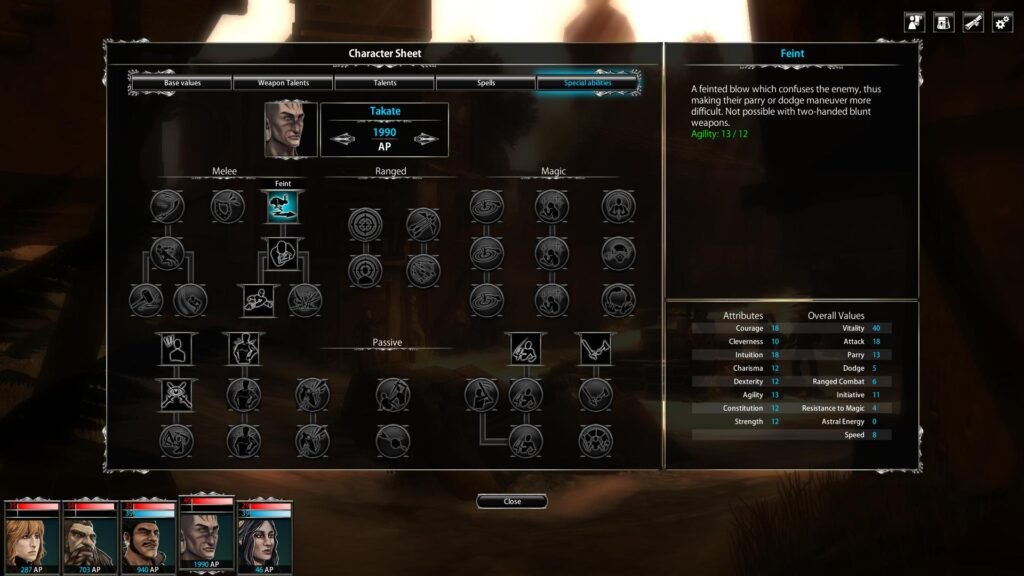
Where Blackguards truly splits the player base down the middle is its heavy reliance on the underlying pen-and-paper mechanics. If you are looking for a casual, modern strategy game like modern XCOM where you can easily eyeball your success, you are going to get your teeth kicked in during the very first chapter. Everything in this game operates on complex, behind-the-scenes virtual dice rolls. The character progression system uses Adventure Points instead of standard levels. This gives you absolute, meticulous freedom to customize your squad, but it also means you can easily ruin your build if you do not understand what you are doing. You are forced to balance weapon masteries, special combat maneuvers, passive perks, and dynamic spell tiers without much hand-holding from the sparse tutorials.
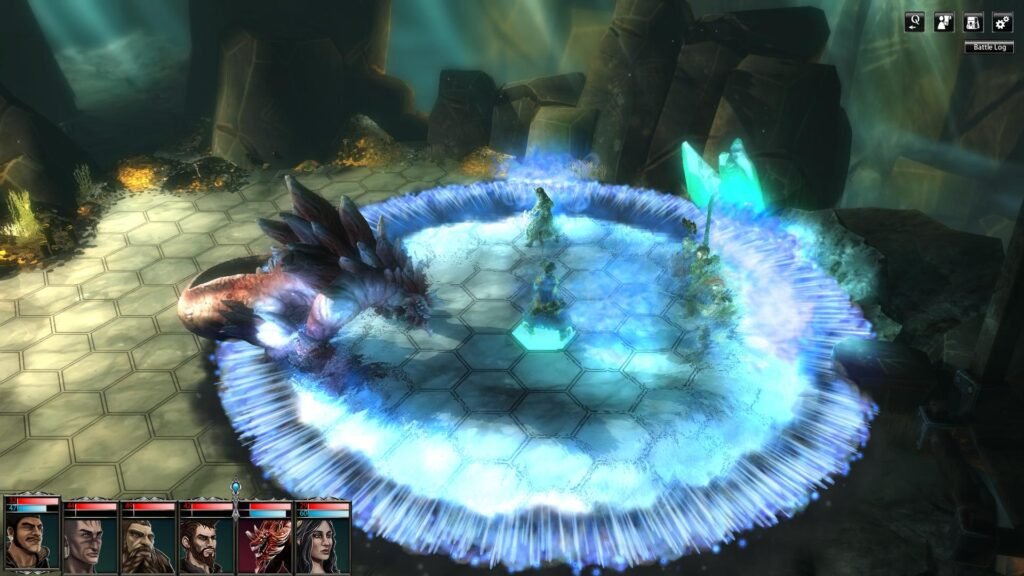
The meat of the game takes place on beautifully detailed, hand-drawn hex-based battlegrounds. Daedalic completely skipped the concept of generic, procedurally generated filler fights. Every single encounter across the massive campaign is a meticulously designed tactical puzzle. What makes the combat special is the intense focus on interactive environmental hazards. You are rarely just walking up to an orc and swinging an axe until they drop. You will find yourself shooting down heavy crystal chandeliers to crush a row of guards, collapsing rickety wooden bridges to isolate enemy archers, or kicking over barrels of flammable oil and using your mage to torch the entire battlefield.
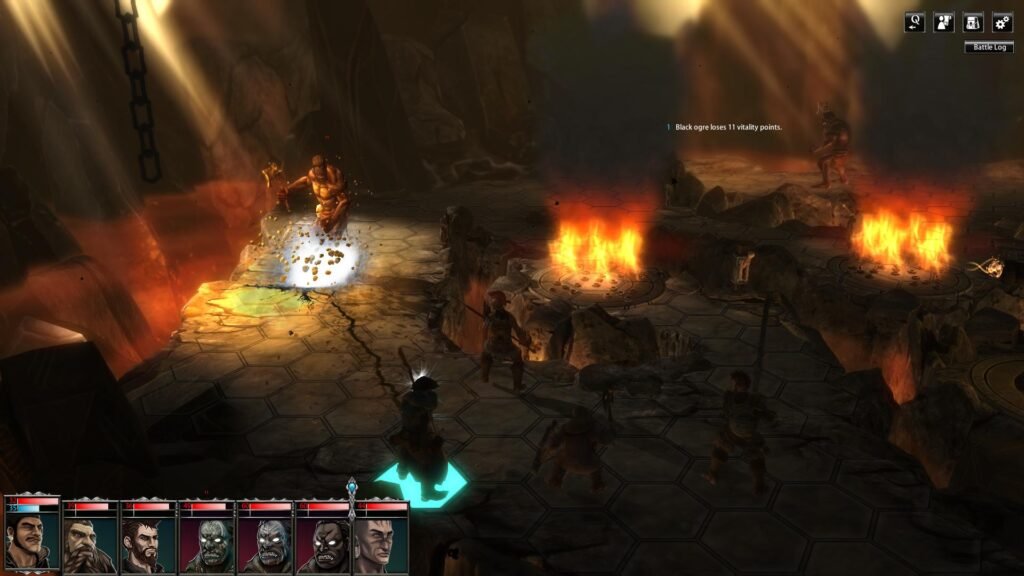
The battlefield design constantly forces you to adapt your strategy, transforming what could have been a repetitive grid-grind into a highly engaging, stressful exercise in positioning.
Unfortunately, the game’s greatest strengths are constantly fighting against an incredibly clunky user interface. Managing your party’s equipment is an absolute nightmare of unfilterable item menus and counter-intuitive layouts. Trying to issue a precise command in the heat of a crowded battle often requires navigating a clumsy right-click radial menu that is prone to misclicks. There is nothing quite as frustrating as intending to cast a critical healing spell on your dying warrior, only for the imprecise targeting system to accidentally apply the buff to your perfectly healthy wizard instead.
Furthermore, the game suffers from a lack of transparent data feedback. It will tell you that a weapon modifies your attack values, but it often conceals the exact probability math, leaving you to guess why your rogue just missed three ninety-percent chance attacks in a row.
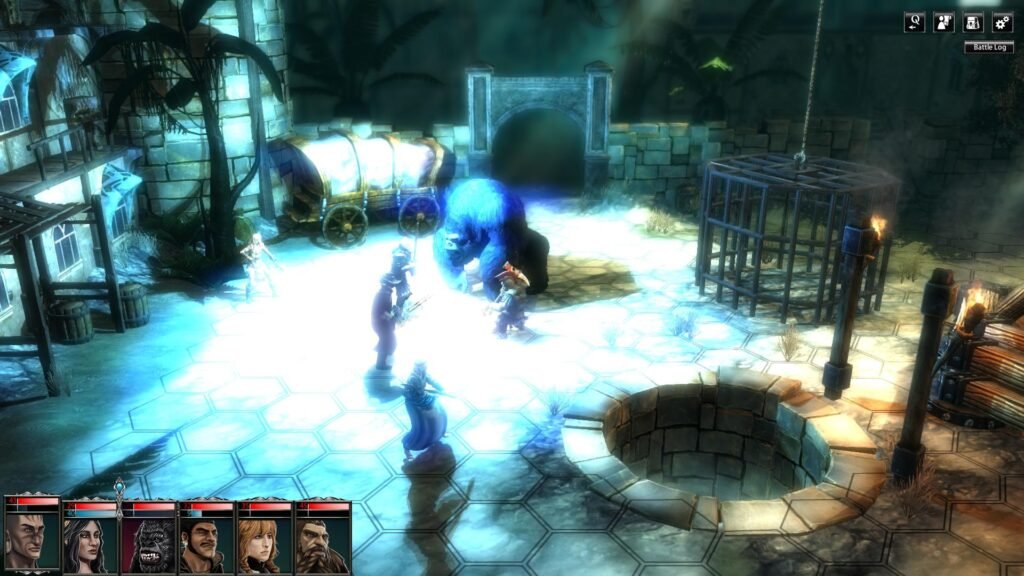
The technical polish is similarly mixed. Since Daedalic transitioned away from their traditional 2D art style into full 3D models for the combat sections, the visual limitations are painfully apparent. The character models look stiff, their facial expressions are completely vacant even during high-stakes dramatic cutscenes, and an aggressive depth-of-field blur effect leaves a large portion of the screen looking oddly out of focus.
Yet, when the game shifts back into its town screens, the classic Daedalic art direction shines through. The cities are not fully explorable three-dimensional hubs; they are gorgeous, stationary, illustrated backdrops where you click on static merchant icons to buy supplies, visit healers, or accept side quests. It gives the game a nostalgic, old-school computer RPG aesthetic that feels perfectly at home with the pen-and-paper tabletop vibe.
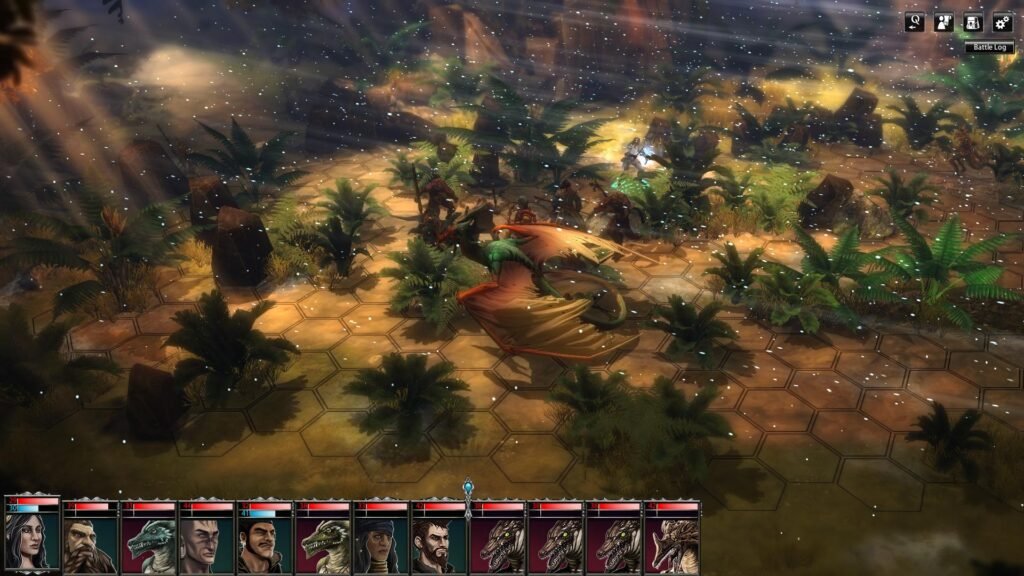
We must also talk about the brutal inconsistent difficulty. Blackguards is a game that expects you to abuse the quick-save feature. There are specific story encounters that introduce sudden, unannounced enemy reinforcements or hidden map traps that will instantly wipe your party without warning. You will frequently find yourself using the handy “retry encounter” button simply because the first attempt was a mandatory learning experience to figure out the map’s unique gimmick. If your dice rolls go cold or your mage’s spell fizzles out at a critical juncture, a battle can spiral completely out of control within a single turn. It is an exhausting loop that will undoubtedly alienate casual players, but for the subset of tactical veterans who live for the thrill of barely surviving an impossible scenario, the victories feel immensely rewarding.
When you look back at it, Blackguards is an fascinating artifact of niche RPG development. It is far from perfect, heavily burdened by its awkward controls, budget-constrained visual presentation, and a punishing learning curve that demands a lot of patience. Yet, despite all the rough edges, the excellent tactical variety, the unique charm of its criminal party members, and the sheer depth of its adaptation of The Dark Eye universe make it a journey worth taking. It is a diamond in the rough that doesn’t care about mass appeal, choosing instead to serve up a deep, dark, and highly challenging tactical feast for those brave enough to dive in.