
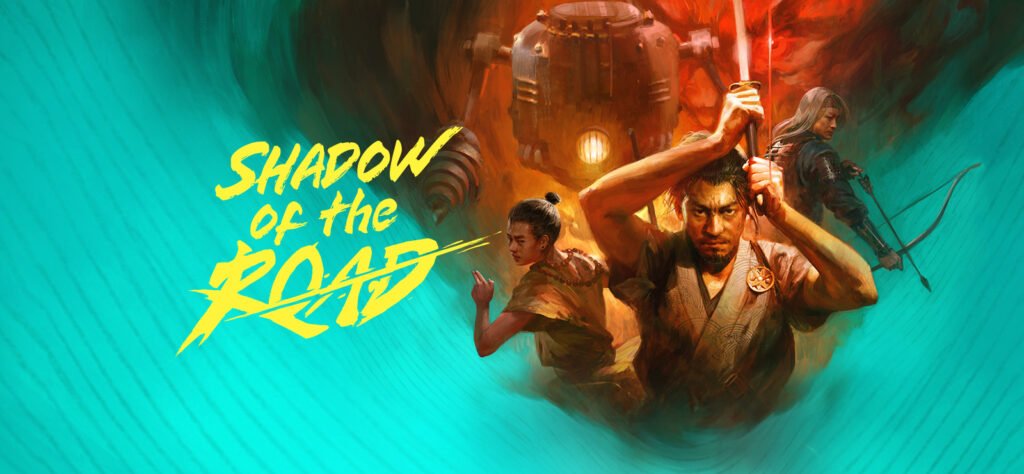

In the landscape of modern tactical RPGs, few settings manage to feel truly “new.” We have seen endless iterations of Tolkien-esque high fantasy and gritty cyberpunk dystopias. However, every so often, a project emerges that blends cultural history with fantastical imagination so seamlessly that it demands attention. Shadow of the Road, developed by Another Angle Games and published by the esteemed Owlcat Games, is exactly that project.
Set against the backdrop of a reimagined 19th-century Japan, Shadow of the Road is an isometric turn-based RPG that explores the chaotic final days of the Edo period. But this isn’t the history found in textbooks. This is a world where the traditional steel of the katana meets the hissing gears of steampunk technology and the eerie whispers of Japanese folklore.
A Realm in Transition
The core of Shadow of the Road lies in its atmosphere. The game takes place during the Boshin War, a pivotal moment in Japanese history where the old world of the Shogunate clashed with the modernizing forces of the Emperor.
In this version of events, the conflict is amplified by supernatural elements. As players traverse the beautifully rendered landscapes—from snow-dusted mountain passes to neon-lit teahouses—they aren’t just fighting rival samurai. They are contending with Yokai (spirits and monsters) and terrifying mechanical constructs that bridge the gap between magic and industry.
The Lore of the Yokai: Spirits of a Changing World
In this alternate 19th-century Japan, the Yokai are not merely fairy tales; they are active, often volatile participants in the Boshin War. Their presence is a direct reaction to the “profanation” of the land by the rapid industrialization brought by the British-backed Imperial forces.
- Environmental Manifestations: Yokai often appear where the veil between the physical world and Ne-no-kuni (the Land of Roots) is thin. This primordial spirit realm serves as a “shadowed mirror” of the living world, and the game allows players to find hidden passageways into this mythical dimension.
- The Moral Spectrum: Unlike many RPG “monsters,” Yokai in Shadow of the Road aren’t all inherently evil.
- Guardians: Some spirits act as protectors of sacred sites and can even be befriended, lending their supernatural powers to your party.
- The Menacing & Mischievous: Others, like the razor-wind Kamaitachi, view the clatter of steam engines as an affront to nature and will hunt players relentlessly.
- Narrative Impact: Your interactions with these beings—whether you choose to aid “good” spirits or exorcise the “bad”—will influence your standing in the world and can alter the trajectory of the main story.
Masterful Tactical Combat
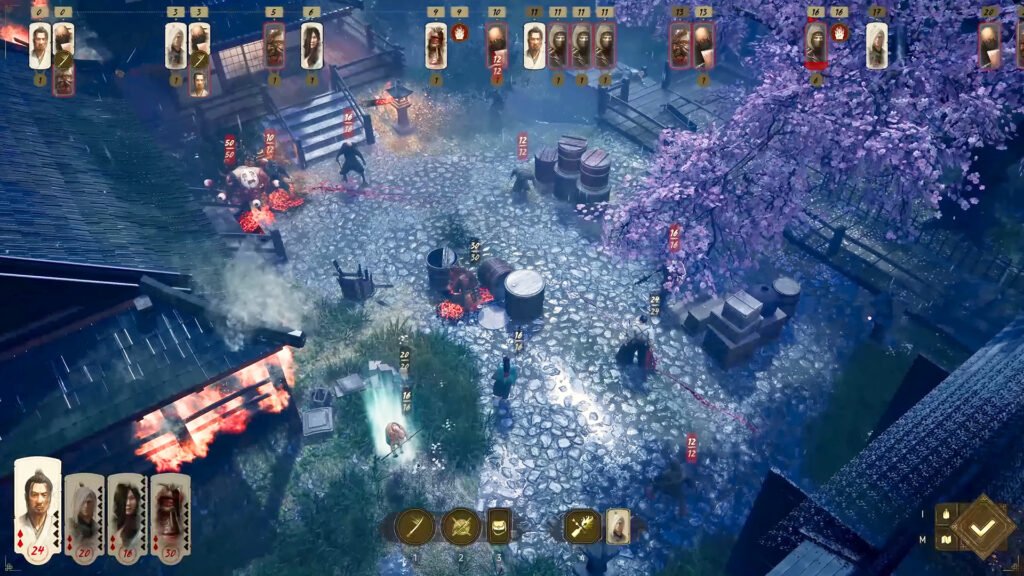
At its heart, this is a deep, tactical experience. Fans of the genre will find a combat system that rewards positioning, environmental awareness, and the clever synergy of party members.
The game features a diverse cast of characters, each with their own complex backstories and conflicting loyalties. Whether you are controlling a masterless Ronin, a tech-savvy inventor, or a practitioner of the mystical arts, every turn requires a calculated risk. The “Shadow” in the title refers not just to the stealthy approach players can take, but to the moral ambiguity of the era; there are rarely “right” choices, only those that ensure survival.
Character Classes and the “Party of Outcasts”
While the game features a set cast of protagonists, their “classes” are defined by unique skill trees and specialized roles that blend traditional martial arts with high-tech or mystical flair.
1. The Ronin (The Duelists)
Characters like Satoru and Akira represent the traditional heart of the party. These are your master swordsmen, but they aren’t static tropes.
- Satoru: Focuses on high-stakes precision, utilizing “Samurai Tactics” that reward perfect timing and guard-breaking slashes.
- Akira: Often brings more tactical flexibility, bridging the gap between raw damage and leadership on the battlefield.
2. The Manipulator (The Spymaster/Caster)
Asuke is a standout example of the “bewitching” support class. Rather than dealing direct damage, she focuses on:
- Timeline Manipulation: She can shift both allies and enemies along the initiative timeline, granting teammates “unexpected opportunities” to strike before the enemy can react.
- Subtle Spells: Her kit is built around “silk and steel,” using charms and deadly traps to control the flow of battle while staying out of the direct line of fire.
3. The Tech-Specialist (Steampunk Engineering)
Reflecting the influence of the British East Nippon Company (ENC), certain characters (and enemies like the Flamethrower Ninja) utilize mechanical ingenuity. These classes often rely on:
- Gadgetry: Deploying deployable turrets or using steam-powered explosives.
- Armor Piercing: Specifically designed to take down the towering ENC Walkers and other mechanical constructs that the Shogunate’s steel alone can’t dent.
4. The Vessel (The Supernatural Wildcard)
The central plot revolves around protecting a mysterious boy with uncontrollable powers. While not a “class” you can customize in the traditional sense, his presence acts as a unique tactical element, occasionally unleashing devastating—and unpredictable—magical outbursts that can turn the tide of a losing battle.
The beauty of these classes is how they interact through cooperative abilities. Depending on the relationships you build between your party members, you can unlock “Synergy Attacks” that combine, for example, a Ronin’s blade with a Yokai-sourced spell.
In Shadow of the Road, victory isn’t just about who hits the hardest; it’s about who hits first and how often. Unlike the “Your Turn/My Turn” structure found in many traditional RPGs, this title utilizes a Dynamic Timeline System.
This system is a hallmark of the deep tactical gameplay Owlcat Games tends to favor, requiring players to think several steps ahead to prevent the enemy from ever getting a chance to draw their steel.
How the Timeline Functions
At the top of the screen, you will see a linear track featuring portraits of every combatant—allies, enemies, and even neutral Yokai. This is the Timeline, and it is the most important UI element in the game.
1. Active Initiative vs. Fixed Rounds
In a fixed-round game, once everyone has moved, the round ends and resets. In Shadow of the Road, the timeline is a continuous flow.
- Every action has an Active Cost (often measured in time units).
- If you perform a quick jab with a wakizashi, your portrait will only slide a short distance back on the track, allowing you to act again soon.
- If you unleash a massive, steam-powered cannon blast or a complex Yokai ritual, your portrait will fly to the far end of the track, leaving you vulnerable for a long duration.
2. “Bumping” and Delaying
The real strategy comes from manipulating the enemy’s position on the track. Many character classes have abilities specifically designed to “Delay” an opponent.
- The Impact Factor: If an enemy samurai is about to execute a deadly “Iaijutsu” strike on your healer, you can use a character like Asuke to “bump” that enemy further down the timeline.
- Interrupting: If you hit an enemy hard enough while they are “charging” an ability, you can potentially cancel their turn entirely, forcing them to start their wind-up from scratch.
3. The “Opportunistic Window”
The timeline isn’t just a queue; it’s a tactical map. Certain buffs or environmental effects (like a house catching fire or a Yokai’s aura pulsing) occur at specific “ticks” on the timeline.
- You can purposefully delay a character’s turn so they act exactly when a debuff on an enemy is at its peak.
- Coordinating two allies to act immediately after one another allows for Synergy Attacks, where the second character follows up the first’s strike with a devastating finisher.
Why it Feels Different
This system removes the safety net of “waiting for your turn.” You are constantly scanning the track to see who is the most immediate threat. It creates a high-stakes “tug-of-war” where a well-timed stun doesn’t just stop an enemy for one turn—it can cascade into a series of events that keeps that enemy at the back of the line for the entire fight.
The tension of seeing a boss’s portrait creeping toward the “Active” zone while your party is still recovering is what gives Shadow of the Road its signature white-knuckle pacing.
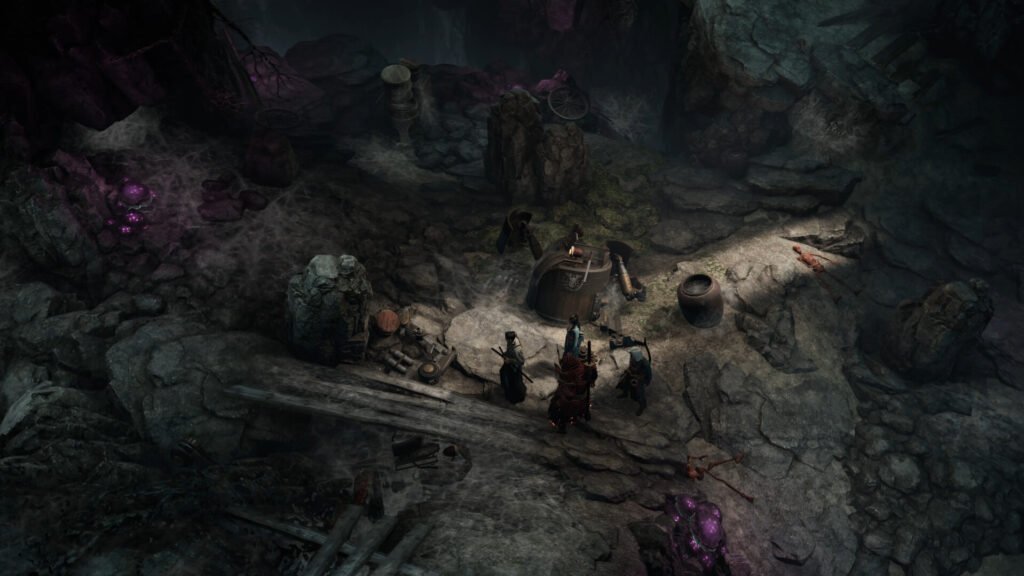
In Shadow of the Road, the Ne-no-kuni (the Land of Roots) isn’t just a place you visit during cutscenes—it is a supernatural layer that can “bleed” into the physical battlefield, fundamentally altering the rules of engagement.
When the veil thins, players must contend with the Aura of the Beyond, a mechanic that transforms a standard tactical encounter into a high-stakes struggle against the environment itself.
1. The Dual-Layer Battlefield
In certain encounters, the battlefield exists in two states simultaneously. While your Ronin might be standing in a physical village square, the spiritual “shadow” of that square might be a twisted forest of bone and spirit energy.
- Phasing: Some enemies (and specialized player abilities) allow units to “Phase” into the spirit realm. A unit in the spirit realm may be invisible or untargetable by physical attacks, requiring your party to use mystical wards or “Spirit Sight” to even engage them.
- The Overlap: Areas where the two worlds overlap create Nodes of Power. If a character stands on a Node, they might gain massive bonuses to their supernatural abilities, but at the cost of their physical defense.
2. Environmental Hazards: Spirit Miasma
The spirit realm introduces a unique set of hazards that ignore traditional armor. As the battle progresses, “Miasma” can creep across the tiles of the combat grid.
- Corrosive Presence: Spirits and Yokai thrive in Miasma, gaining speed on the Timeline. Humans, however, suffer “Spirit Fatigue,” which slows their movement and can eventually lead to a “Broken” state where they lose their turn entirely.
- Cleansing: Players must often balance their tactical positioning with the need to “Cleanse” the ground using talismans or specific character skills, creating safe pockets of reality amidst the spiritual chaos.
3. The “Whispering” Mechanic
The most unique effect of the spirit realm on battle is the Whispering. Because Ne-no-kuni is a realm of memories and shadows, it can manifest the psychological fears of your party members.
- Hallucinations: In high-intensity spirit zones, “Ghost” units may appear on the timeline. These aren’t always real enemies—some are decoys meant to trick you into wasting a powerful cooldown or a high-cost action.
- The Cost of Power: Using powerful magic in Shadow of the Road draws energy from the spirit realm. Do this too often, and you might accidentally trigger a Rend, causing a powerful Yokai to be summoned directly into the middle of the fight, hostile to both you and your enemies.
The spirit realm adds a layer of “risk vs. reward.” You are often tempted to use the realm’s power to finish a fight quickly, but the more you lean into the supernatural, the more unpredictable the battlefield becomes.
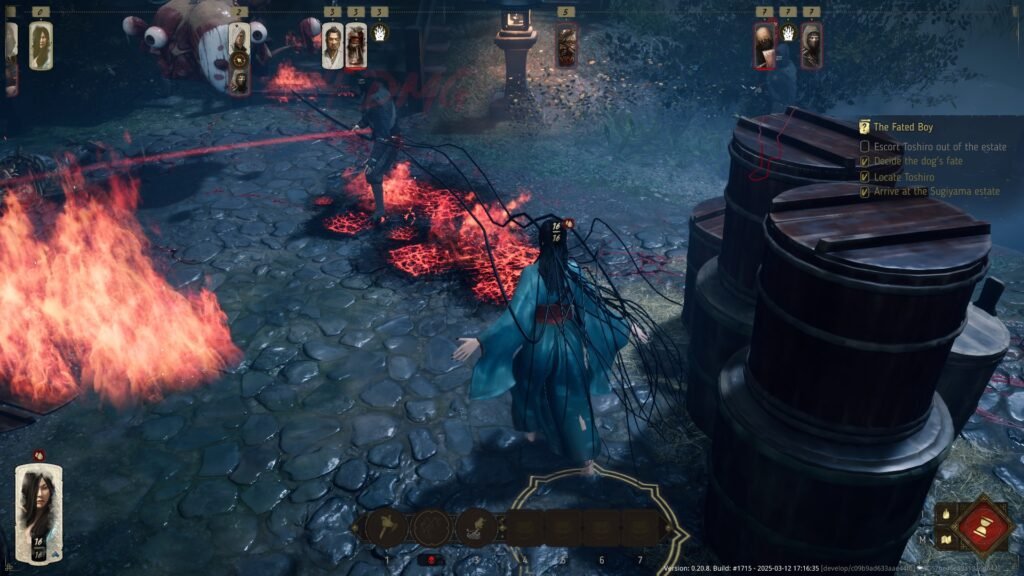
In the shadow-drenched world of Shadow of the Road, the Yokai are not just monsters—they are manifestations of a land in pain. When the spirit realm of Ne-no-kuni bleeds into reality, it brings forth entities that defy human logic.
1. The Gashadokuro (The Starving Skeleton)
The Gashadokuro is a towering horror composed of the bones of those who died in battle or from starvation without a proper burial. In the context of the Boshin War, these are all too common.
Tactical Threat: Due to its immense size, the Gashadokuro often takes up multiple tiles on the combat grid. Its primary mechanic is “Bone-Chilling Dread,” an aura that inflicts a massive penalty on your party’s morale, causing them to move slower on the Timeline.
The Spirit Twist: You cannot simply “kill” a Gashadokuro with steel. Players must often target specific “Soul Anchors” in the spirit realm—remnants of the anger that holds the bones together—to make the physical form vulnerable to a Ronin’s blade.
2. The Onibi (Demon Fires)
These flickering, atmospheric lights might look like simple wisps, but they are among the most annoying and dangerous support-type enemies in the game.
The Mechanic: Onibi act as “beacons” for the spirit realm. They don’t deal much direct damage; instead, they “Ignite the Miasma.” If your party is standing in a spirit-corrupted zone, the Onibi can detonate that energy, causing spiritual burns that bypass physical armor.
The Timeline Trap: Onibi are incredibly fast. They often occupy multiple slots on the timeline, darting in to buff other Yokai and then retreating before your heavy hitters can swing.
3. The Kamaitachi (The Sickle Weasels)
Representing the “Wind of the Mountains,” these Yokai are a nightmare for parties that rely on positioning. Legend says they travel in threes: one to trip you, one to cut you, and one to apply a magical salve so you don’t realize you’re bleeding until it’s too late.
Synergy Attacks: In Shadow of the Road, the Kamaitachi often attack in a “Chain Action.” If one hits you, it automatically triggers the second and third to move up the timeline immediately.
Battlefield Hazard: They can create “Vacuum Zones” on the map, pulling your characters out of cover and into the open, leaving them exposed to the Gatling guns of the Imperial forces.
4. The Jorogumo (The Spider Bride)
The Jorogumo is a shapeshifting horror that exemplifies the “Whispering” mechanic mentioned earlier. She often appears as a helpless civilian or an ally in the spirit realm to lure players into a trap.
Web of Fate: Her primary combat ability is a literal and metaphorical web. She can “tether” two of your party members together. If one moves, the other is dragged along; if one takes damage, the other feels a portion of it.
Tactical Solution: Defeating her requires high Perception or mystical items to see through her illusions before she can land a “Cocooning” strike that removes a character from the timeline for several turns.
These Yokai encounters are often tuned to be quite difficult. You cannot “brute force” a Gashadokuro or outrun a Kamaitachi. Success requires a deep understanding of how the Ne-no-kuni interacts with the physical world, forcing you to switch between traditional samurai techniques and esoteric spirit-cleansing rituals mid-fight.
One of the most promising indicators of the game’s quality is its partnership with Owlcat Games. Known for developing the massive Pathfinder cRPG series and the grimdark Warhammer 40,000: Rogue Trader, Owlcat has transitioned into a publishing powerhouse.
By bringing Shadow of the Road under their wing, Owlcat Games is signaling a commitment to deep, narrative-driven experiences. Their involvement ensures that the game receives the polish and structural depth that hardcore RPG fans expect. It is a perfect match: Another Angle Games provides the fresh, artistic vision of a supernatural Meiji Restoration, while Owlcat brings the veteran expertise of building complex, branching stories.
Why It Matters
Shadow of the Road stands out because it treats its setting with reverence while daring to be weird. It captures the “Mono no aware”—the pathos of things—by showing a world that is beautiful even as it falls apart. The clatter of a Gatling gun echoing through a sacred Shinto shrine perfectly encapsulates the game’s central tension: Tradition vs. Progress.
For players who crave a story where their choices carry weight and their tactical prowess is constantly tested, this title is shaping up to be a must-play. It is a dark, atmospheric journey through a Japan that never was, but feels hauntingly real.