

If you have ever stared up at the night sky and thought, “I want to pilot a retro-thrusting junker of a spaceship directly into a terrifying gravity well for corporate profit,” then you are in luck. There is a deeply intriguing indie project on the horizon that might just be your next major gaming obsession. Developed by Distant Light Games and published by the strategy specialists at Hooded Horse, C-Beams is a top-down space action-RPG that feels like a gorgeous, physics-heavy love letter to gritty, hard sci-fi exploration.
The story behind the game is as charming as the game itself. Distant Light Games is actually the brainchild of two longtime friends, Charlie Goldberg (the creator behind the incredibly popular YouTube channel LevelCapGaming) and Rich Joslin. The duo originally met years ago at a LEGO builders club, and that collaborative, block-by-block creative energy has translated beautifully into building a detailed, systematic video game. They have spent over two years crafting this cosmic sandbox, and with the publishing muscle of Hooded Horse now backing them, they are preparing to launch the title into Steam Early Access.
So what exactly is this game, and why is the indie community already drawing comparisons to cult classics like Starsector? Let us break down the gravity of this upcoming release.
Welcome to the Black Hole Gold Rush
In the distant future of C-Beams, humanity has pushed deep into uncharted space, eventually stumbling upon a highly volatile, perilous black hole system. Rather than fleeing this massive, light-swallowing gravity trap, humanity did the most human thing possible: they started a corporate gold rush. This cosmic abyss turns out to be a goldmine of rare, never-before-seen elements that can only be harvested near the dangerous, shifting event horizons.
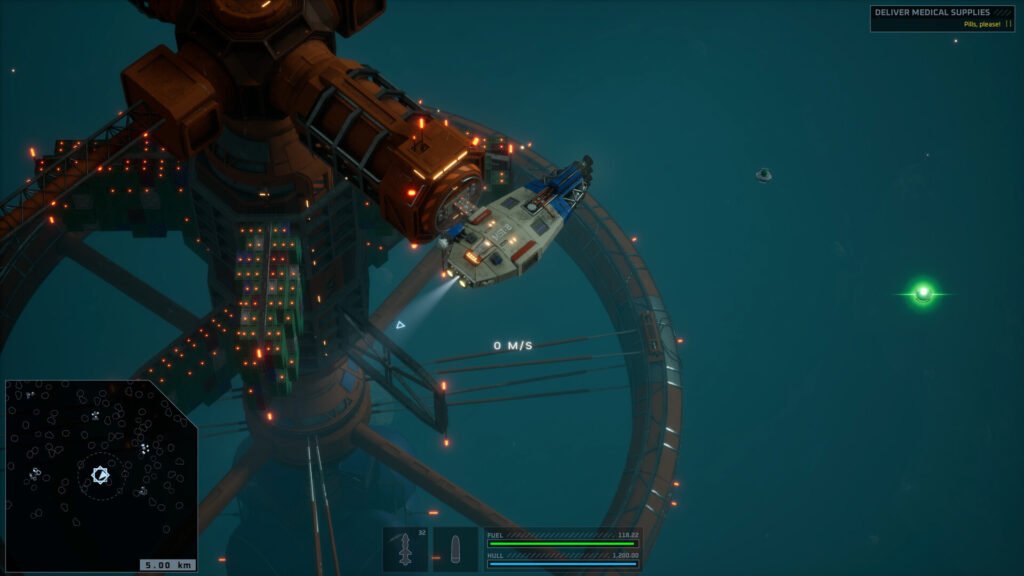
You enter this lawless, high-stakes frontier as a rookie pilot with an empty bank account and a cheap ship, looking to carve out your own legacy. The game drops you into a vast, interconnected network of jump points linking asteroid belts, industrial space stations, planets, moons, and thick nebulas. How you handle this frontier is entirely up to you, but the environment is actively trying to kill you. Highly hazardous space-time anomalies twist and warp across the map; while these distortions can easily rip your hull to shreds, they also act as goldmines for the absolute rarest materials. It is a classic high-risk, high-reward loop that keeps exploration genuinely tense.
Real Physics, Heavy Cargo, and Masterful Piloting
One of the most exciting aspects of C-Beams is its commitment to realistic Newtonian physics. Flying in this game isn’t just about holding down the forward key and pointing your nose toward a waypoint. Your ship has actual mass and inertia. To stop, you have to actively fire your retro thrusters to burn off momentum. If you want to slip past a hostile faction’s radar, you can cut your engines entirely and drift silently through the cold void, relying on your initial trajectory to carry you through.
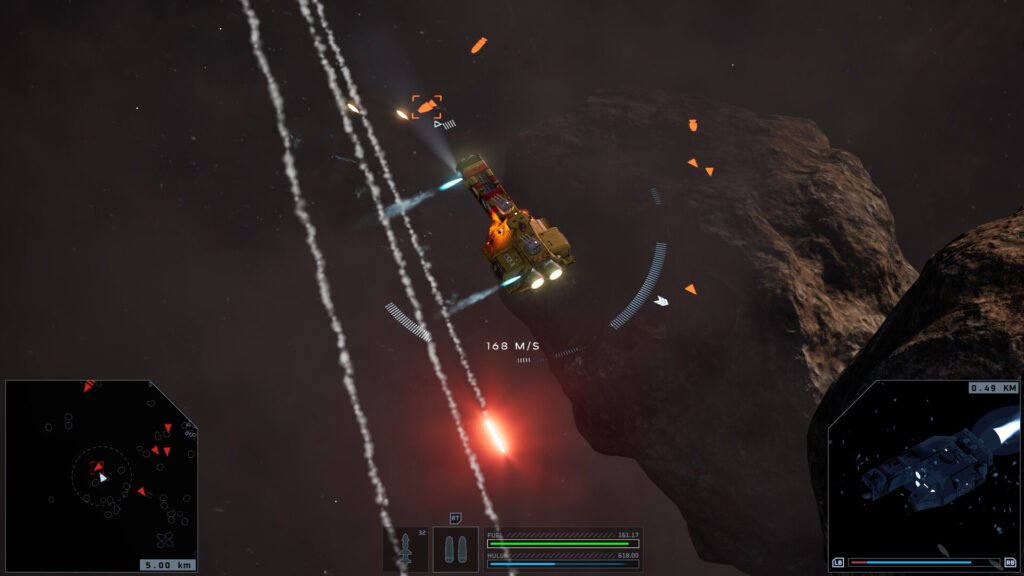
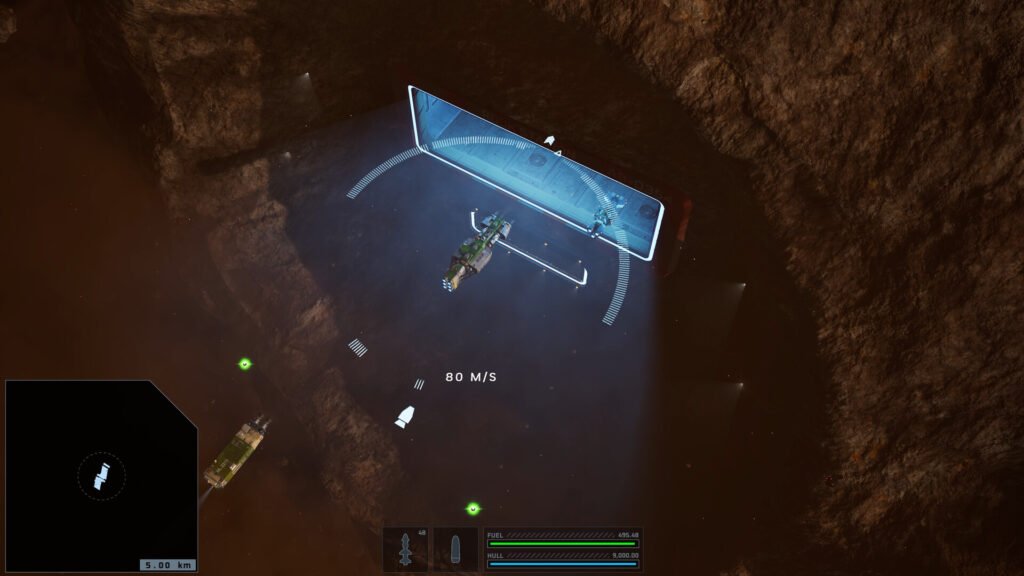
This realistic handling becomes a brilliant gameplay mechanic when you start hauling cargo. As you mine rare elements or loot destroyed wrecks, your ship gets heavier. Overloading your cargo hold directly increases your ship’s mass, making it noticeably sluggish, slow to accelerate, and incredibly difficult to turn. Trying to maneuver a heavily weighted mining barge through a dense asteroid field or lining up a delicate docking sequence with a spinning space station turns into a true test of piloting skill.
Sub-System Targeting and Tactical Void Combat
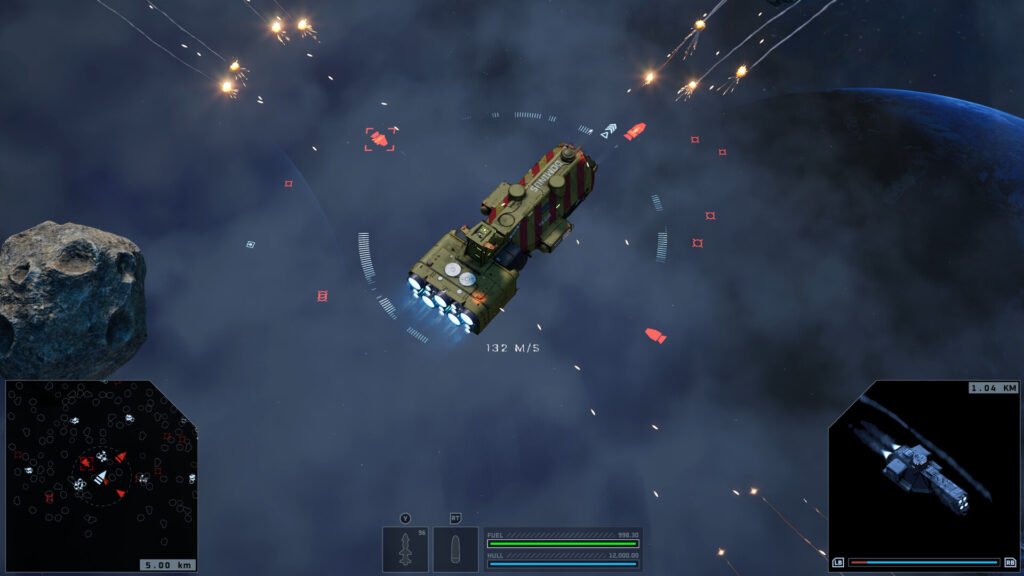
When diplomacy fails—which is often in a lawless corporate gold rush—combat in C-Beams is fast, brutal, and highly tactical. Instead of just chipping away at a generic health bar, the game features deep sub-system targeting. If you are facing a massive, heavily armored corporate cruiser, you can specifically target and disable its radar to blind it, blow out its engines to leave it stranded in space, or strip away its weapon turrets one by one.
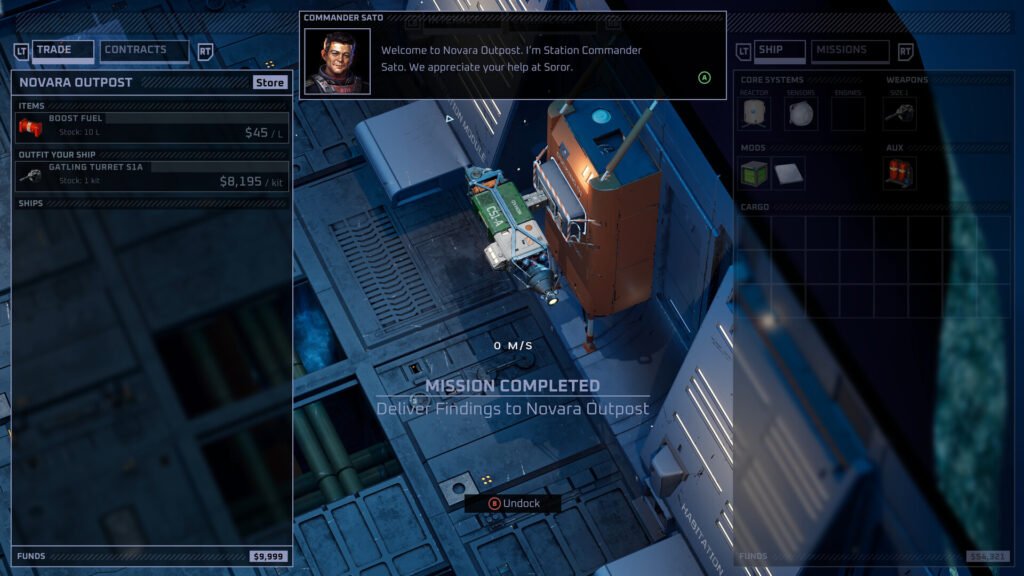
The arsenal at your disposal is remarkably diverse. You can tear enemy ships apart in close-quarters dogfights using rapid-fire gatling guns and recoilless cannons, or play the long game by launching long-range guided missiles and heavy railguns. Of course, you can also melt your targets using the devastating, high-energy lasers that give the game its name: the titular C-Beams. If direct combat isn’t your style, you can invest in stealth components to pull off devastating ambush attacks or use giant asteroids as physical cover to break line of sight and escape. Once the dust settles, you can dock with the disabled, drifting husks of your enemies, raid their cargo holds for high-tier components, and drag the salvage back to your personal hangar.
Customizing Your Dream Fleet
Your progress in C-Beams is anchored by your customizable hangar, which serves as your persistent home base. Here, you can store your collection of ships and fine-tune them for specific roles. Components can be bought from local space stations, earned by completing faction contracts, or salvaged directly from wrecks in uncharted space.
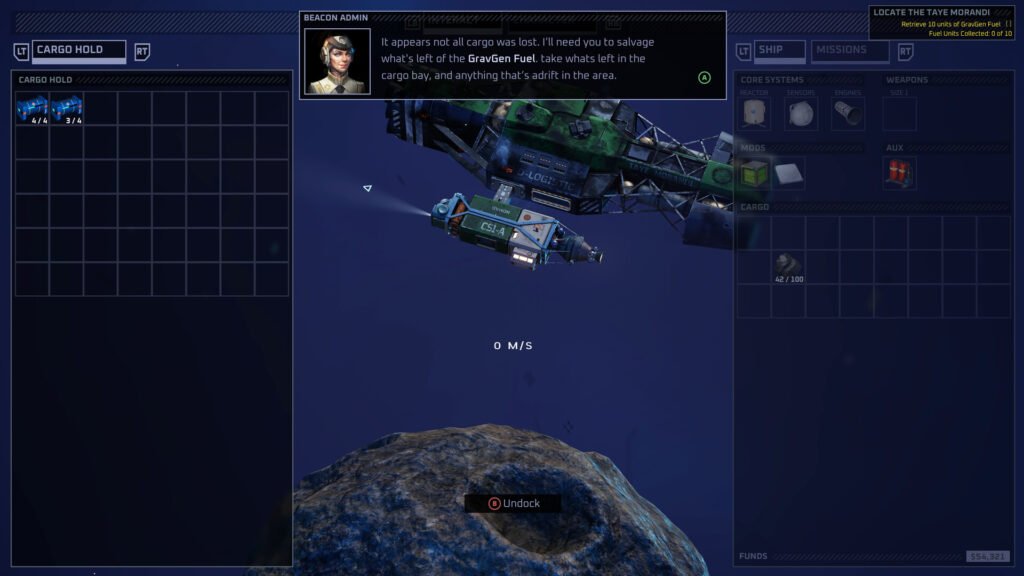
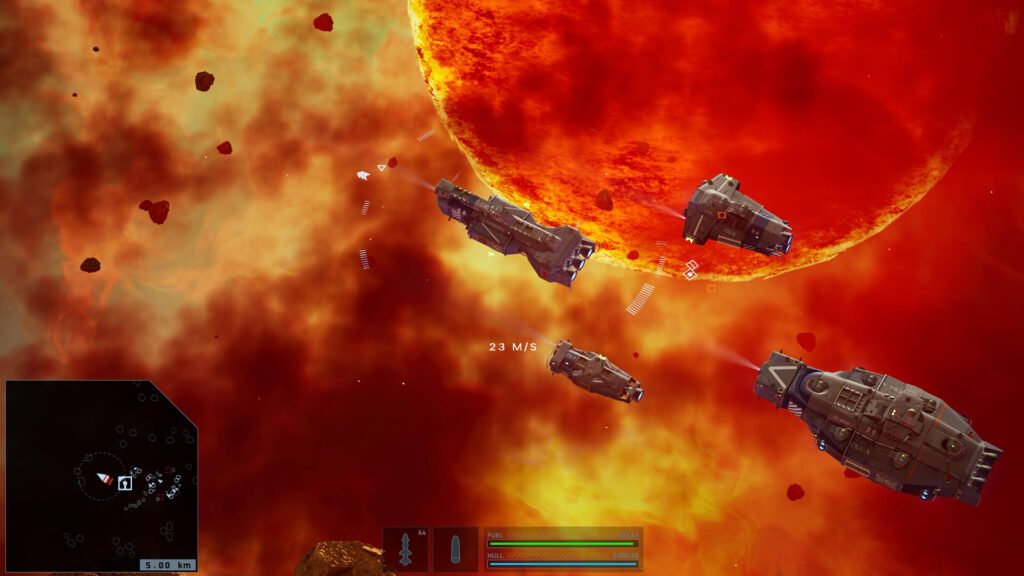
Because of the realistic flight model, you will likely want to build a specialized fleet rather than trying to make one ship do everything. You might keep a small, nimble scout ship equipped with advanced stealth plating and high-end sensors for mapping out dangerous anomalies. For trade runs, you will want a massive, heavily shielded freighter, and for bounty hunting, a heavily armed fighter packed with sub-system disrupting missiles. Building up your reputation with different competing factions unlocks unique, high-tier military and corporate tech, ensuring your progression feels consistently rewarding. With its brilliant blend of realistic flight, tactile combat, and atmospheric exploration, C-Beams is shaping up to be an absolute must-play for space enthusiasts.