
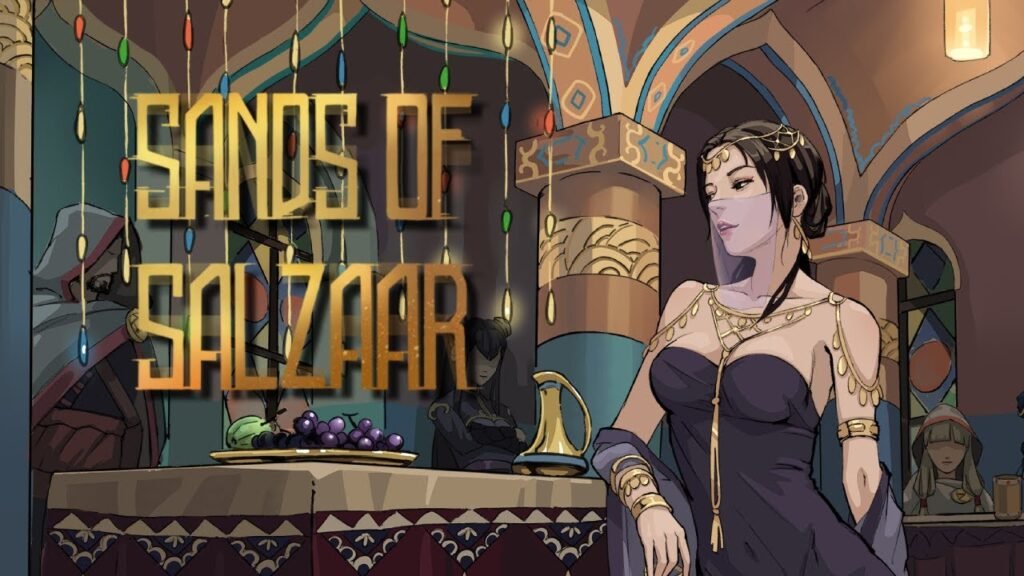

Sands of Salzaar (Chinese: 部落与弯刀) is a sprawling, ambitious blend of genres that feels like a fever dream born from a marriage between Mount & Blade and Diablo. Developed by Han-Squirrel Studio, it transports players to an exotic, war-torn desert where five major tribes vie for control after the collapse of a great empire. It is a game of grand scale, offering a sandbox experience that is as much about tactical army management as it is about high-fantasy heroics.
A World of Sand and Sorcery
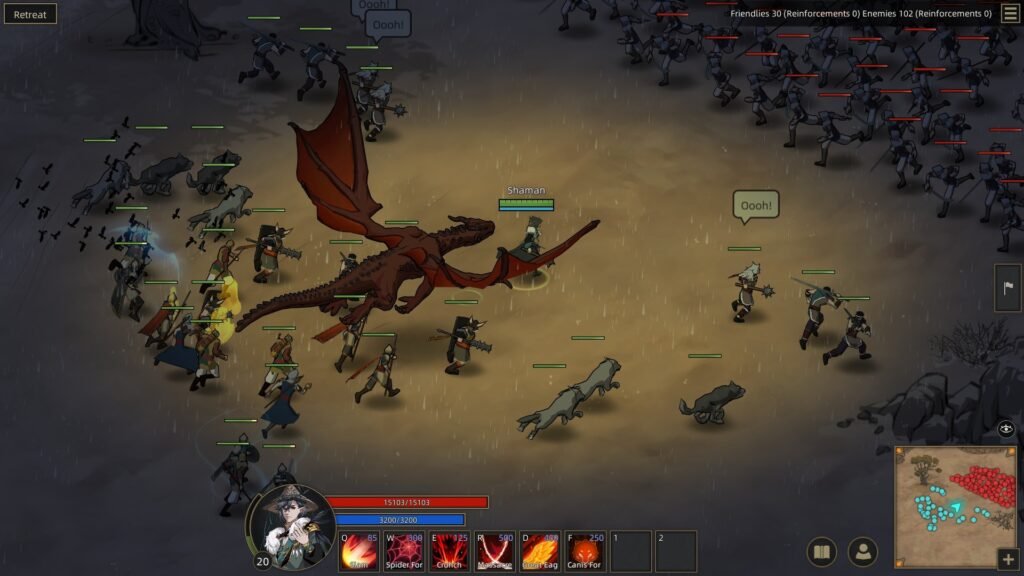
The first thing that strikes you about Sands of Salzaar is its aesthetic. The hand-drawn, comic-book art style gives the various biomes—ranging from the shimmering Redstone Keep to the frozen peaks of Zagros—a distinct personality. Unlike the grounded, gritty realism of Western medieval simulators, Salzaar leans heavily into “Wuxia” and high-fantasy tropes. You aren’t just a mercenary; you are a force of nature capable of summoning meteor showers or transforming into a massive dragon to turn the tide of battle.
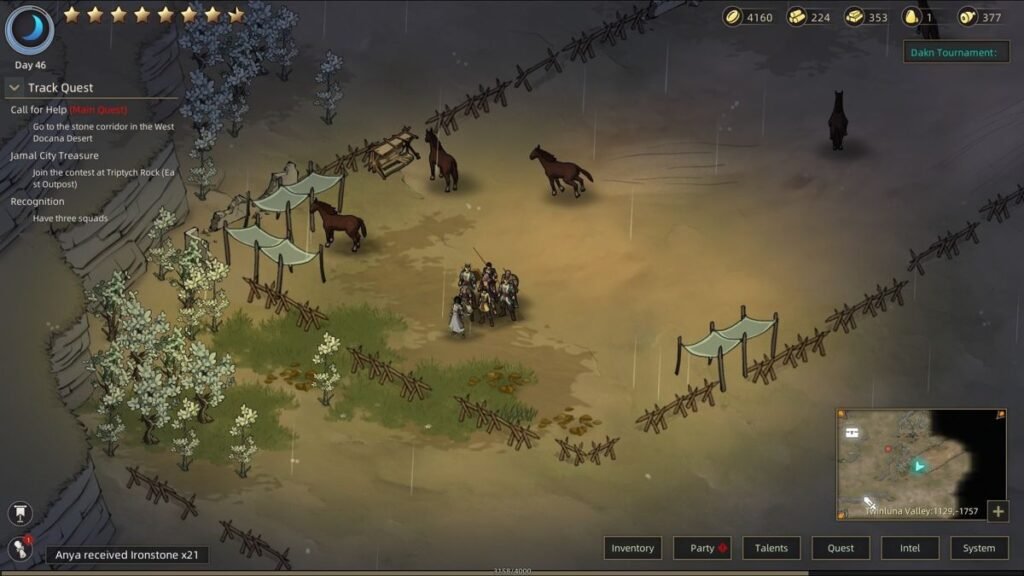
The gameplay loop is split into two distinct layers. On the world map, the game plays like a strategy title. You navigate your party across the desert, visiting towns to trade, recruiting soldiers from local taverns, and engaging in diplomacy (or treachery) with tribal leaders. Once steel meets steel, however, the game shifts into an isometric action RPG. Hundreds of units clash on screen at once, creating a chaotic, spectacular mess of magic beams and flying bodies.
Freedom and the Legacy System
One of the game’s strongest features is its Legacy System. When you finish a playthrough or meet a messy end, you earn Legacy Points based on your achievements. These points are then used to “buy” advantages for your next run—extra skill points, powerful starting units, or even unlocking entirely new character classes like the Nameless. This roguelite-adjacent progression makes the steep learning curve much more palatable, as every failure paves the way for a more powerful successor.
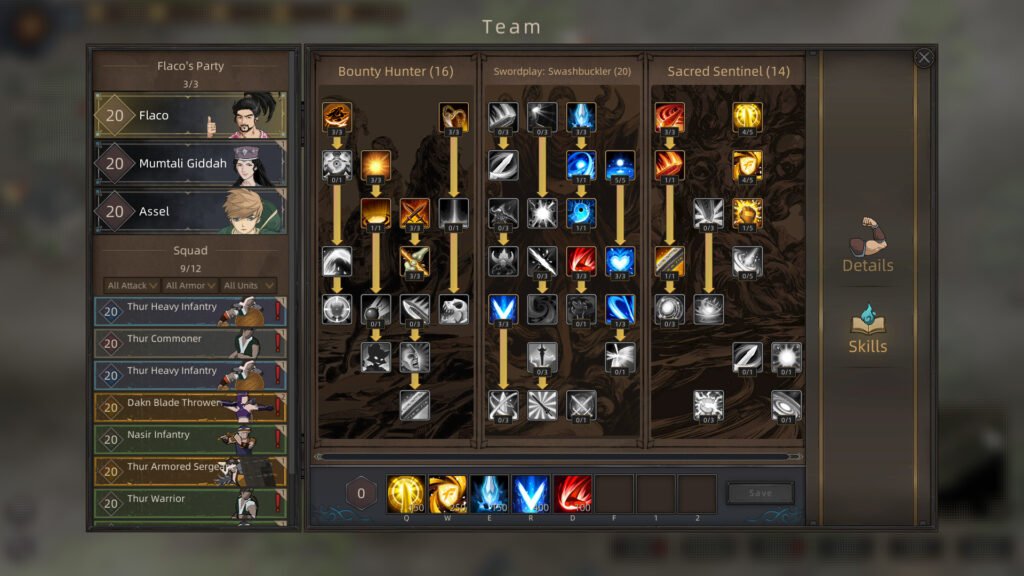
With eight unique classes—including the Spiritmancer, Sultan, and Jackal—the game offers immense replayability. Each class features its own skill trees and background story, changing how the world reacts to you and how you approach the mid-game power struggle.
Expanding the Desert: The DLCs
As the game has matured, Han-Squirrel Studio has released several expansions that flesh out the endgame and customization options.
- The Tournament: This DLC introduces a competitive arena system. It focuses on 3v3 battles and hero “chemistry,” adding five new recruitable NPCs and over 25 pieces of specialized gear. It’s perfect for players who want to test their character builds in a controlled, high-stakes environment.
- Champion of Chaos (Free): A generous free update that overhauled the skill trees for 17 existing hero NPCs. It ensures that your companions feel like unique individuals with synergistic abilities rather than just generic stat-sticks for your army.
- Land of the Eclipse: This is a “three-in-one” expansion. It includes The Eclipse Hive (a boss-rush mode with 24 secret realm bosses), Exotic Wayfarer (new character customization models and outfits), and Siege and Conquest (which adds a layer of defensive depth to city sieges, including wall systems and archer positions).
- The Ember Saga: Released more recently, this DLC adds the Ember Workshop side story involving the Iron Dynasty. It also introduces a “Child Rearing” mechanic, allowing players to continue their bloodline, and adds a new playable class, Xin Qi Ji, who specializes in counterattacks and “Demon Sword” techniques.