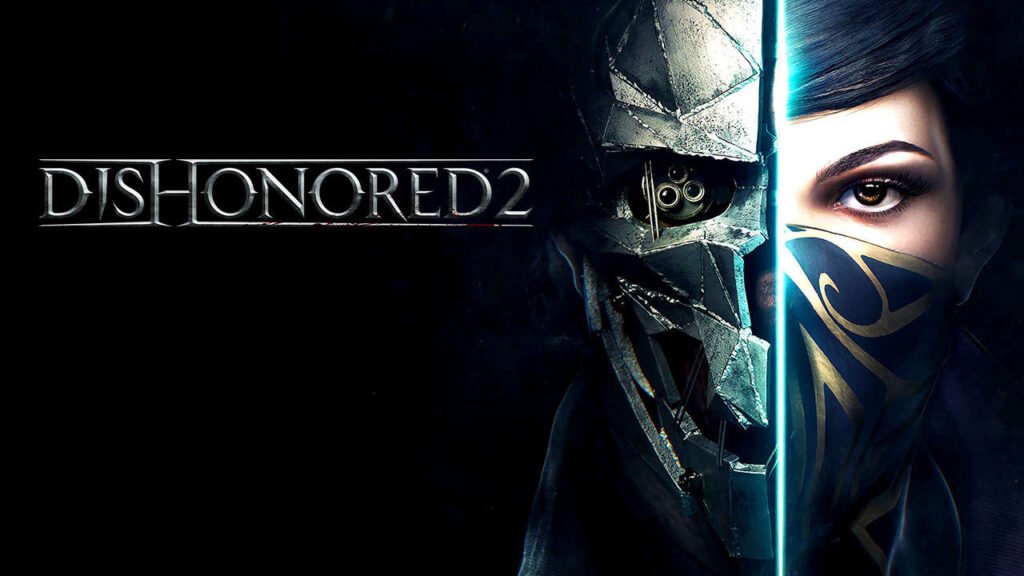

If you ever wanted to feel like a supernatural assassin who can stop time, possess a bloodfly, or link a whole squad of guards so that one well-placed blade takes them all down at once, Dishonored 2 is still the gold standard. Released back in November 2016 by Arkane Studios and published by Bethesda Softworks, this sequel to the original Dishonored somehow managed to take everything that was already special about that game and make it deeper, prettier, and even more player-driven. Ten years on it still holds up as one of those rare titles that rewards creativity more than following the script.
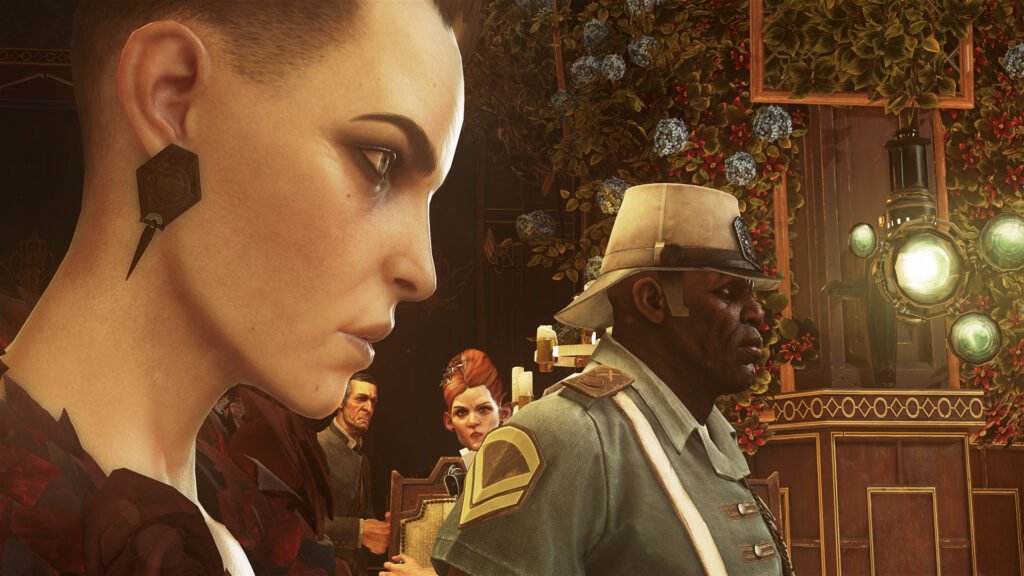
The story kicks off fifteen years after the events of the first game. The Rat Plague is history, Dunwall has recovered, and Emily Kaldwin now sits on the throne as Empress with her father and Royal Protector Corvo Attano at her side. Everything looks stable until a dramatic coup on the anniversary of the late Empress Jessamine’s death. The witch Delilah Copperspoon, who claims to be Jessamine’s long-lost half-sister, storms Dunwall Tower with the help of the Duke of Serkonos. In the chaos one of the two protagonists gets turned to stone while the other escapes. You choose right at the start whether you want to play the rest of the game as Emily or as Corvo, and that choice sticks. The other character remains trapped until the very end.
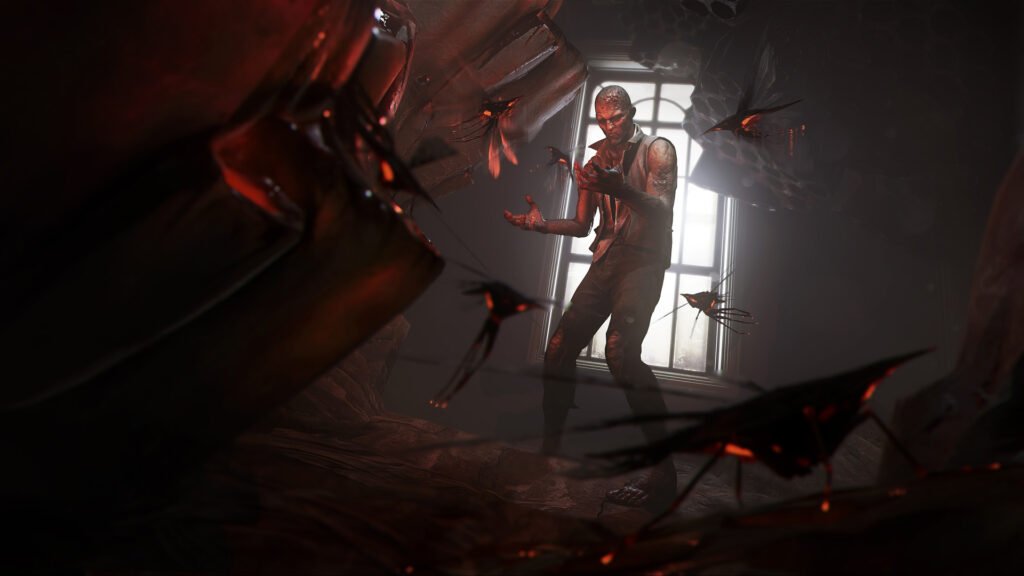
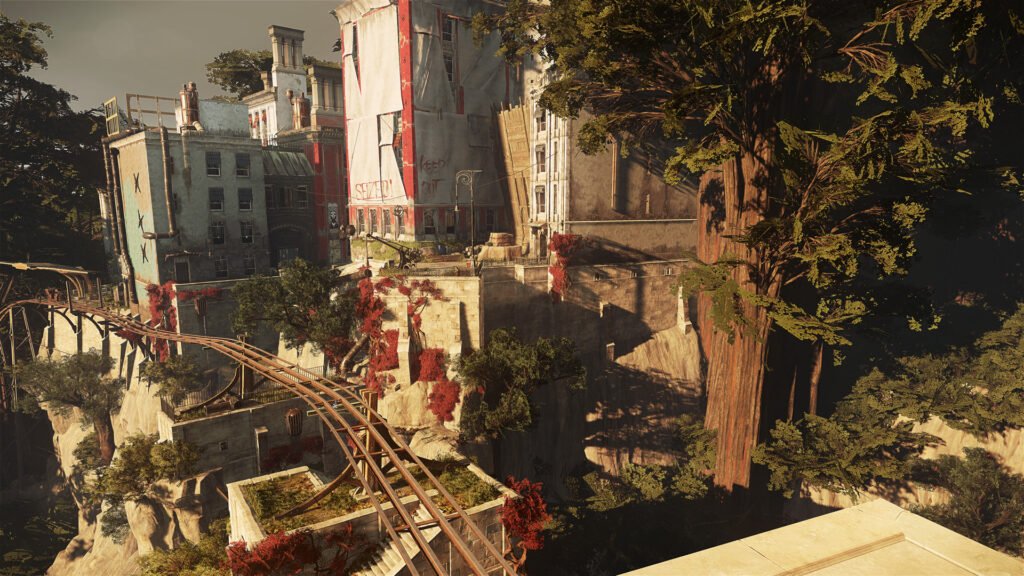
From there the action moves south to Karnaca, the coastal capital of Serkonos and Corvo’s childhood home. Where Dunwall felt like a grim industrial London choked by fog and rats, Karnaca is a sun-drenched, decaying Mediterranean jewel. Think dusty streets, grand mansions clinging to steep hillsides, bloodfly infestations instead of plague rats, and a constant tension between the wealthy elite and the struggling working class. The city feels alive in that classic Arkane way. You overhear conversations that flesh out the lore, find notes and diaries that reward curiosity, and discover environmental storytelling tucked into every corner. The art direction, led once again by Sébastien Mitton, is stunning. The lighting, the architecture, the way the wind moves dust through the air — it all creates a place that feels tangible even when you’re bending the laws of physics.
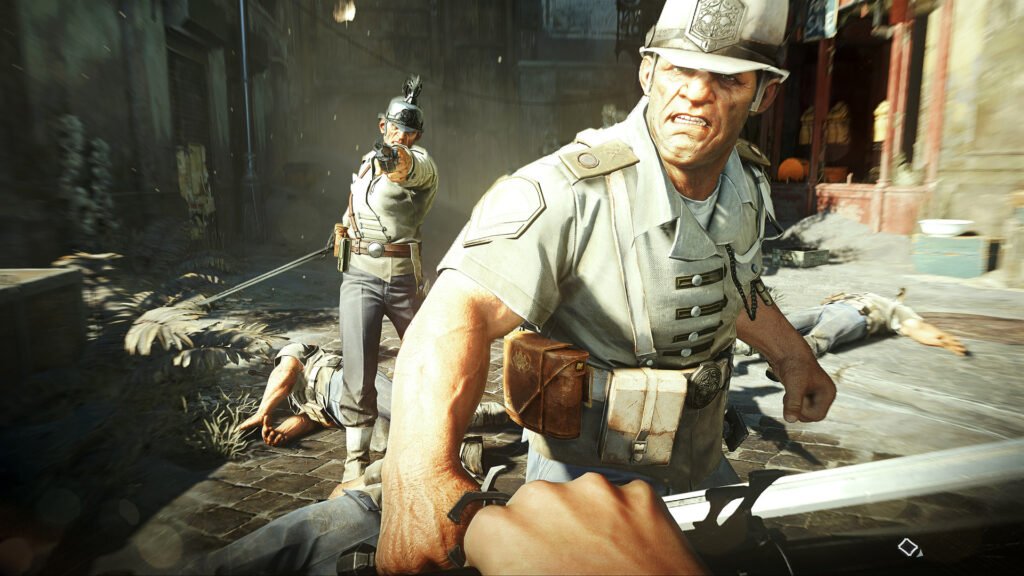
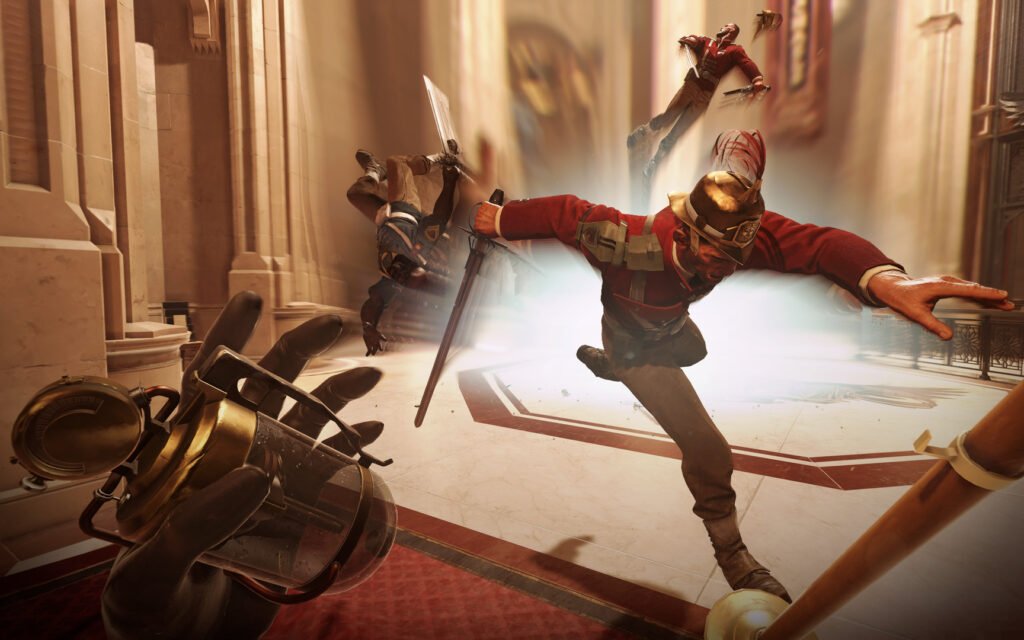
What really sets Dishonored 2 apart is the pure freedom of approach. This is an immersive sim through and through. Every mission is a dense sandbox. You get a target — usually some powerful figure tied to the conspiracy — and then the game steps back and lets you figure out how to deal with them. Want to ghost through the entire level without being seen? Perfectly doable. Prefer to carve a bloody path and leave bodies everywhere? The combat is weighty and satisfying. Prefer something in between, using gadgets, environmental traps, and supernatural powers in creative combinations? That’s where the magic really happens.
Speaking of powers, both characters get the Mark of the Outsider, that enigmatic black-eyed figure who grants supernatural abilities with a mixture of curiosity and mild amusement. Corvo keeps refined versions of his classic kit from the first game: Blink for short-range teleportation, Bend Time, Possession (now including insects and even corpses), Devouring Swarm, and the rest. Emily gets an entirely new set that feels fresher and often more inventive. Far Reach pulls her toward ledges or yanks enemies closer. Domino links the fates of multiple people so that whatever happens to one happens to all. Doppelgänger creates a decoy that can fight or draw attention. Mesmerize hypnotizes groups. You upgrade and combine these abilities through bone charms and runes, and the skill trees let you specialize in ways that completely change how levels play.
The chaos system returns, tracking how lethal or non-lethal you are and adjusting the world accordingly. High chaos makes the city darker, more desperate, and more heavily guarded. Low chaos keeps things relatively stable and opens up different story moments and endings. You can complete the entire game without killing a single person if you want the “clean hands” challenge, and the non-lethal takedowns feel just as satisfying as the lethal ones. That flexibility is the heart of the experience. The game never forces a playstyle on you; it simply reacts to the one you choose.
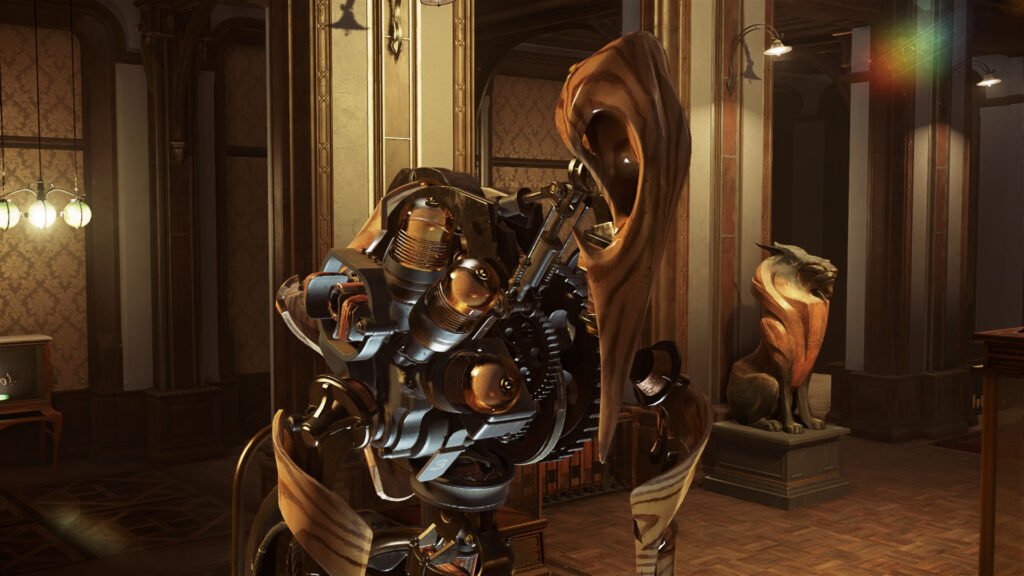
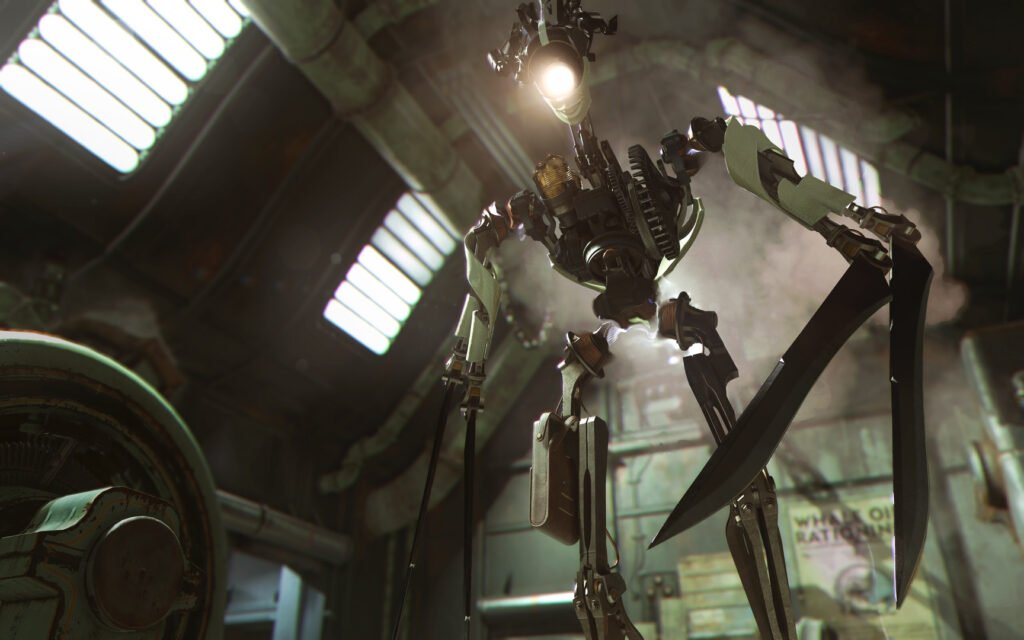
Two missions in particular have become legendary among fans. The Clockwork Mansion is a shifting mechanical puzzle box of a level where walls move, rooms reconfigure, and you can explore both the public spaces and the hidden machinery that runs everything. It’s pure Arkane genius. Then there’s A Crack in the Slab, where you move between the past and present of a decaying mansion by interacting with a magical device. Watching the same space transform around you while you solve problems across timelines is the kind of set-piece that other games still try (and usually fail) to match. These levels alone justify the price of admission.
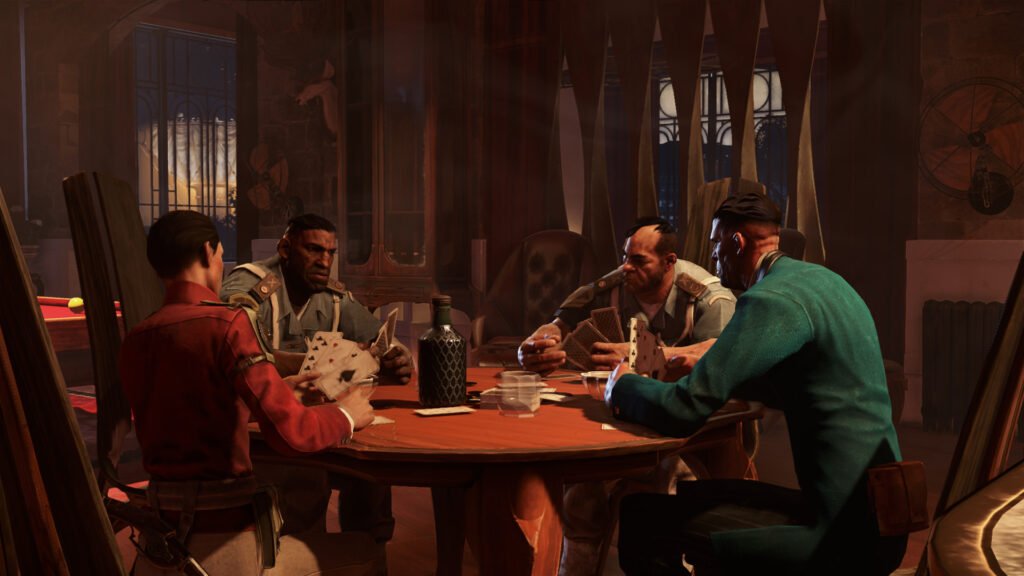
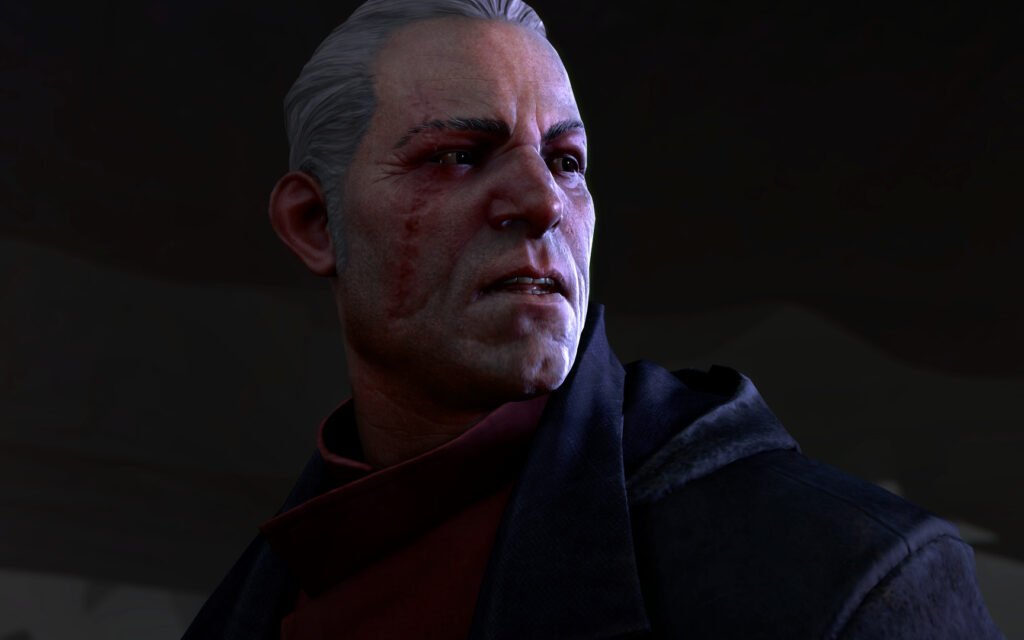
The supporting cast is strong too. Voice work from people like Rosario Dawson (as the mysterious captain of the Dreadful Wale), Vincent D’Onofrio, Pedro Pascal, and others gives the world personality. The writing has that signature Arkane blend of dark humor, melancholy, and political intrigue. The Outsider himself, voiced with perfect deadpan detachment, remains one of gaming’s great enigmatic figures. He’s never quite ally or enemy, just a fascinated observer of the chaos you create.
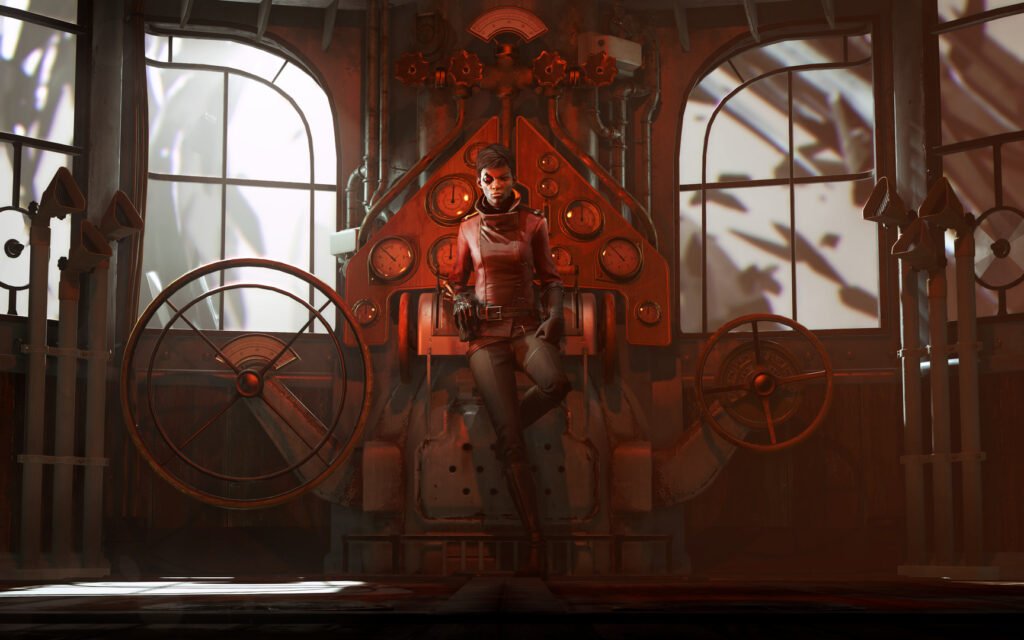
A few months after the main game’s events, the story continues in the standalone expansion Dishonored: Death of the Outsider, released in September 2017. This time you play as Billie Lurk, the former assassin who spent much of Dishonored 2 under the alias Meagan Foster. She reunites with her old mentor Daud, the legendary Knife of Dunwall himself, who is dying and has one final request: kill the Outsider. What follows is a tighter, more focused campaign that strips some of the series’ systems down while introducing new ones.
Billie doesn’t receive the Mark of the Outsider in the usual way. Instead she gains three unique abilities tied to artifacts: Displace (a teleportation system that lets her place markers and warp between them), Semblance (which lets her take on the appearance of other people), and Foresight (a time-stopping investigative vision mode). Mana regenerates automatically, removing the need to constantly hunt for potions. The chaos system is gone entirely, which changes the tone — there’s less moral accounting and more pure focus on the heist-like missions and the strange cultists who worship the Outsider. Optional contracts add extra targets and challenges that encourage different approaches. The bank heist mission in particular is a highlight, dense with routes and possibilities in classic Dishonored fashion.
Death of the Outsider works both as a direct continuation and as a relatively accessible entry point. It digs deeper into the lore of the Void and the Outsider’s origins, delivering a satisfying conclusion to what Arkane called the “Kaldwin era” of the series. Whether you choose to kill the black-eyed god or free him, the ending feels like a proper full stop on that chapter of the universe. The shorter length and refined systems make it a perfect companion piece rather than a full-priced sequel, and it remains one of the better examples of how to expand a world without simply repeating the formula.
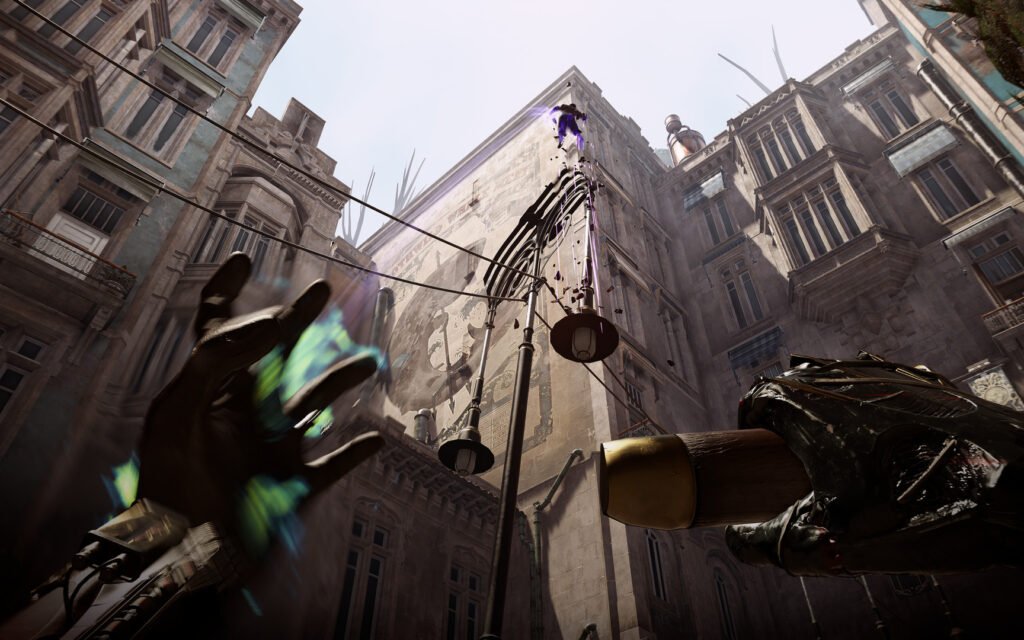
Looking back, Dishonored 2 stands as a high-water mark for the immersive sim genre. It trusts the player completely. It fills its world with so much detail and so many interlocking systems that every playthrough feels personal. Whether you’re a pure stealth ghost, a chaotic whirlwind of blades and powers, or something in between, the game meets you where you are and lets you write your own story of revenge, redemption, or pure mayhem. Combined with Death of the Outsider, it forms a complete and deeply satisfying experience that still rewards revisiting years later. If you’ve never taken that boat to Karnaca, or if it’s been a while since you last blinked across its rooftops, there’s never been a better time to dive back in. The Outsider is still watching, after all, and he always enjoys a good show.