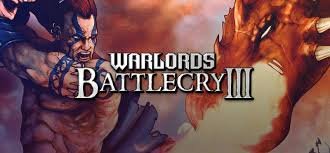

Release Date: May 17, 2004 Developer: Infinite Interactive
Get It On: GOG
The early 2000s saw an absolute explosion of the Real-Time Strategy genre. It was the era of Warcraft III, Age of Mythology, and Command & Conquer. But nestled among those heavy hitters was a gem that did something the others only flirted with: it fully married the RTS with deep, crunching RPG mechanics. That game was Warlords Battlecry III, and even decades later, it remains a towering achievement in high-fantasy gaming.
Developed by the legends at Infinite Interactive—the same minds that would later give us Puzzle Quest—this title wasn’t just another base-builder. It was a playground for theory-crafters and power-gamers. While other games gave you a “Hero” unit that might gain a few levels over a match, Warlords Battlecry III gave you a Persistent Hero. Your character didn’t just exist for one mission; they grew, looted, and evolved over hundreds of hours of gameplay.
The Madness of Choice: 16 Races and 28 Classes
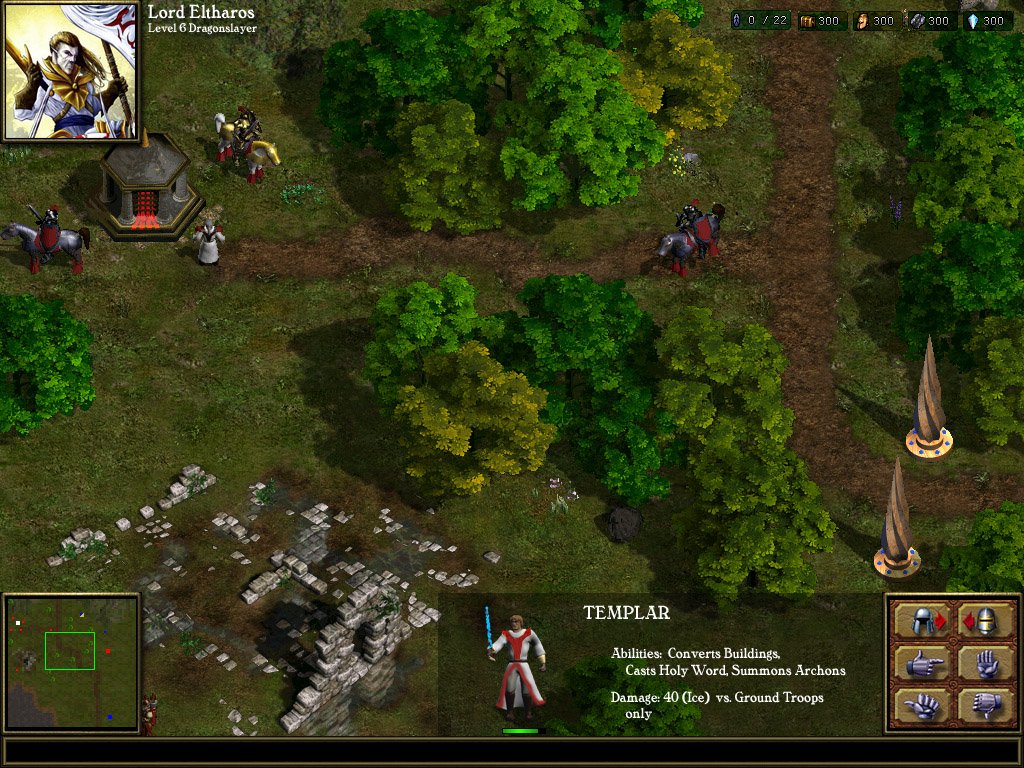
Most modern games struggle to balance three or four factions. Infinite Interactive looked at that and said, “Hold my ale.” Warlords Battlecry III features a staggering 16 unique races. We aren’t just talking about different colored humans, either. You’ve got the Plaguelords, who spread disease like it’s a competitive sport; the Ssrathi, ancient snake-people who worship dinosaurs; and the Swarm, an insectoid hive mind that plays like a terrifying game of Starcraft on steroids.
But the customization doesn’t stop at your race. You also choose from 28 character classes. Want to be a Death Knight leading an army of the undead? Go for it. Prefer a Merchant who focuses entirely on the economy so you can out-buy your opponents? You can do that too. The sheer number of combinations means that every single playthrough feels entirely different. You can build a Mage who rains down fireballs and meteor showers, or a Warrior who is so physically tanky they can literally solo an entire enemy base without a single soldier to back them up.
A Hero for the Ages
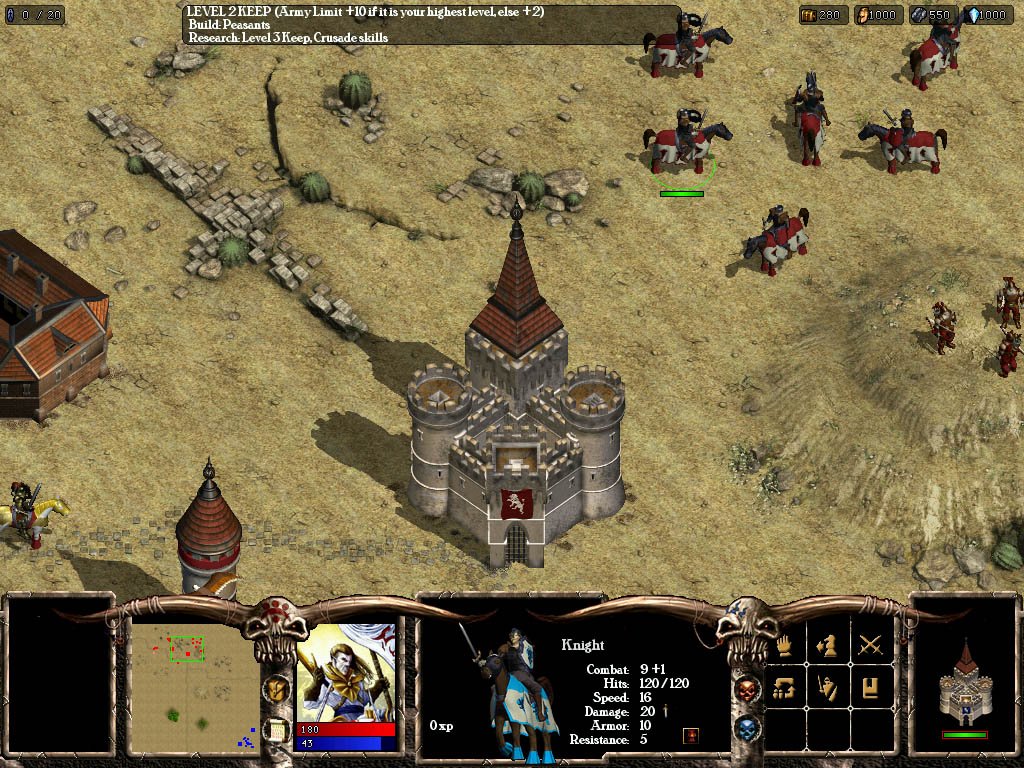
The heart and soul of the game is your Warlord. Unlike most RTS games where your units disappear into the ether once the “Victory” screen pops up, your Hero in Battlecry III is yours forever. As you play through the nonlinear campaign or custom skirmishes, your hero earns Experience Points (XP). You’ll find yourself agonizing over stat points—should you dump everything into Strength for raw damage, or Charisma to lower the cost of your units?
The loot system is equally addictive. You’ll find magical swords, enchanted armor, and mysterious artifacts that grant your Hero insane buffs. By the time you reach the late-game, your Hero isn’t just a unit; they are a demigod. There is a specific kind of dopamine hit that only this game provides: watching your level 50 Assassin go invisible, sneak into an enemy base, and one-shot their General while their entire army watches in horror. It’s glorious, slightly broken, and incredibly fun.
The World of Etheria: A Campaign That Actually Matters
The single-player campaign is set on the continent of Etheria, and it’s surprisingly open-ended. Instead of a linear list of missions, you’re presented with a world map. You decide where to go, which factions to ally with, and which ones to wipe off the face of the earth. This sandbox approach was years ahead of its time.
You might spend one afternoon helping the Dwarves reclaim a mountain hold, only to spend the next betraying them because the Dark Elves offered you a better artifact. The choices you make actually influence which units you can recruit and which races will join your retinue. Speaking of which, the Retinue system allows you to keep high-level units from previous battles, creating a sense of a “personal guard” that follows your hero through the fire and flames.
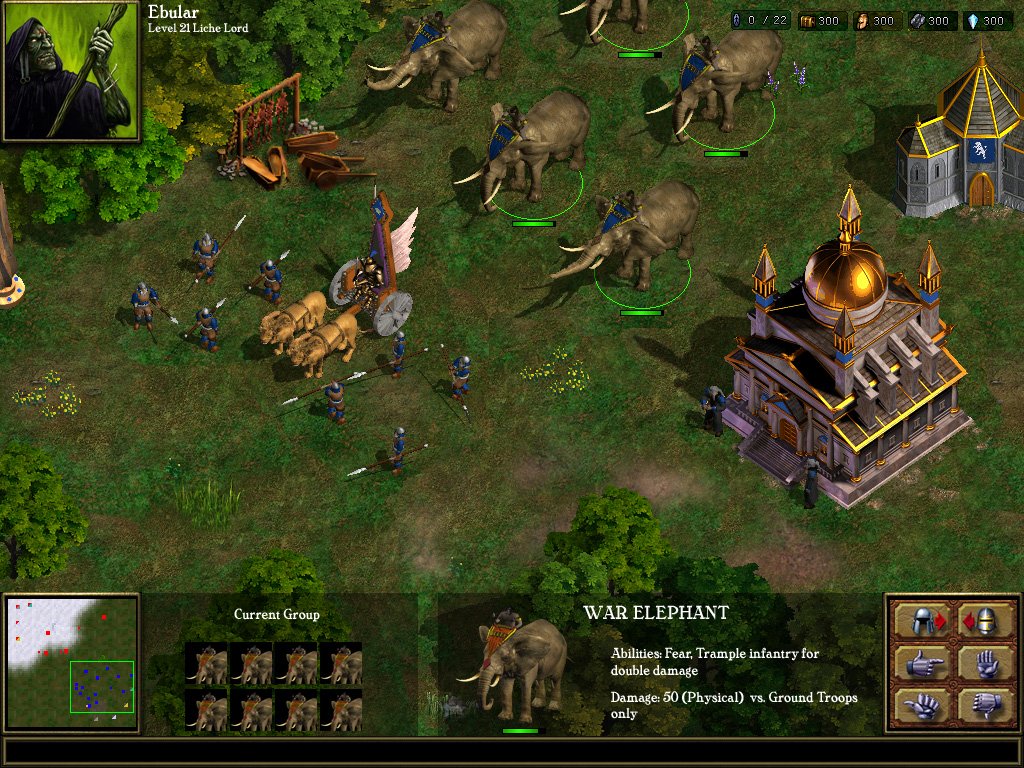
Magic, Mayhem, and Micro-Management
If you’re a fan of spellcasting, this game is your personal heaven. There are over 130 spells spread across different spheres of magic. You can summon dragons, warp across the map, or turn your enemies into harmless sheep. The magic system isn’t just a side-note; it’s a primary way to win. A well-placed Nature spell can turn a forest into a legion of Treants in seconds, flipping the script on an enemy who thought they had you cornered.
The game also introduced some very smart automation features. You can set your buildings to auto-produce units or tell your Hero to automatically hunt for treasure. This reduces the click-heavy micromanagement that often scares people away from the RTS genre, allowing you to focus on the big-picture strategy and the RPG growth of your character.
Why You Should Play It Today
Is the game dated? Sure, the 2D sprites might look a bit “retro” by 2026 standards, but there is an undeniable charm to the hand-drawn art style. The colors are vibrant, the unit designs are creative, and the soundtrack is absolute peak fantasy atmosphere. It’s the kind of game that runs on a potato but offers more depth than most $70 AAA titles released today.
The community is also surprisingly alive. Thanks to platforms like GOG, the game is perfectly playable on modern systems, and there are fan-made mods like The Protectors that add even more races, items, and balance tweaks. It’s a testament to the game’s core design that people are still tinkering with it twenty years later.
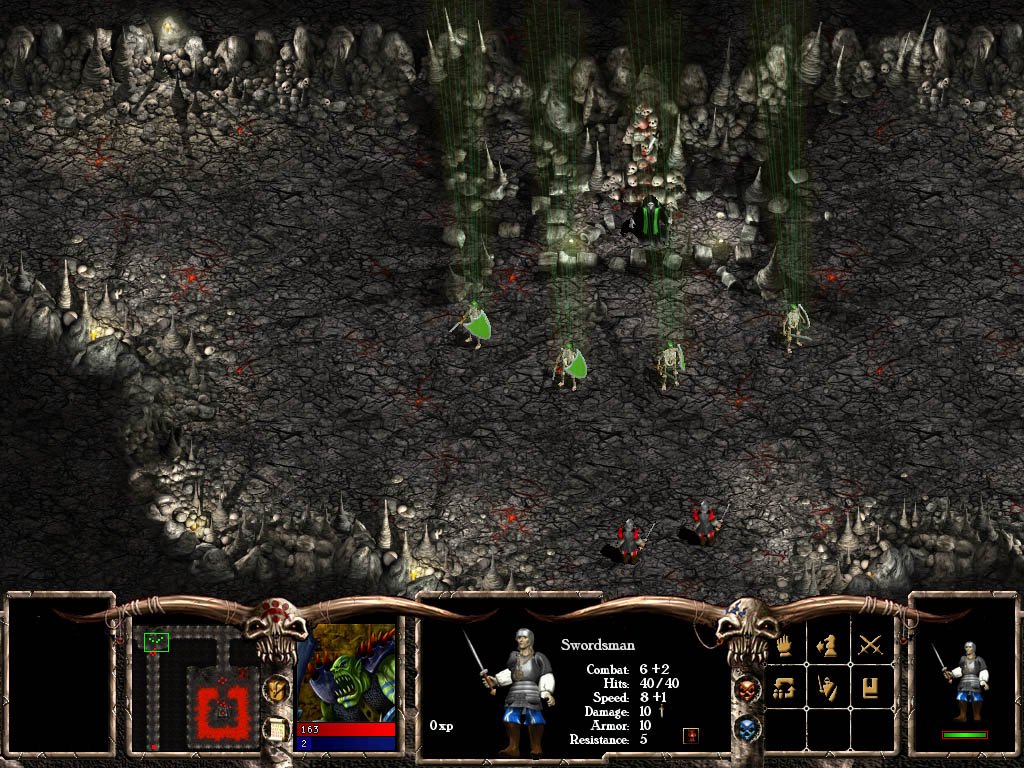
Final Verdict: A Must-Play Classic
Warlords Battlecry III is a chaotic, ambitious, and endlessly replayable masterpiece. It’s a game that respects your time by giving you a permanent sense of progression, and it respects your intelligence by offering a level of strategic depth that is rarely matched. Whether you’re an RTS veteran or an RPG lover looking for something different, you owe it to yourself to visit Etheria. Just be warned: once you start building your perfect Hero, you might find that “just one more match” turns into a sunrise.