
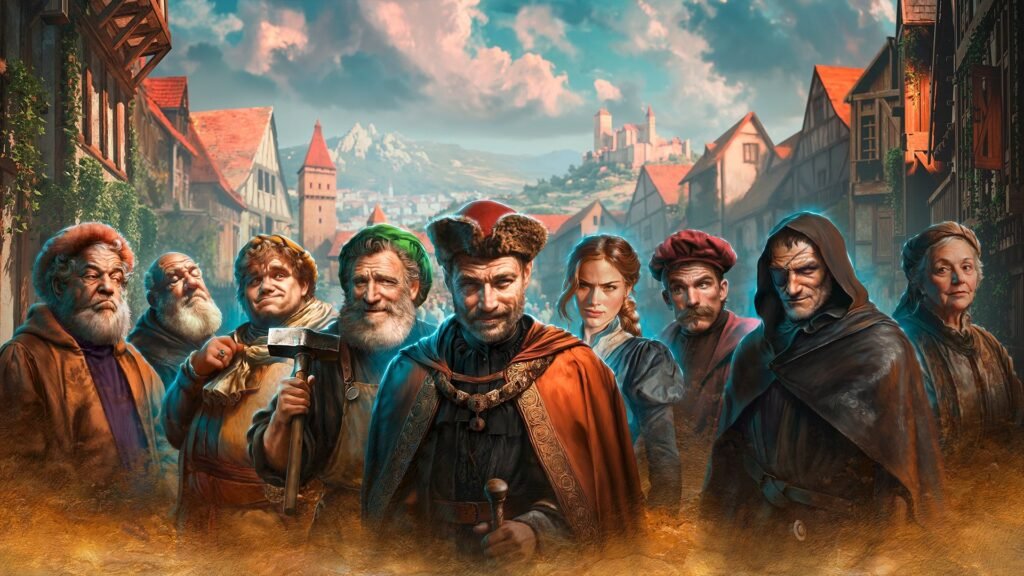

If you have ever played a strategy game and thought, “This is fun, but I wish I could frame my political rival for murder, marry into money, and then force my children to work in my blacksmith shop,” then you probably remember the absolute chaos of the original medieval life simulation games. Specifically, the classic 2002 title Europa 1400: The Guild. It was a bizarre, addictive blend of economic strategy, deep role-playing, and pure petty drama. After a few sequels that sadly lost their way in a swamp of technical bugs and weird design choices, publisher THQ Nordic and Czech developer Ashborne Games are hitting the giant red reset button. They are bringing the franchise back to its glorious roots with The Guild Europa 1410, a spectacular reboot built from the ground up in Unreal Engine 5.
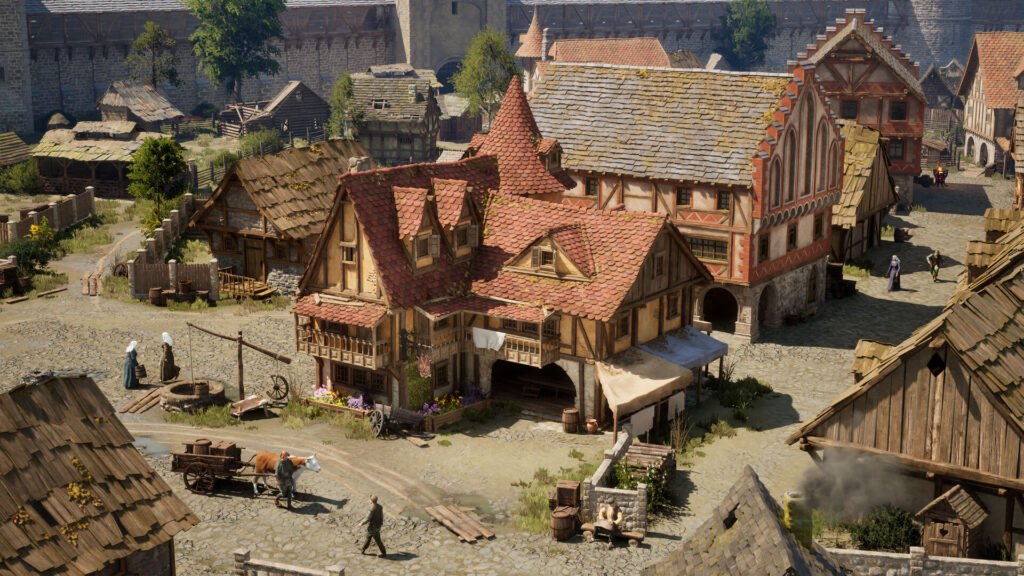
The premise of The Guild Europa 1410 is delightfully simple but incredibly deep. You start as a absolute nobody in the year 1410. You have a tiny bit of pocket change, a dream, and a microscopic workspace. Your goal is to build an unstoppable family dynasty that will dominate the city for generations. This is not a game where you play as an omnipotent god floating in the sky, nor are you a king commanding massive armies. You are just a regular person living in a bustling, living medieval city. You walk the muddy streets, talk to the local citizens, buy raw materials at the market, and manually manage your shop. The scale feels delightfully personal, which makes your inevitable rise to power feel all the more satisfying.
You begin your journey by choosing a profession, and the options cater to every style of play. If you want to play a clean, honest game, you can become a craftsman like a humble blacksmith, a tailor, or a stonemason, spending your days turning raw iron and cloth into valuable goods to sell for a profit. If you prefer a more academic or spiritual vibe, you can dive into alchemy or join the priesthood. For the players who love to watch the world burn, you can dive headfirst into a life of petty crime, running a rogue’s guild that thrives on pickpocketing, extortion, and robbing the wealthy merchants who dare to walk down your alleyways.
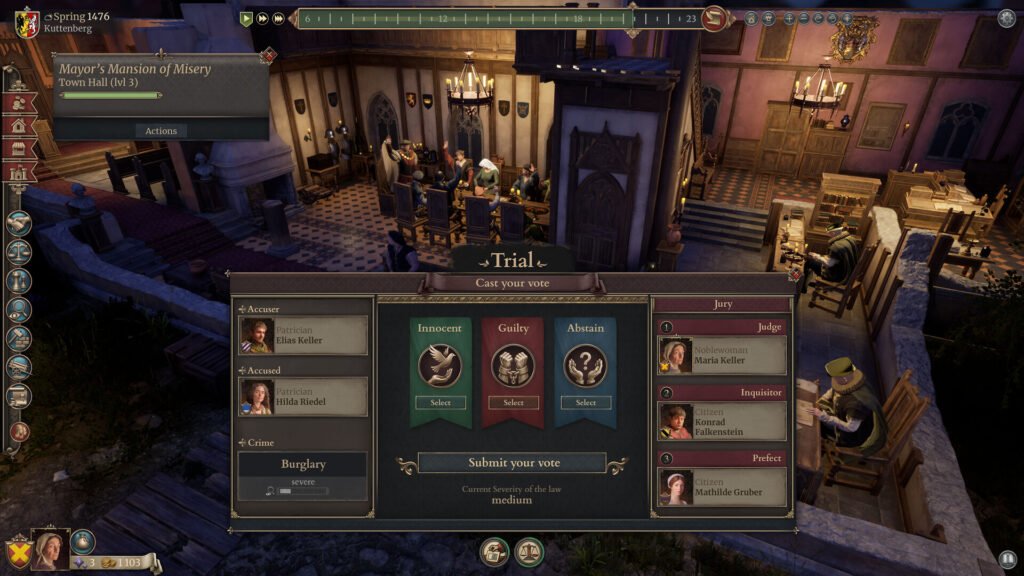
No matter which path you choose, you quickly realize that economic strategy is only half the battle. You can run the most efficient bakery in Central Europe, but if the local city council decides to jack up the tax rate on flour, your profit margins are toast. This is where the brilliant, cutthroat political simulation mechanics take center stage. To protect your business, you need to climb the social ladder and secure a seat on the town council. The political system is a massive ladder of offices, ranging from lowly night watchmen and inspectors all the way up to the master of the mint or the supreme judge. Getting elected requires making friends, bribing officials, or using a little bit of tactical blackmail. Once you hold an office, you can use your power to pass laws that favor your own shops while actively ruining your rivals.
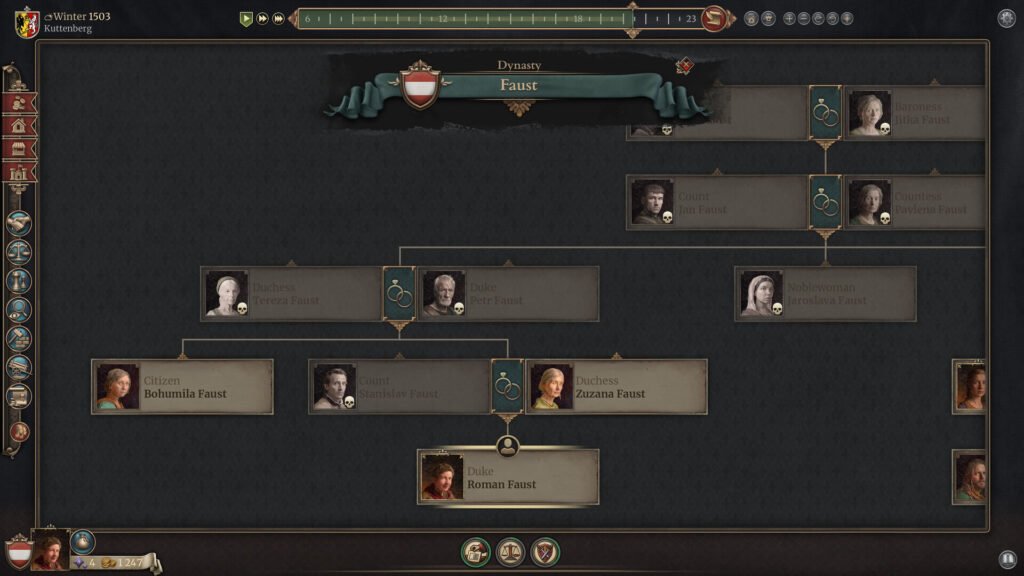
There is a catch to all of this power, though, and it is the ultimate equalizer in The Guild Europa 1410: mortality. Your initial character is going to grow old, get sick, and eventually die. If you do not have a legitimate heir ready to take over the family business when you pass away, your game ends right then and there. This makes family planning a mechanical necessity. You have to actively court a partner, get married, and produce children. Once your kids are old enough, you have to educate them, assign them to run your expanding branches, and arrange strategic marriages with other powerful families to secure alliances. Balancing your business ledgers while managing your family drama feels like running a medieval mafia, and it is incredibly compelling.
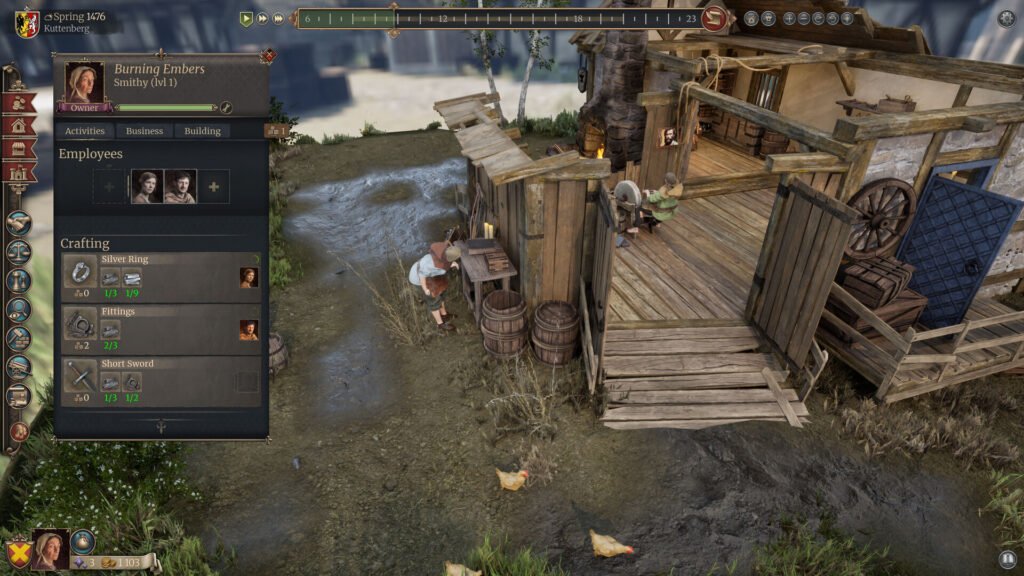
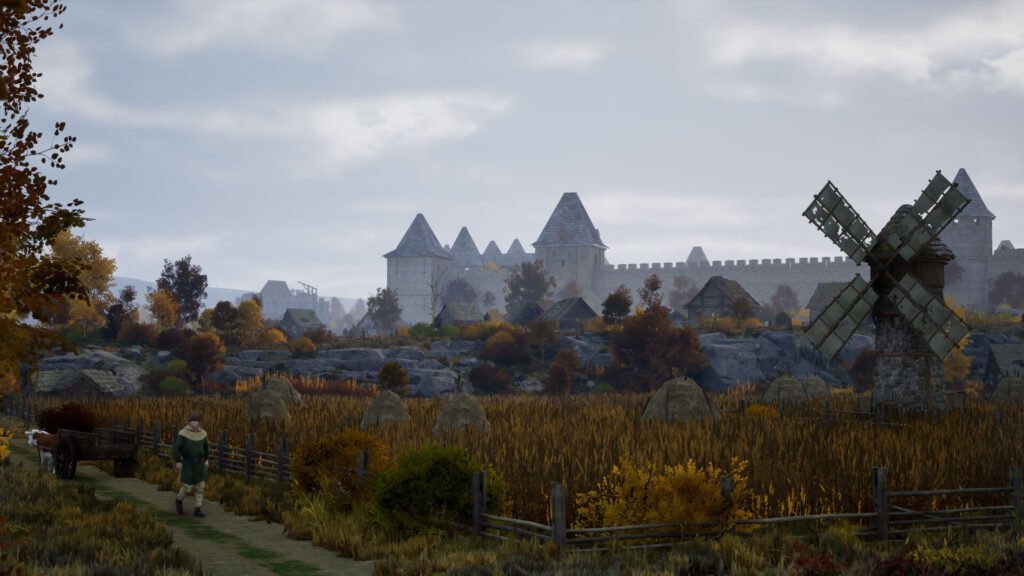
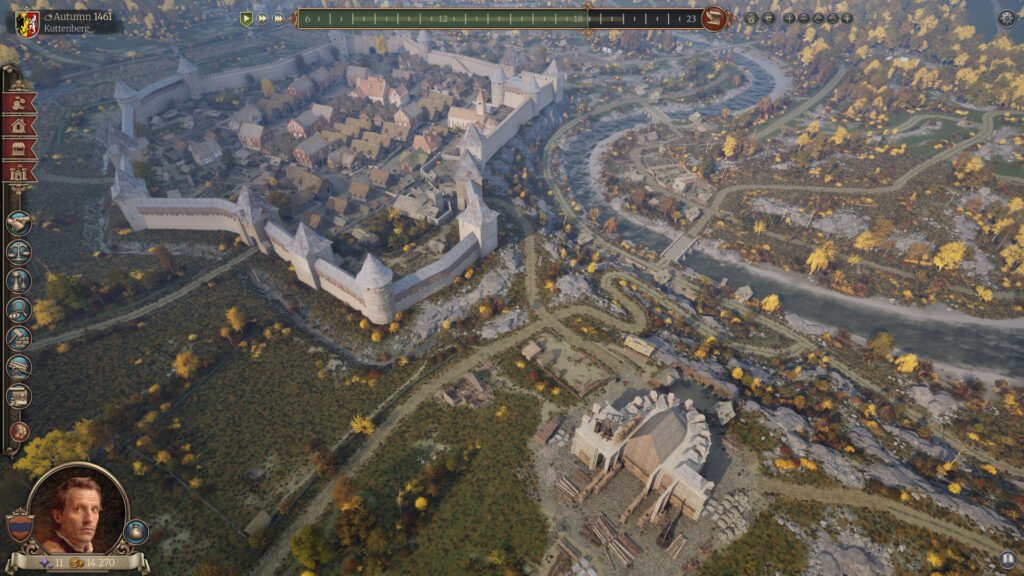
Visually, the jump to Unreal Engine 5 changes everything. The developer opted for a classic isometric perspective and top-down view that lets you survey your kingdom clearly, but the level of detail is stunning. The cities actually feel alive. You can see the smoke billowing from your forge, watch citizens gather in the marketplace to gossip, and observe the changing of the guard at night. The atmospheric lighting and historically accurate details draw you into the late Middle Ages in a way that previous games in the series simply could not manage.
The developer is also fully embracing community play by including a massive multiplayer mode that supports up to twelve players. Playing against the computer artificial intelligence is fun, but nothing matches the pure, unadulterated chaos of competing against eleven of your actual friends. You can form secret economic cartels to monopolize the timber market, pool your votes together to control the city council, or spend your entire evening launching coordinated smear campaigns against your best friend’s character until they are forced out of office. It turns the game into a digital board game filled with shifting alliances and inevitable backstabbing.
What makes The Guild Europa 1410 so exciting is that the developers are explicitly using the beloved 2002 original as their primary design inspiration. They recognized that the fans did not want a radical departure from the formula; they wanted a game that captured the magic of the original but ran beautifully on modern hardware without breaking. By focusing on the core loops of trade, personal intrigue, and dynastic survival, they are delivering exactly what simulation fans have been begging to play for years.
If you are eager to see if you have what it takes to survive the cutthroat world of medieval capitalism and politics, you do not have to wait blindly for the full launch. There is currently a free game demo available right now on Steam, allowing you to dip your toes into the muddy streets, open your very first shop, and get a taste of the strategy before the game officially launches into Early Access. Head over to the store page, download the trial, and start plotting your family’s rise to absolute medieval glory today.