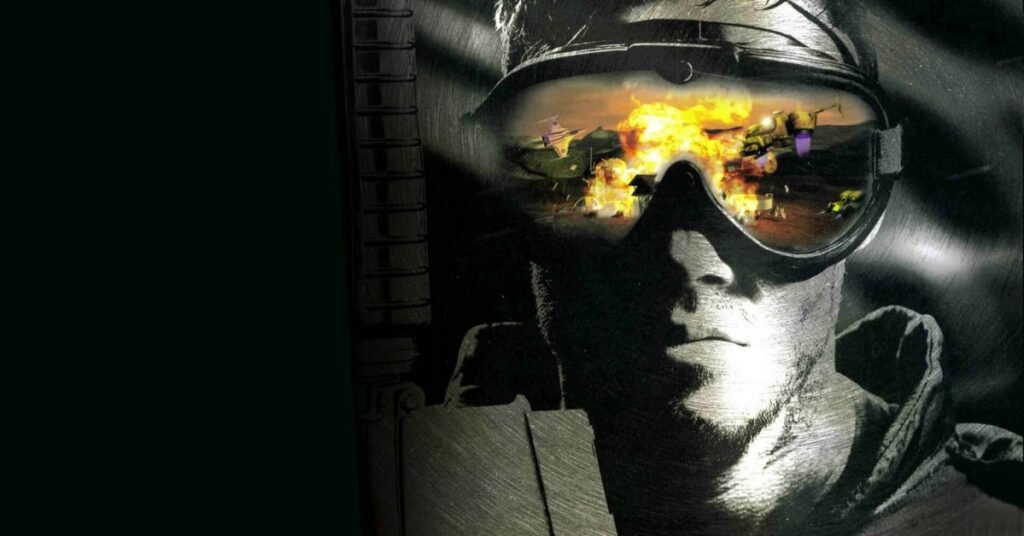

There is a particular kind of 90s PC magic that you only get when a small studio in Las Vegas decides the next war should be fought over an alien crystal, filmed with office staff in cheap uniforms, and scored like a military industrial rock concert. That game is the original Command & Conquer, released on September 26, 1995 by Westwood Studios. Fans later nicknamed it Tiberian Dawn, which is a much cooler name than the box ever admitted, but in 1995 it was just called Command & Conquer, and that was enough. It did not politely join the strategy genre. It kicked the door in, dragged Warcraft and everything else into the same room, and explained that war on a computer should feel fast, loud, a little ridiculous, and completely addictive.
Westwood already knew how to make this kind of game. In 1992 they had shipped Dune II: The Building of a Dynasty, the title that basically wrote the rulebook for real-time strategy. Harvest a resource, spend it on buildings, spend buildings on units, click until the other guy is a crater. The problem was that Dune II still felt like a prototype. Selecting a unit meant a little ritual of clicks. The interface fought you. The fiction belonged to Frank Herbert. Co-founder Brett Sperry later said Command & Conquer was simply the Dune II wish list with the license peeled off. The studio wanted the ultimate RTS under a name they owned. Sperry was fanatical about that title. Command & Conquer, exactly like that, because that is what you did.
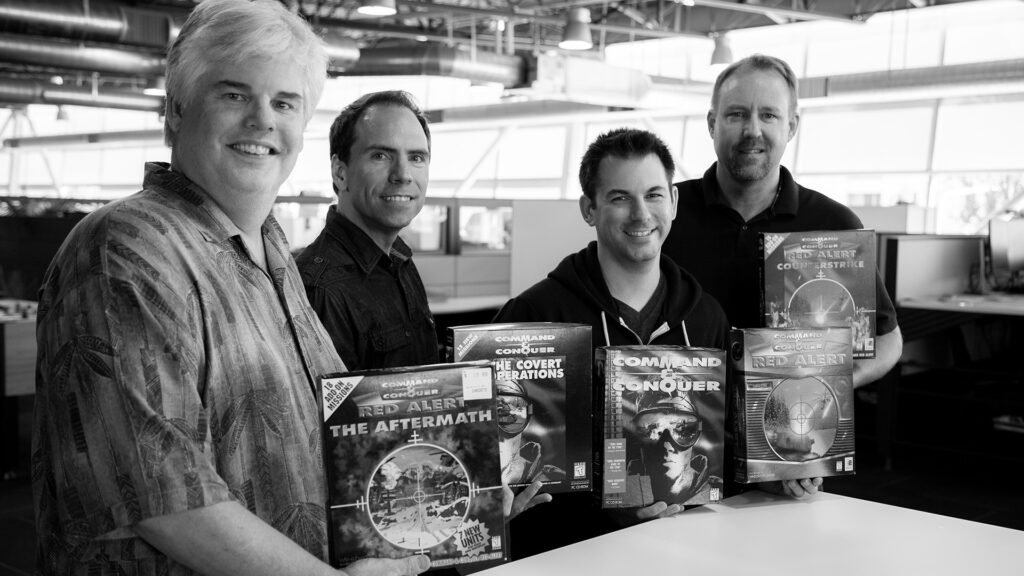
The first idea was not tanks. Early on the project leaned fantasy. There was talk of wizards, warriors, gold mines, wood, humans versus fairy folk, even a subtitle like Fortress of Stone. Louis Castle has joked that it was pretty close to orcs versus humans. Then the room changed its mind. The mid-90s were full of CNN footage, the aftertaste of the Gulf War, and a growing public anxiety about terrorism that did not look like two nation-states politely lining up on a map. Sperry argued that everybody already understood a tank and a guy with a rifle. Nobody needed a tutorial on what a fireball spell was. So the fantasy kit went in a drawer and the team started flipping through Jane’s catalogues and Soldier of Fortune instead. Tanks just felt better.
The new fiction was mean and a little prophetic. A meteor slams down near the river Tiber and coughs up Tiberium, a glittering, spreading, extremely profitable hazard that rewrites soil, funding, and geopolitics overnight. Two sides rush to own it. On one side sits the Global Defense Initiative, the GDI, a UN-backed high-tech peacekeeping machine with mammoth tanks, Orca aircraft, and the kind of briefing rooms that look like they have a budget. On the other side is the Brotherhood of Nod, an ancient, cultish, media-savvy insurgency that treats Tiberium like scripture and public opinion like another battlefield. Nod does not try to out-spend GDI. It out-narrates them, out-ambushes them, and harvests the crystal first. Sitting at the center of that red banner is Kane, the self-appointed messiah who talks like he has been rehearsing the end of the world for a thousand years.
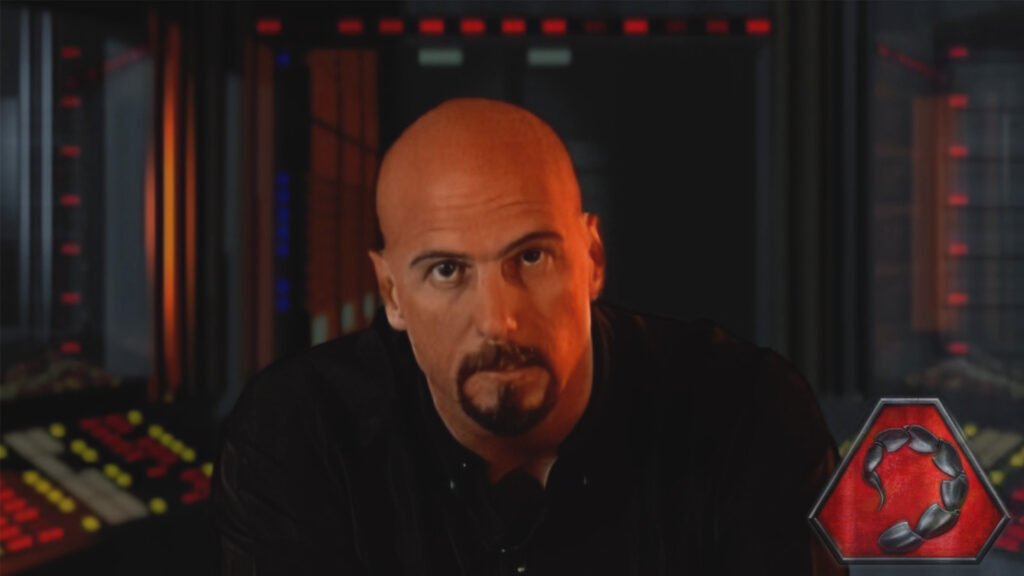
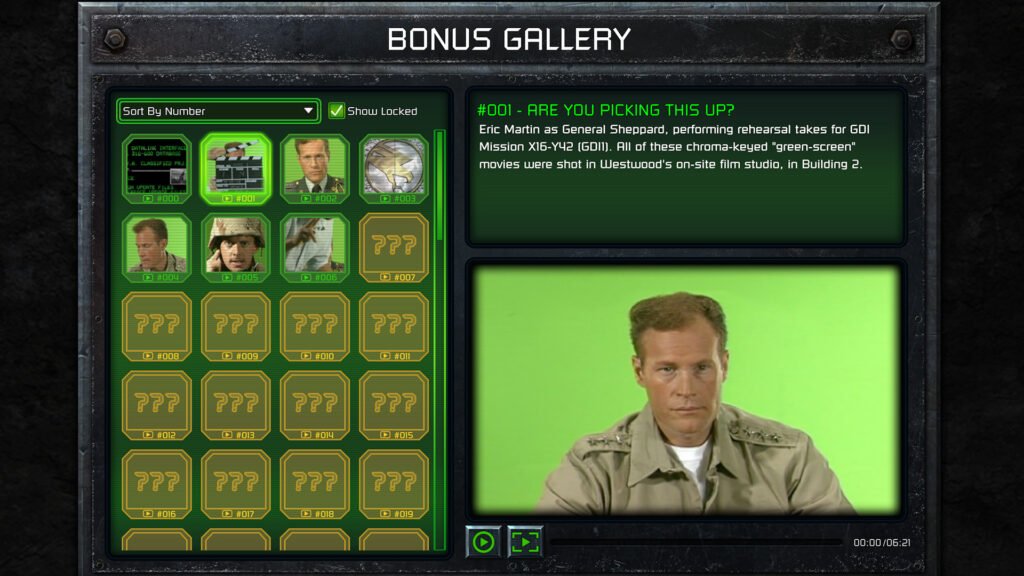
Kane should not have worked. Westwood did not fly in a Hollywood villain. They hired Joseph D. Kucan to help direct the full-motion video sequences and then put him in front of the camera. Office lighting guy Eric Gooch became Seth, Kane’s soon-to-be-unlucky lieutenant. Other staff filled briefing rooms, news desks, and crumbling bunkers. Half the budget, Castle later estimated, went into those cutscenes. They look cheesy now in the best possible way: overlit, overacted, and completely committed. In 1995 they felt like the strategy game had stolen a late-night action movie and spliced it between missions. You did not just get a text briefing. You got propaganda, betrayals, and a man in a black coat staring through the screen as if he already knew which mission you would fail.
The missions themselves were the real trick. Westwood looked at Apple’s Macintosh desktop, specifically the way you could drag a box around files, and stole the idea for the battlefield. Drag-select sounds obvious now. In 1995 it was the difference between a wargame and a toy you could actually play at speed. Group your infantry, fling them at a turret, panic when the Tiberium field gets contested, rebuild the barracks you should have protected, and try not to lose the harvester that is the entire economy. Designer and programmer Joe Bostic described the philosophy as too many spinning plates. You cannot watch all of them. You pick which disaster happens first. That tension is still the heartbeat of competitive RTS.
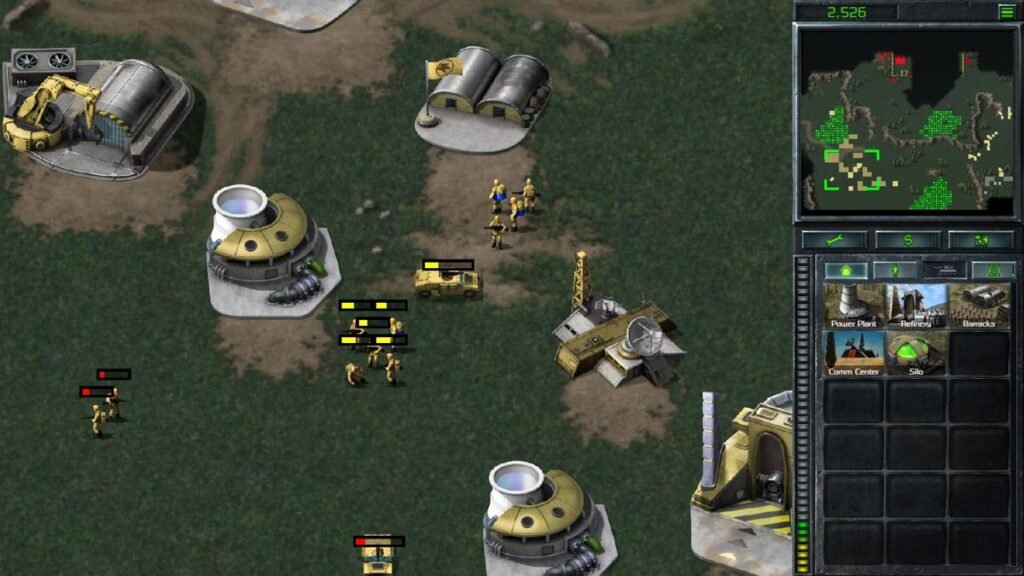
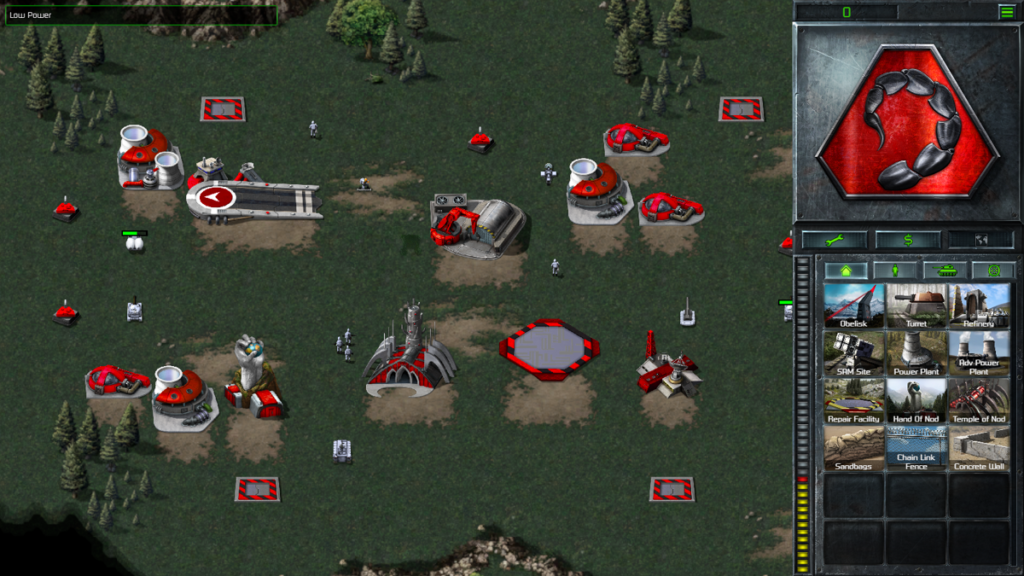
Tiberium was the secret sauce. It was spice with a personality: it grew, it poisoned, it funded the next tank, and it made every map feel alive instead of like a static pile of gold. GDI played like a conventional army that wanted clean supply lines and overwhelming force. Nod played like a conspiracy with flamethrowers, stealth, and the sneaking suspicion that the news broadcast you just watched was a lie. The campaigns taught that difference without a lecture. You learned by losing a base because you got greedy on the crystal field.
Then there was the noise. Frank Klepacki was barely in his twenties and already writing music that sounded like a war factory had formed a band. Tracks like Act on Instinct, No Mercy, and Industrial did not sit politely under the action. They shoved it forward. The sound design barked “unit ready” and “building” into a generation’s brainstem. People who have not launched the game in twenty years can still hear EVA. That is not nostalgia doing extra work. That is a composer and a sound team understanding that an RTS lives or dies in the ears as much as on the map.
Westwood even packaged the war like they expected you to fight a friend on the same night you bought it. The original came on two CDs, one for each faction, so two people could play from a single box. LAN multiplayer was not a checkbox. It was the feature that turned living rooms and university labs into late-night battlefield cafes. You have not fully understood 90s PC culture until you have heard someone shout across a dorm because a stealth tank just deleted their construction yard.
The world noticed immediately. By October 1995 it was already among the best-selling CD-ROM products in the United States. Copies piled up toward half a million, then a million, then about 1.7 million by early 1997, and more than three million worldwide before the dust settled. Germany and France went especially hard for it, even after the German release had to turn ordinary soldiers into cyborgs and sand down some of the blood to dodge an index listing. Critics stacked awards on the box. PC Gamer and Computer Gaming World called it strategy game of the year. Computer Games Strategy Plus went further and called it game of the year. The praise was not mysterious. The thing was simply more cinematic, more readable, and more viciously replayable than what had come before.
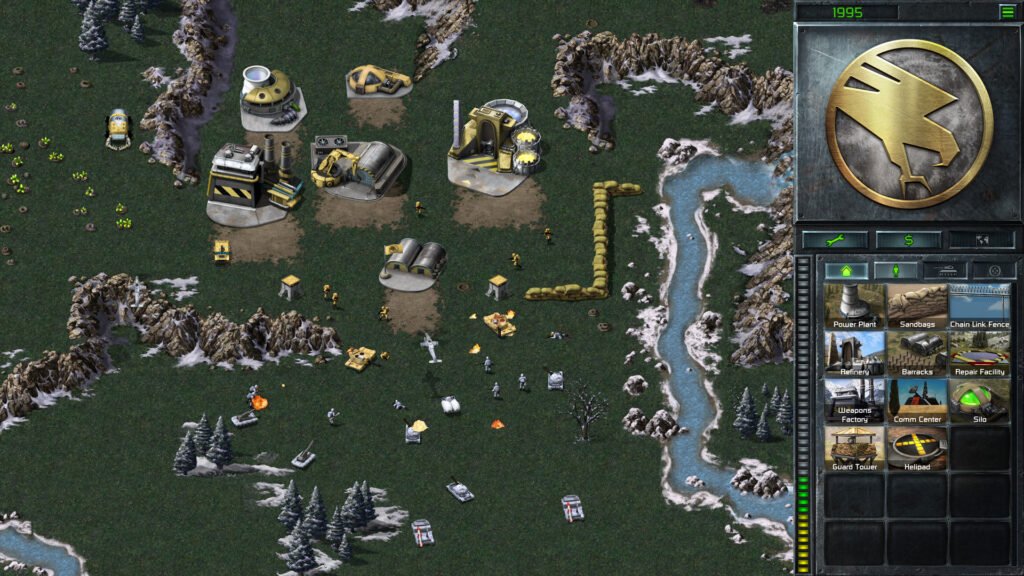
Westwood did not let the moment cool. The Covert Ops, more formally The Covert Operations, arrived in 1996 with a fistful of brutal extra missions and new multiplayer maps. Some of those missions were so nasty they became campfire stories. One detour even threw dinosaurs into the mix, because of course it did. The same year brought Command & Conquer Gold, the SVGA glow-up that made the battlefield look less like a chunky DOS artifact and more like the game people still screenshot today. A year after the original, Red Alert would split the universe and give Klepacki the even more famous Hell March, but that is another war. The first game already had the formula, the villain, the resource, and the attitude.
What lasts is not just the mechanics other studios copied, though they copied plenty. StarCraft, Age of Empires, and a long line of base-builders all owe this title a drink. What lasts is the tone. Command & Conquer was serious about systems and unserious about dignity. It let you be a UN commander at dawn and a cult logistics officer by midnight. It made propaganda part of the toy. It proved that strategy software could have a face, a theme song, and a punchline. When Electronic Arts later released the game as freeware and, decades after that, put the Command & Conquer Remastered Collection in players’ hands with Petroglyph and Klepacki back in the booth, the surprise was how little of the core needed explaining. Box your infantry. Guard the harvester. Do not trust the broadcast. Kane will see you now.
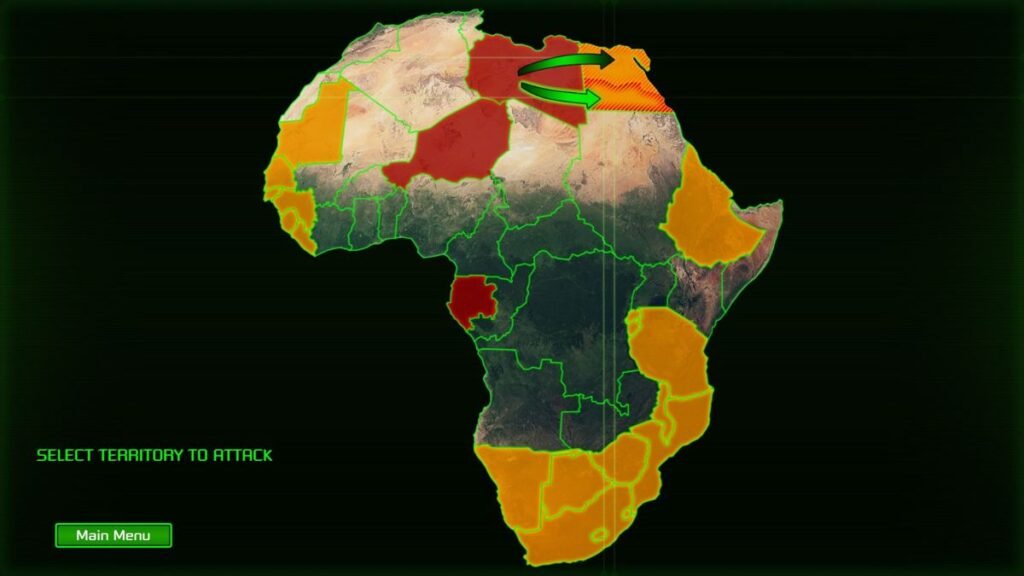
The original Command & Conquer is easy to mythologize because the myth is mostly true. A garage-born Las Vegas studio took the awkward genius of Dune II, threw away the license, watched the news, invented a crystal that ruins the planet and pays for the war, and filmed their coworkers as if the fate of Earth depended on the next construction yard. They shipped it in September 1995 and accidentally set the default language of real-time strategy for years.