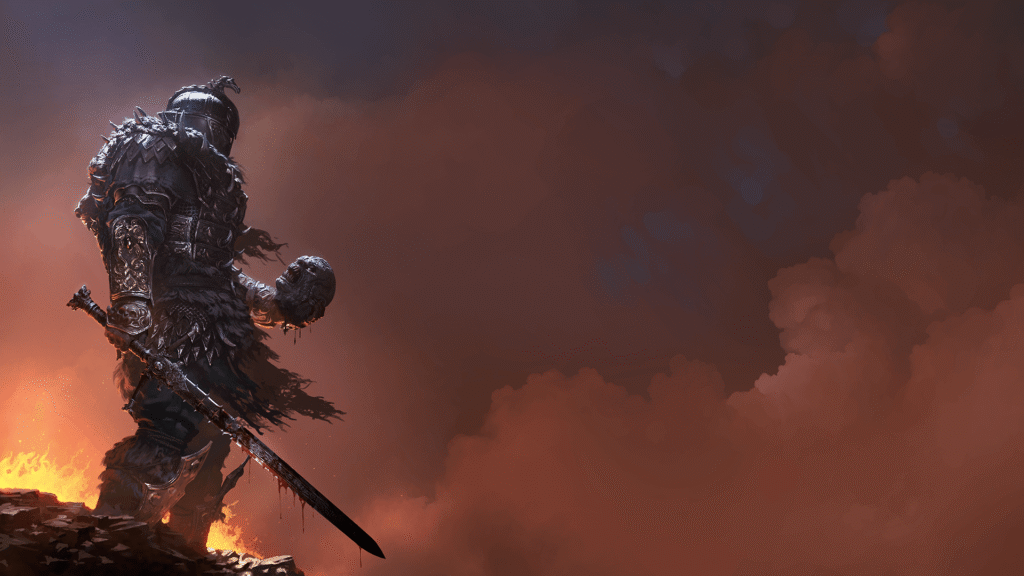

Every now and then, an indie game pops up on Steam out of nowhere and completely demands your attention. If you are a fan of swinging massive swords, casting devastating spells, and exploring gorgeous, moody landscapes, you need to turn your gaze toward Fatekeeper. Developed by Paraglacial, a tiny team of just thirteen passionate developers nestled in Bavaria, Germany, this game has officially made its debut in Early Access. Published by THQ Nordic, it represents a massive leap of faith for a small studio trying to deliver a high-fidelity, highly reactive first-person action RPG experience without the massive AAA bloat.
Stepping into the world of Fatekeeper feels instantly nostalgic yet refreshing. It lands in that perfect sweet spot where independent creativity meets serious graphical power, all running beautifully on Unreal Engine 5. Right out of the gate, the game makes a stellar first impression, proving that a dedicated, small-scale development team can punch way above its weight class when given the creative freedom to build a handcrafted universe.
Visually It Is A Prettier Skyrim
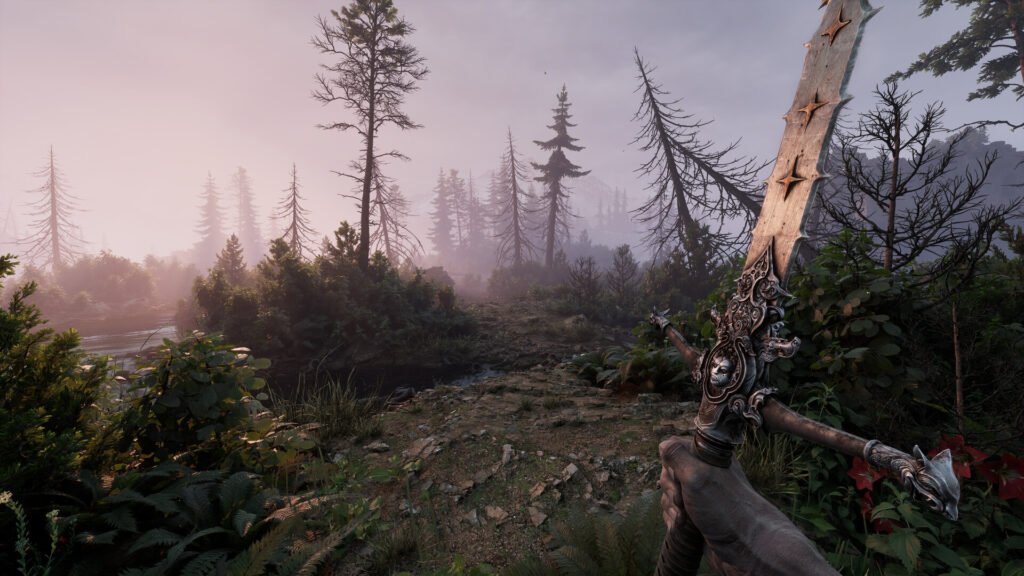
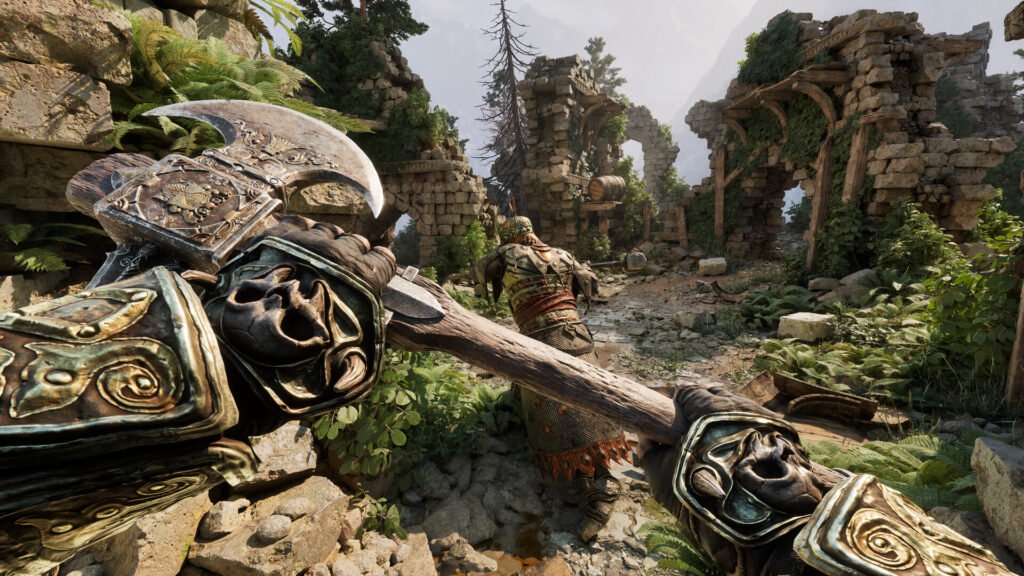
The moment you load into the game, the visual design grabs you by the throat. Many early players and critics are already comparing the aesthetic to a vastly upgraded, modern version of The Elder Scrolls V: Skyrim. The handcrafted world is filled with atmospheric environmental storytelling where ancient, crumbling ruins tell silent stories of historical cataclysms.
You will wander through dense, serene forests where shafts of light pierce the canopy, explore vast underground caverns illuminated by glowing crystals, and stumble upon forgotten sanctuaries that feel genuinely ancient. Paraglacial did not rely on endless procedural generation to fill space. Instead, they built these areas with a deliberate touch, making sure that players who love to wander off the beaten path are properly rewarded with hidden lore, unique gear, and dangerous unexpected encounters. The moodiness of the dark fantasy setting is palpable, establishing a tone that feels heavy, ancient, and dangerous.
Playing Like A Successor to Dark Messiah
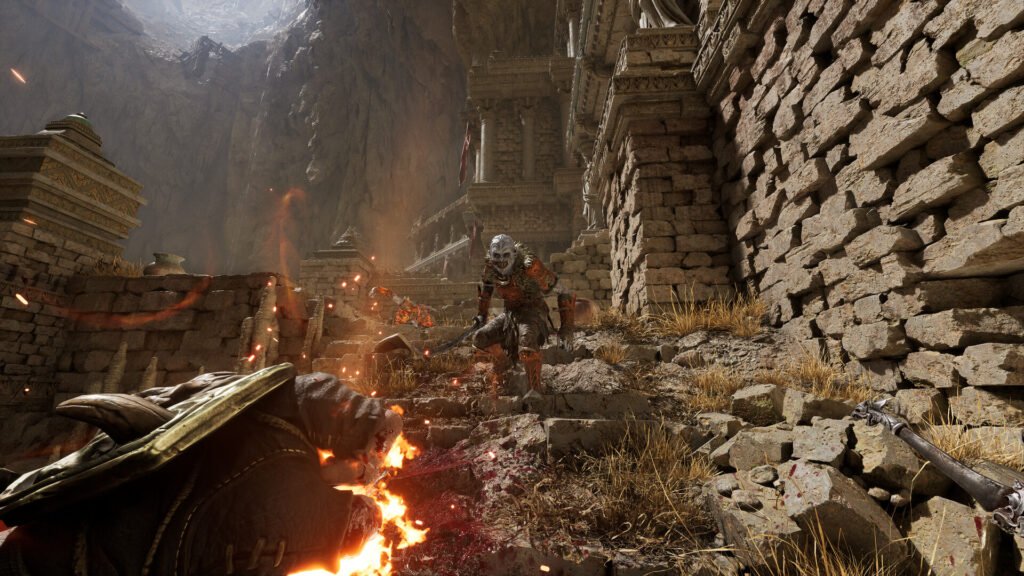
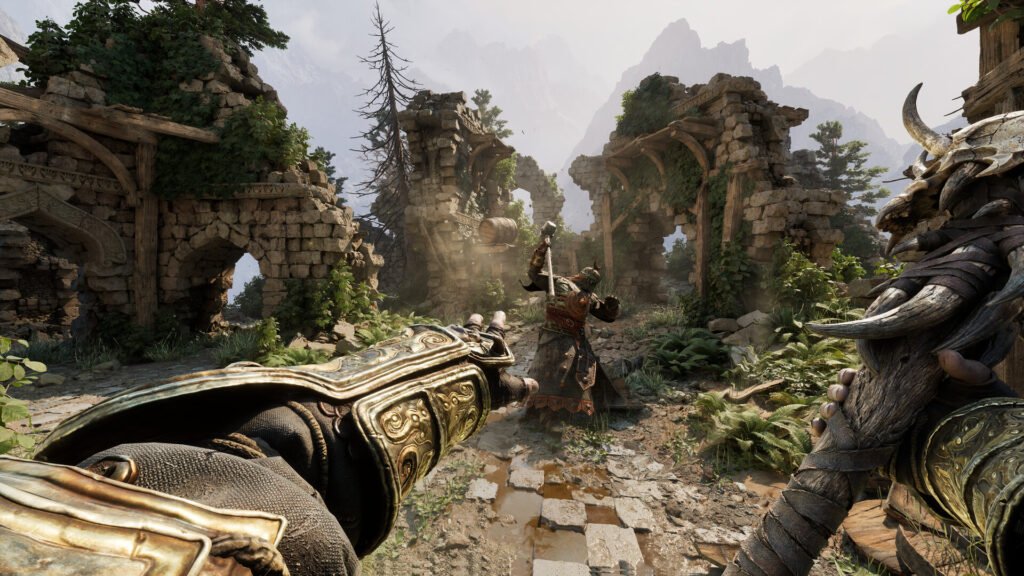
While the visual style might remind you of exploring Tamriel, the moment you draw your weapon, Fatekeeper reveals its true mechanical inspiration. The combat feels remarkably similar to the legendary cult classic Dark Messiah of Might & Magic. This is not a floating, weightless first-person slasher where you just spam the attack button until a health bar hits zero. The reactive melee combat has serious heft to it.
When you swing a greatsword or a heavy axe, your character moves with a sense of momentum that makes you feel like an absolute unit. Impact matters, and the game rewards you for paying attention to enemy positioning and timing. Even better, you are actively encouraged to use the environment to your advantage. If an enemy is standing too close to a steep drop, you can absolutely send them flying off the cliffside to their doom. The physics-heavy interaction gives every skirmish a chaotic, unpredictable energy that keeps you on your toes and forces you to adapt your tactics on the fly.
The Perfect Blend of Sword and Sorcery
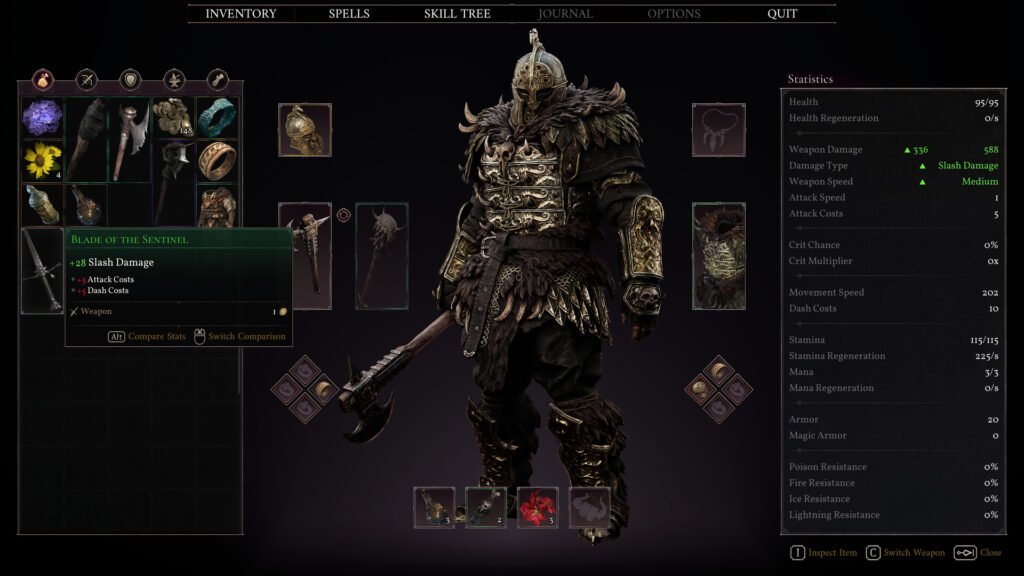
The dynamic duo of melee and magic is where the gameplay loop truly begins to shine. Fatekeeper does not force you into a rigid character class archetype. Instead, it invites you to experiment with a deep, expansive skill tree that supports intense theorycrafting. If you want to build a traditional pyromancer who multiplies flaming projectiles and bounces them off cave walls, you can do that. If you prefer a nimble rogue who throws returning daggers like boomerangs and leaps across the battlefield, the system accommodates you perfectly.
You can even build an alchemist who relies entirely on item optimization and potion buffs to survive. The magic mechanics are seamlessly woven into the physical combat, allowing you to freeze a rampaging monster with an ice spell before smashing them into tiny pieces with a heavy blunt mace. This synergy between diverse weapon types, deep attribute progression, and distinct spell schools keeps the combat loop feeling fresh and highly replayable, even in its earliest development stages.
A Passion Project Built by Thirteen People
It is almost hard to believe that a game with this level of graphical fidelity and mechanical depth is the debut work of an indie studio with only thirteen people. Paraglacial has been incredibly transparent about their development journey, stating clearly that they launched into Early Access specifically to collaborate with the community.
They wanted to put the core gameplay loop out into the wild to see what players enjoy the most, rather than treating their audience as mere beta testers. It is a refreshing approach to game development that shows a massive amount of respect for the community. The studio plans to keep the game in Early Access for roughly eighteen months, steadily adding more narrative content, refining the progression loops, and expanding the overarching world map based on direct player feedback.
Short on Runtime But Big on Potential
Because the game has just launched, you do need to keep your expectations in check regarding the raw volume of content. The initial release offers a highly polished but brief slice of gameplay, clocking in at around two hours of playtime for a standard run. However, the developers are planning for the final 1.0 release to be a robust fifteen-hour journey.
To compensate for the shorter launch length, Paraglacial and THQ Nordic have made the incredibly smart decision to offer the game at a heavy discount during its initial phase. For the price of a cheap value meal or a single movie ticket, you get an immediate look at one of the most promising indie action RPGs of the year. Buying in early acts as a direct investment in the studio, securing you a fantastic bargain before the price inevitably scales up alongside major content updates. If you are looking for a gorgeous, hard-hitting dark fantasy adventure to sink your teeth into, supporting this passionate team of thirteen is an absolute no-brainer.