

Hey there, fellow kombatants! Grab your quarters and blow the dust off your old fight sticks, because we need to talk about one of the most wild retro packages to ever hit our screens. When Digital Eclipse and Atari quietly dropped Mortal Kombat: Legacy Kollection onto modern platforms in late 2025, the gaming community collectively lost its mind. For years, fighting game purists and casual fans alike had been begging for a definitive, playable museum of the franchise’s historical roots. Sure, we’ve had various arcade ports scattered across older console generations, but nothing ever felt completely comprehensive or treated the source material with the reverence it deserved. This collection changes everything by treating the gory, controversial history of Earthrealm not just as a quick cash-grab, but as a prestigious interactive documentary. Whether you grew up ripping out spines in smoky arcades or you’re a newcomer who only knows the modern NetherRealm titles, this massive compilation is designed to grab you by the collar and pull you straight back into the nineties. It is a messy, beautiful, blood-soaked celebration of a franchise that literally changed the fabric of pop culture.
What Exactly is Hiding Inside This Vault?
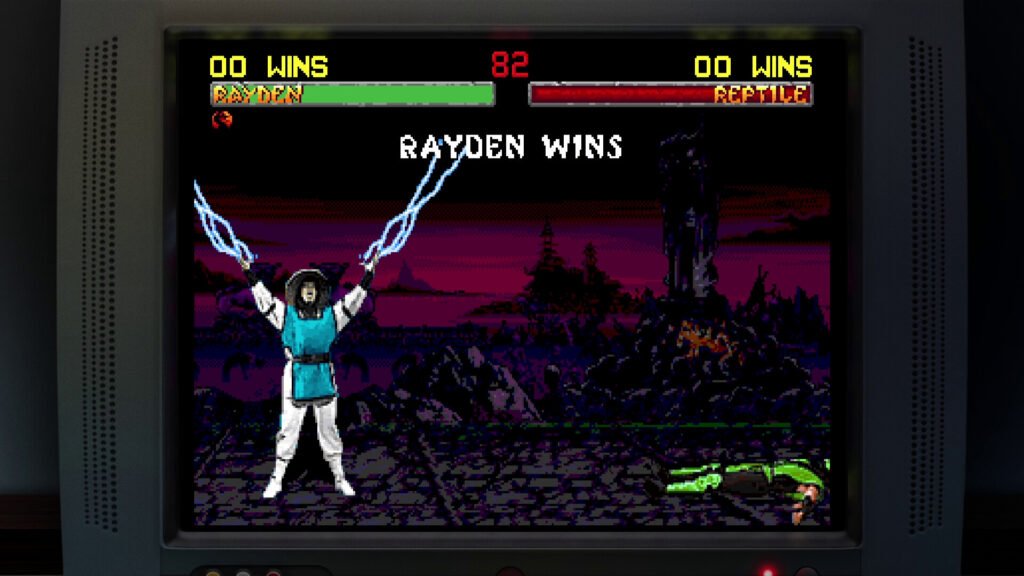
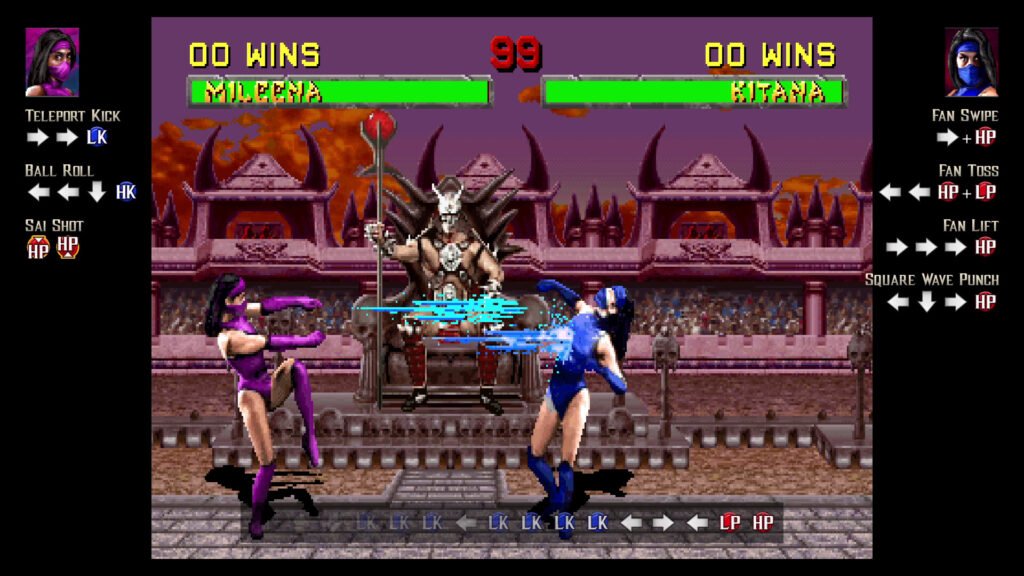
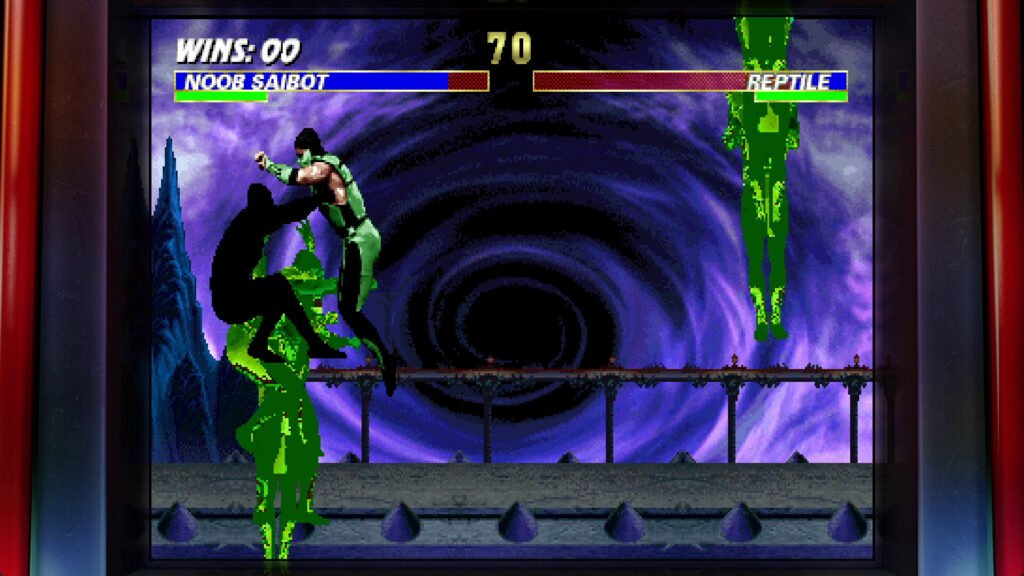
So, let’s unpack what you are actually getting when you boot this bad boy up. Digital Eclipse did not just slap together three arcade ROMs and call it a day. Instead, they went deep into the Midway vaults, pulling out a staggering lineup of games that spans from the original 1992 debut up to the 3D-era experimental days of 2003. You get the iconic arcade versions of the original trilogy, meaning Mortal Kombat, Mortal Kombat II, and Mortal Kombat 3, alongside the tournament-refined Ultimate Mortal Kombat 3. But the developers did not stop at the arcade cabinets. They also included a curated selection of home console ports and portable releases. This means you can actively compare how the Super Nintendo handled the bloodless sweat filters versus how the Sega Genesis delivered the raw, unfiltered arcade experience via a secret code. Even Mortal Kombat 4, the series’ first true, blocky steps into three-dimensional polygons, is fully playable here in all its goofy, limb-snapping glory. It is a massive timeline of fighting game evolution packed into a single digital wrapper, letting you witness how digitized real-world actors transformed over a decade into full 3D models.

The Mythical WaveNet Holy Grail
For the hardcore community, the absolute crown jewel of this entire package is something most gamers have only ever read about in legendary internet forums. The collection includes the first-ever public release of the WaveNet version of Ultimate Mortal Kombat 3. Back in 1997, Midway conducted incredibly limited location tests for an arcade cabinet that could actually connect to a network, allowing players in different arcade venues to battle each other remotely. It was revolutionary for its time, but because infrastructure was primitive, the project was quietly shelved, and the specialized ROMs were presumed completely lost to the annals of gaming history. Digital Eclipse tracked down these legendary files, revived them, and threw them into the collection with full functionality. Playing the WaveNet edition today feels like touching a piece of forbidden gaming history. It features unique balance tweaks and features that never made it to standard arcade boards. Experiencing this rare piece of media from the comfort of your couch, completely preserved and running flawlessly, is worth the price of admission alone for any self-respecting fighting game historian.
Embracing the Good, the Bad, and the Beautifully Broken
What makes this collection so uniquely charming is that Digital Eclipse chose not to sanitize the franchise’s history. They did not just include the flawless masterpieces; they embraced the absolute jank as well. Alongside the beloved classics, you will find some of the most notoriously terrible games ever stamped with the dragon logo. We are talking about the infamous action spin-offs like Mortal Kombat Mythologies: Sub-Zero and the visually disastrous Mortal Kombat: Special Forces. If you have never experienced the agonizing platforming of Sub-Zero or the clunky third-person shooting of Jax’s solo adventure, you are in for a hilarious treat. The package even includes the completely awful Game Boy Advance port of Mortal Kombat Advance, a game so broken it regularly features on lists of the worst games ever made. By including these massive stumbles alongside the triumphs, the collection provides an honest, unvarnished look at a franchise that was throwing everything at the wall to see what would stick. It proves that the developers respect the fans enough to show the full picture, warts and all, creating an incredibly authentic retrospective.
A Masterclass in Interactive History
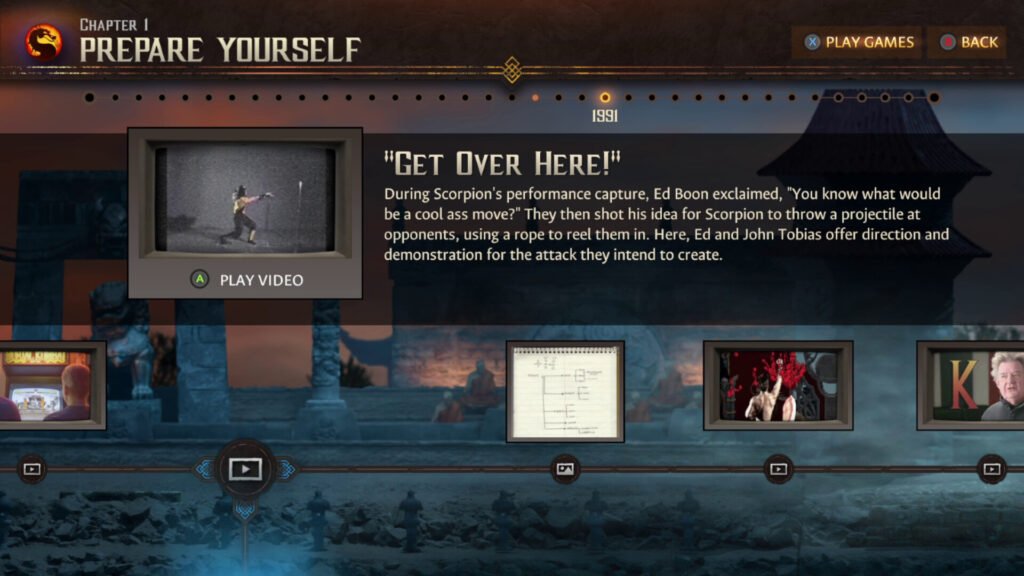
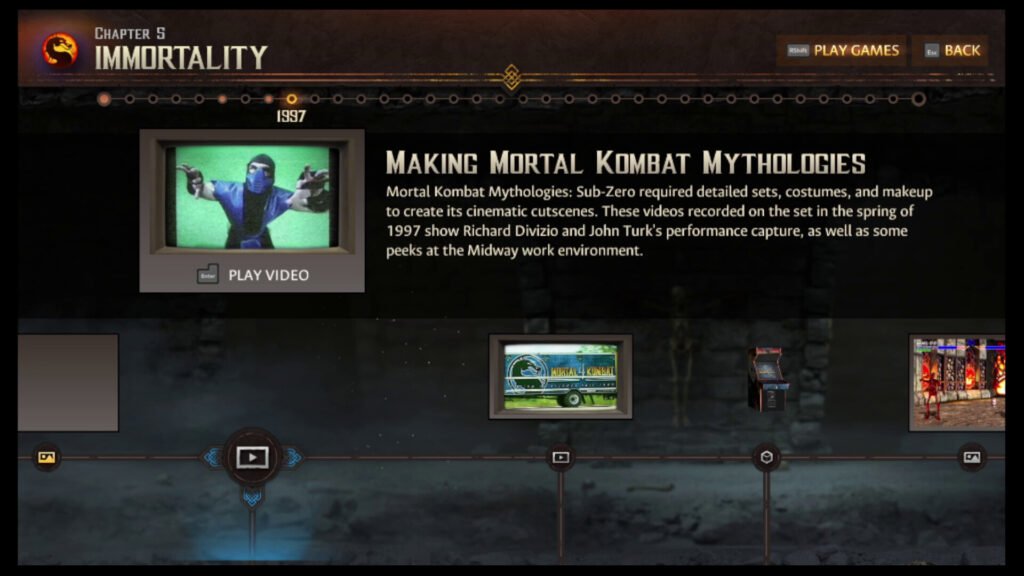
If you have ever played Digital Eclipse’s other documentary-style releases, like Atari 50, you already know what to expect from the presentation here. The user interface itself is an archive. The game organizes its massive wealth of historical context into a beautiful, interactive timeline that you can scroll through at your own pace. As you move from year to year, you unlock rare concept art, vintage television commercials, print ads, and behind-the-scenes photographs. The real highlight, however, is the treasure trove of exclusive interviews. You get to hear firsthand accounts from the original architects of the franchise, including Ed Boon, John Tobias, John Vogel, and audio wizard Dan Forden. Listening to them laugh about how they filmed the digitized actors on cheap video cameras against a makeshift green screen is absolutely golden. They dive deep into the intense moral panic of the early nineties, exploring how their silly martial arts game caused congressional hearings and ultimately forced the creation of the Entertainment Software Rating Board. It is an educational journey that makes you appreciate the games on a completely different level.
The Road to Redemption
It is worth noting that the journey to getting this collection perfect was a bit of a rollercoaster. When the game initially launched in October 2025, it faced a wave of criticism from the community. Early adopters reported noticeable input lag on certain platforms, annoying audio distortions in the Mortal Kombat 4 emulation, and a general lack of online lobbies at launch. Steam reviews dipped into mixed territory, and Sony even offered refunds on the PlayStation Store for a brief window. However, Digital Eclipse responded with lightning speed. Within days, they rolled out comprehensive patches that ironed out the performance hitches, fixed the audio bugs, and stabilized the overall experience. This rapid response completely flipped the narrative. By early 2026, the game’s reputation had been fully restored, culminating in a prestigious Fighting Game of the Year win at the D.I.C.E. Awards and a major nomination at The Game Awards. It stands as a testament to what happens when a developer truly listens to the community and refuses to let a legendary legacy be tarnished by initial technical hiccups.
The Final Verdict on Earthrealm’s History
At the end of the day, Mortal Kombat: Legacy Kollection is an absolute triumph of video game preservation. It successfully bridges the gap between a hard-core historical archive and a fun, accessible arcade lounge. By gathering everything from the legendary WaveNet test version to the hilariously bad PlayStation-era spin-offs, it delivers an unparalleled look at how a small group of developers created a global phenomenon. The gorgeous documentary materials, coupled with the butter-smooth rollback netcode and helpful modern tools, make this the definitive way to experience the foundation of the fighting game genre. It is an essential purchase for anyone who has ever loved a fighting game, offering hundreds of hours of brutal competition and fascinating history. If you haven’t picked it up yet, do yourself a favor, step into the arena, and remember why this franchise reigns supreme as the ultimate king of video game violence.