
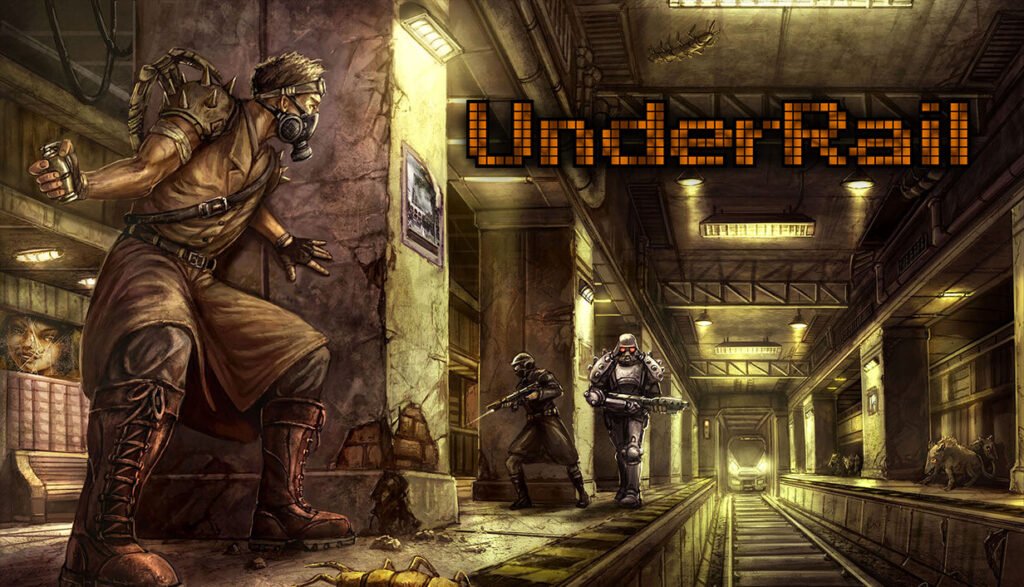

Release Date: December 18, 2015 Developer: Stygian Software
Get It On: GOG
If you’ve ever wanted a game that feels like it crawled straight out of the 90s isometric RPG golden age and then got turbocharged with modern depth, UnderRail is that game. Developed by the tiny but talented Stygian Software and fully released in December 2015 after a long early-access period, this turn-based isometric role-playing game drops you into a bleak underground world where the surface is long dead and humanity clings to survival in the tunnels and metro stations of the UnderRail. It’s dark, it’s punishing, it’s incredibly detailed, and once it clicks, it’s one of the most satisfying hardcore RPGs you can play.
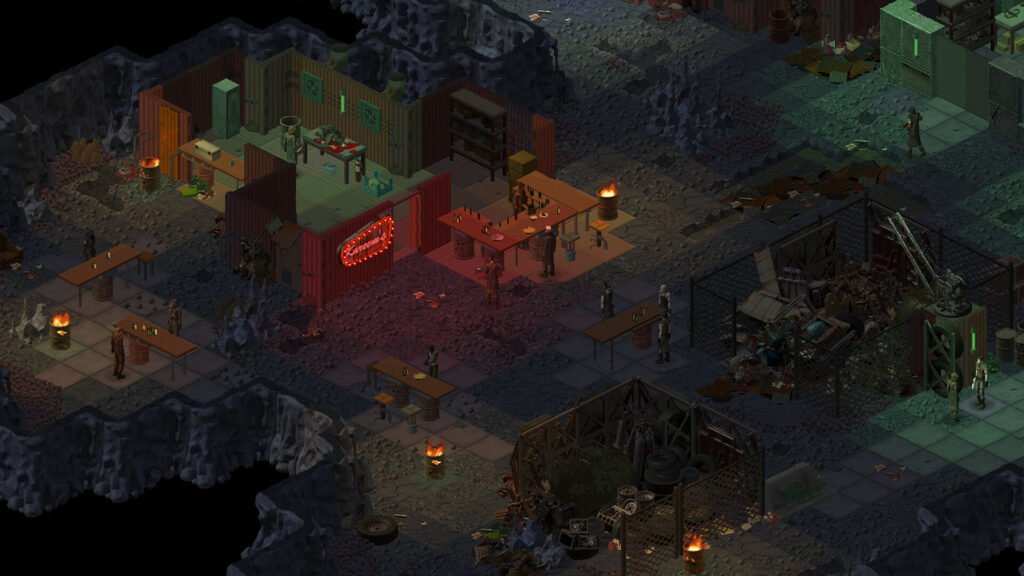
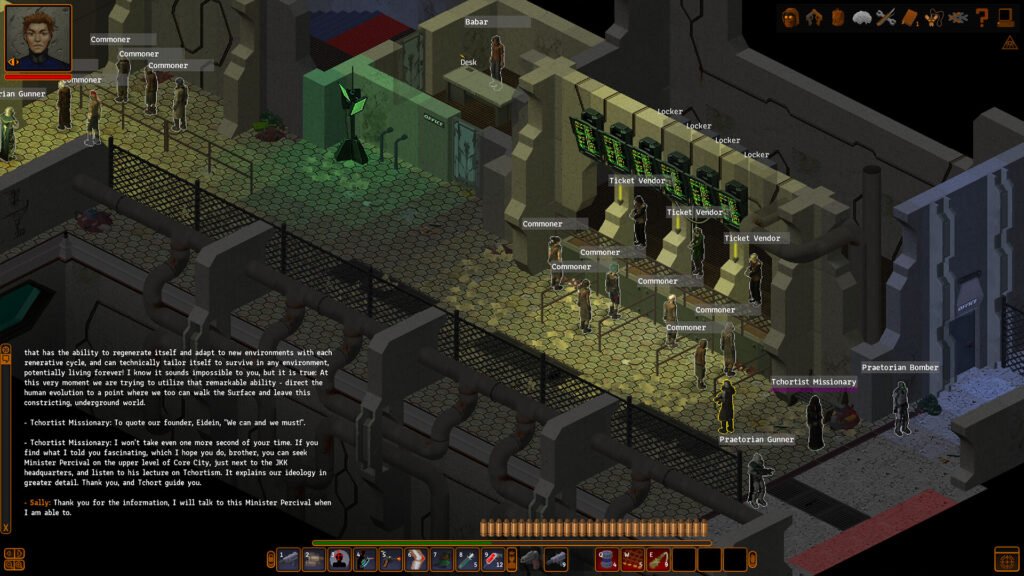
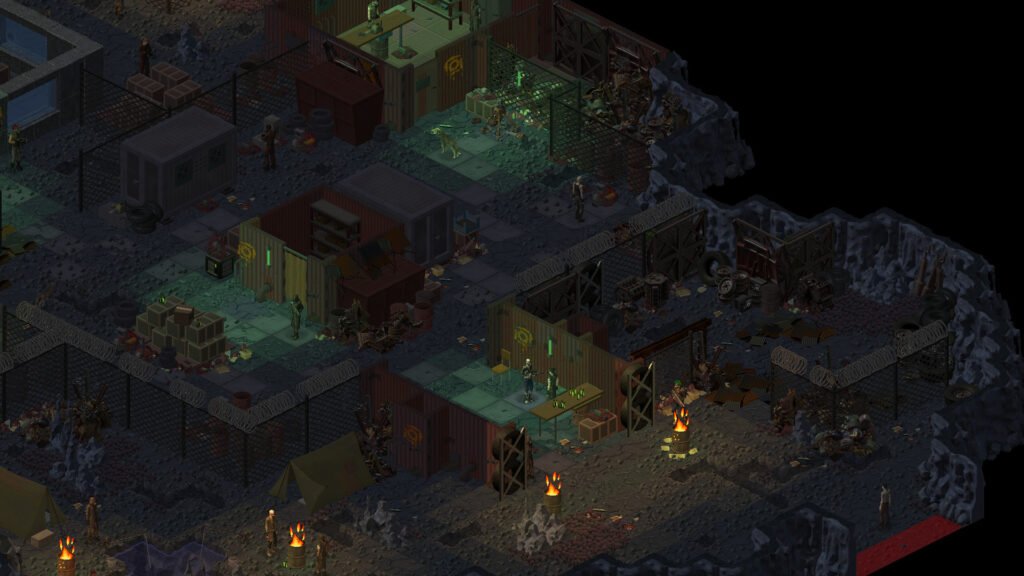
The premise is pure post-apocalyptic flavor. Life on Earth’s surface became impossible ages ago. What’s left of humanity lives in a sprawling network of stations, caves, and forgotten industrial complexes. You start as a new recruit at South Gate Station, one of the more organized outposts. From there the world opens up as you take on jobs, get tangled in faction politics, and slowly realize that something bigger and nastier is stirring in the dark. The writing is dry and functional rather than flowery, but the atmosphere is thick. Every location feels lived-in and dangerous. You’ll meet desperate scavengers, ideologues, mutants, and people who have adapted to the tunnels in ways that are equal parts clever and unsettling.
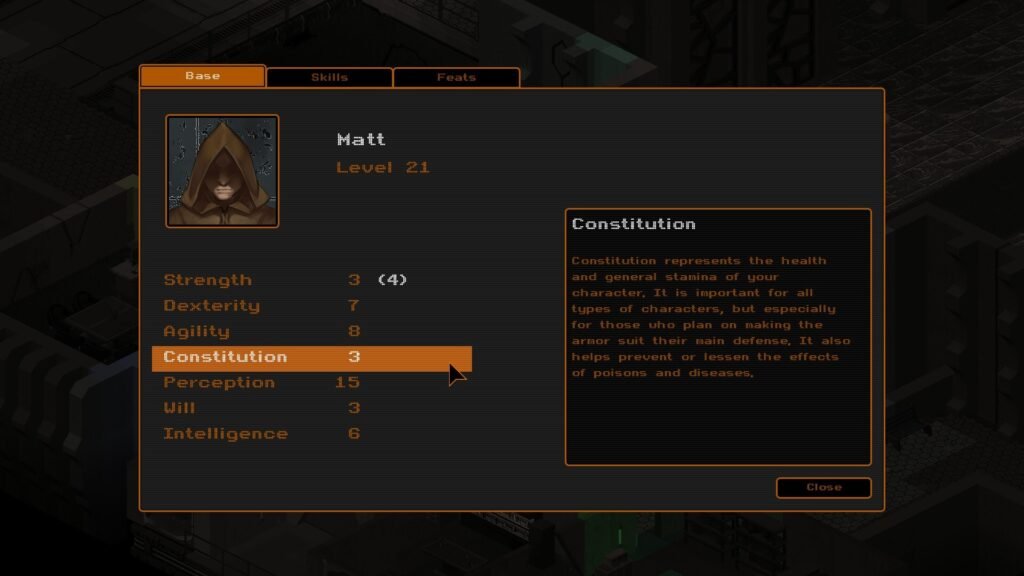
What really sets UnderRail apart is how much freedom it gives you in how you approach the world. There is no rigid class system. Instead you get a set of base abilities that feel very much inspired by the classic SPECIAL system from the original Fallouts. Strength, Dexterity, Agility, Constitution, Perception, Will, and Intelligence all matter a lot. On top of those you invest in a wide range of skills: Guns, Melee, Throwing, Stealth, Hacking, Lockpicking, Mechanics, Electronics, Biology, Chemistry, and the three schools of psionics (Thought Control, Psychokinesis, and Metathermics). Then there are feats that can completely change how a build plays. You can go pure stealth and never fire a shot. You can become a walking arsenal of crafted explosives and traps. You can focus entirely on psionics and melt minds or throw people around with telekinesis. Or you can mix and match until you create something wonderfully broken (or wonderfully doomed if you mess up the early levels).
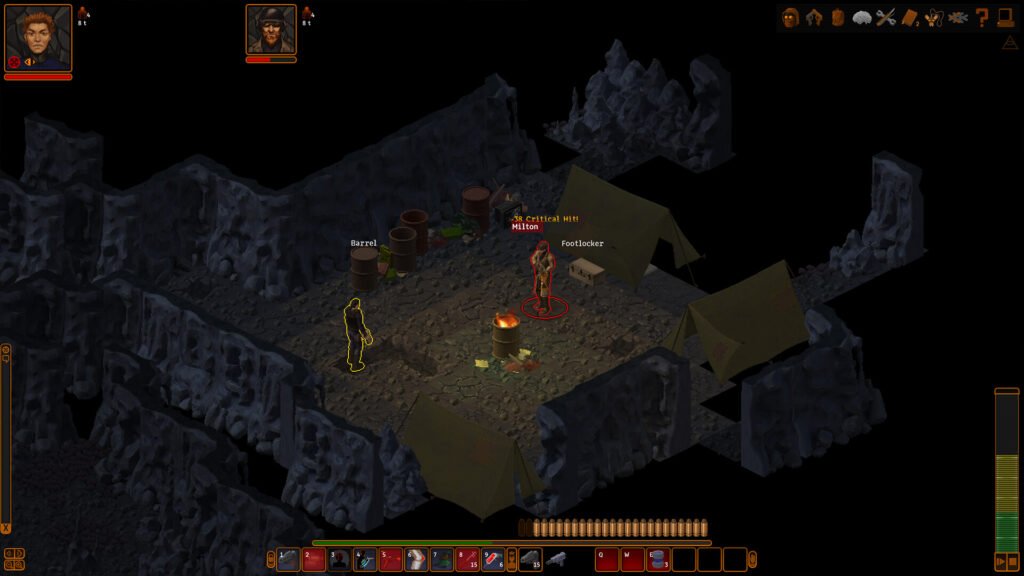
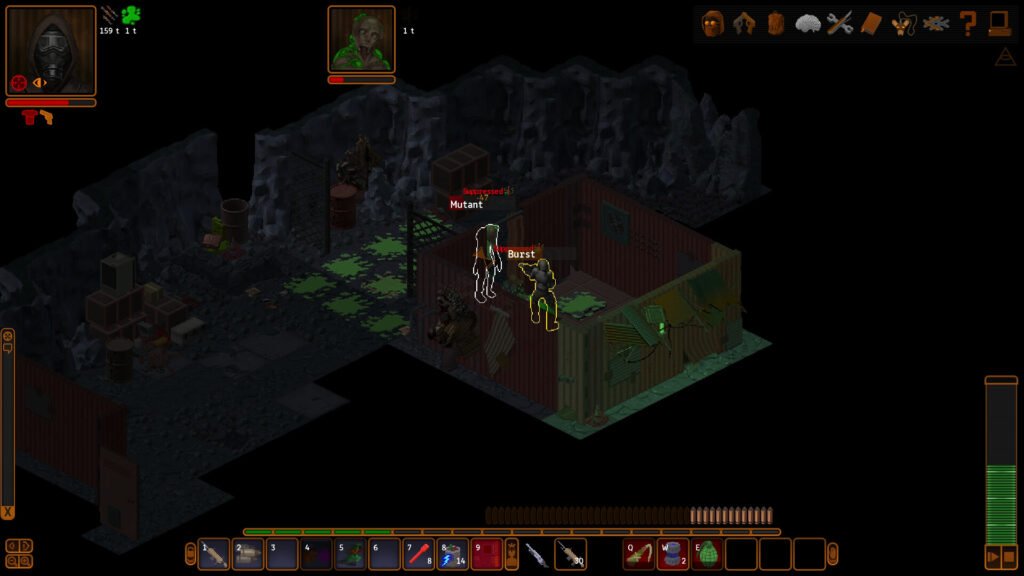
Combat is the heart of the experience and it is properly old-school. Everything is turn-based with action points. Positioning, cover, weapon range, accuracy, and status effects all matter. Enemies are not scaled to your level in the modern sense; if you wander into the wrong area too early you will get destroyed. That tension is part of the charm. When a fight goes well because you prepared properly, used the environment, and exploited an enemy’s weaknesses, it feels fantastic. When it goes poorly because you got greedy or under-prepared, the game is happy to remind you that the tunnels do not care about your feelings. There is a real sense of risk and reward that a lot of modern CRPGs have softened.
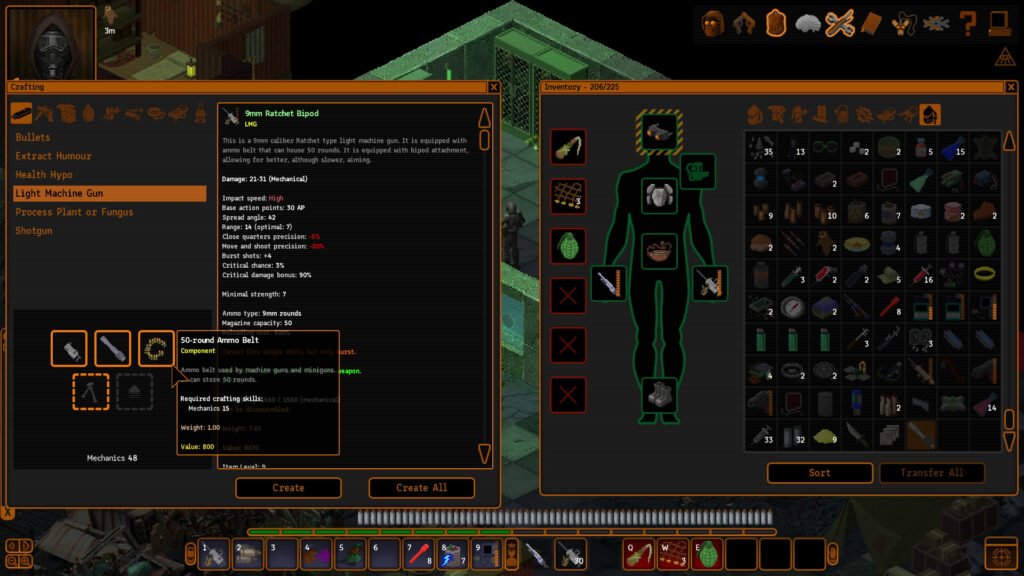
Exploration and crafting are just as deep. The world is dense with secrets, optional areas, and hidden routes. You’ll spend a lot of time scavenging components so you can craft better weapons, armor, medical items, and gadgets. The crafting system is one of the most robust around. Finding a rare blueprint and the right components can completely change your playstyle. Want a silenced pistol that hits like a truck? You can build it. Prefer a suit of armor that lets you shrug off energy weapons while still moving quietly? That’s possible too. The game rewards players who pay attention and experiment.
Faction politics add another layer. You’ll deal with groups that have competing visions for the future of the UnderRail. Some are more pragmatic, some are more fanatical, and some are just trying to survive. Your choices can open or close questlines, change how certain areas treat you, and even affect which companions or resources become available. It’s not a massive branching narrative in the style of a BioWare game, but the consequences feel personal and grounded in the setting.
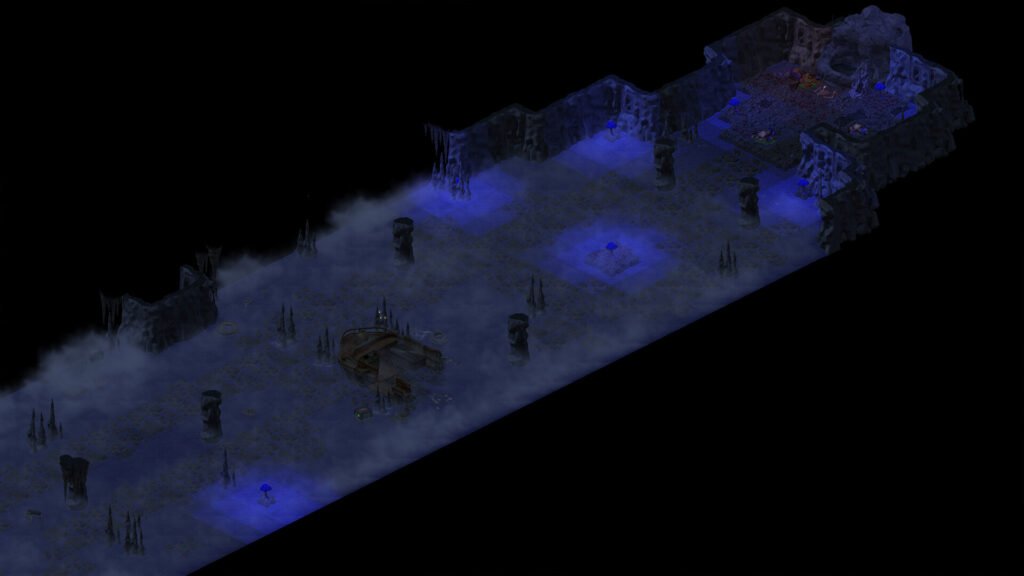
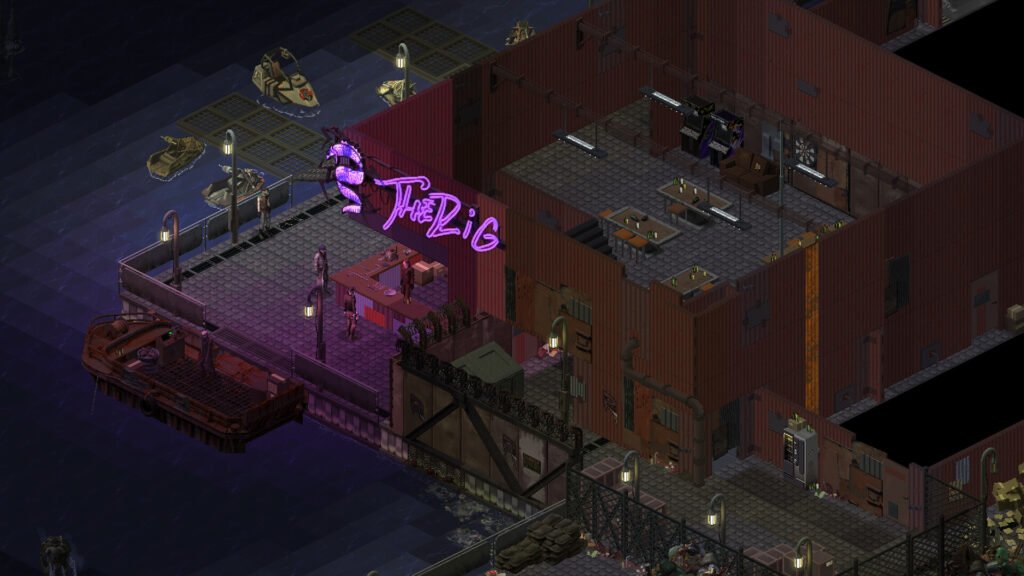
UnderRail: Expedition, released in 2019, adds an entire new region centered around the Black Sea, a massive underground body of water. Suddenly you can hop on jet skis (ranging from glorified junk to heavily armed death machines) and explore shores, islands, pirate outposts, and mysterious facilities. The expansion brings a full new storyline that becomes available in the mid-game and can be approached in multiple ways. There are nearly two hundred new areas, new creatures, new robots, new weapons, and new psionic abilities. The naval combat and exploration feel genuinely different from the tunnel crawling of the base game. Some players find the pacing a bit uneven or the difficulty spikes harsh, but almost everyone agrees that Expedition massively expands the sense of scale and gives the world a more adventurous, almost seafaring flavor in the middle of a post-apocalyptic metro system. It’s the kind of DLC that makes the base game feel incomplete once you’ve played it.
UnderRail: Heavy Duty, which arrived in late 2023, is smaller in scope but very focused. It introduces three new weapon types: light machine guns and miniguns under a brand-new Heavy Guns skill, plus grenade launchers that sit under the regular Guns skill. These weapons change the feel of combat for players who like to lay down serious sustained fire or clear rooms with explosive ordnance. Along with the new toys comes a high-level side mission designed to challenge even veterans. It’s shorter than Expedition but it gives power-fantasy players and theory-crafters a lot of new toys to play with, and it fits cleanly into the existing campaign.
Together the base game and its two DLCs form a complete package that can easily eat fifty, eighty, or well over a hundred hours depending on how thoroughly you explore and how many different builds you try. The difficulty curve is steep, the UI is functional rather than pretty, and the learning curve can be intimidating for newcomers. This is not a game that holds your hand. It expects you to read tooltips, experiment, and sometimes reload when things go sideways. That old-school attitude is exactly why a dedicated community still loves it more than a decade after its full release. Stygian Software has continued to support the game with updates, including a tenth-anniversary polish pass that improved visuals for unique weapons and added a little extra content.
Looking ahead, the same studio is working on UnderRail 2: Infusion, a proper sequel that will feature improved visuals, a refined combat system, and a new story set in a different part of the UnderRail. For now, though, the original remains the definitive experience. If you enjoy the original Fallouts, games like Age of Decadence, or just want a modern title that prioritizes systems depth and atmosphere over hand-holding and cinematic cutscenes, UnderRail is worth your time. Grab the base game, dive into the tunnels of South Gate Station, and prepare to get lost in one of the most immersive underground worlds ever made. Just remember to save often, craft carefully, and never trust a rathound.