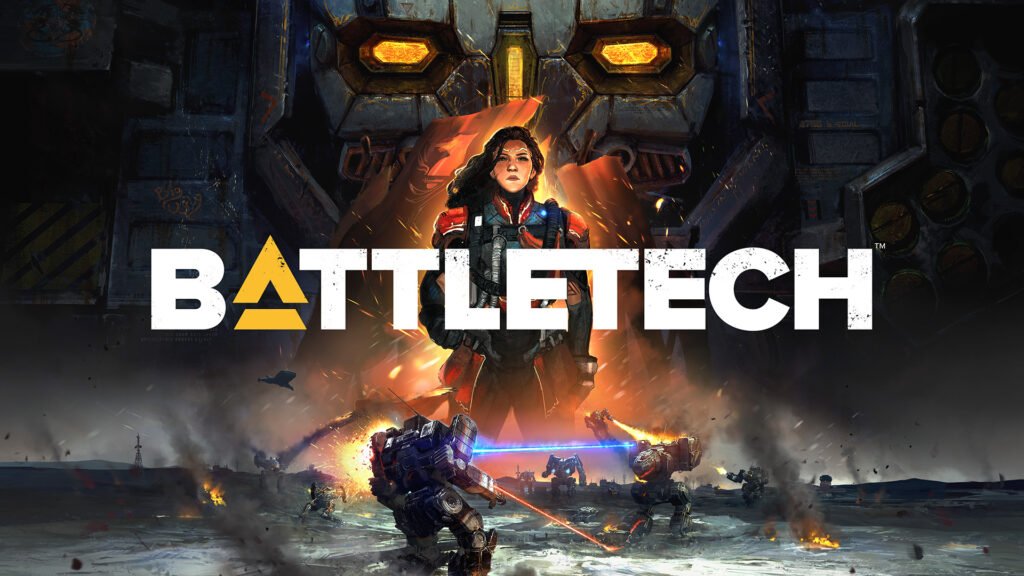

If you have ever looked at a skyscraper and thought to yourself, “I really wish I could attach a PPC to that and kick a tank,” then Harebrained Schemes has exactly what you need. Released back in 2018 after a massively successful Kickstarter campaign, BattleTech isn’t just another tactical game; it is a slow-burn love letter to a universe that has been crushing civilian infrastructure since the 1980s. When you boot this game up, you aren’t just playing a strategy title. You are stepping into a cockpit that smells of ozone, stale coffee, and the looming threat of bankruptcy.
What makes this specific adaptation so special is the pedigree behind it. You can’t talk about this game without mentioning Jordan Weisman. Not only did he co-found Harebrained Schemes, but he is the original creator of the BattleTech and MechWarrior universe. Having the literal father of the franchise at the helm meant that this game didn’t just try to mimic the tabletop experience—it captured the soul of the Inner Sphere. It understands that these machines aren’t just sleek sci-fi gadgets; they are ancient, temperamental Walking Tanks that are often held together by duct tape, prayer, and the sheer stubbornness of a mercenary crew.

The High Stakes of Mercenary Life
Most tactical games focus entirely on the battlefield, but BattleTech knows that the real drama often happens in the accounting office. You play as the commander of a disgraced mercenary company, and your primary antagonist isn’t just an evil empire—it is your Monthly Operating Expenses. Every time you fire a laser or take a missile to the face, it costs you C-Bills. If your favorite pilot spends six weeks in the medbay because a stray AC/10 round hit their cockpit, you still have to pay their salary.
This financial pressure creates a wonderful sense of Persistence. You aren’t just moving disposable units across a grid; you are managing assets. When you successfully complete a mission, the choice between taking Currency or Salvage is agonizing. Do you take the cold hard cash to keep the lights on, or do you take those three pieces of an Orion chassis so you can finally field a heavy hitter? This loop of “one more mission for one more part” is incredibly addictive. The game eventually gives you the Argo, a massive ancient dropship that serves as your mobile base of operations. Upgrading the Argo feels meaningful, whether you’re adding a gym to improve pilot morale or expanding the Mech Bay so you can tinker with more toys.

The Crunchy Heart of Tactical Combat
Once you actually drop onto a planet, the game shifts from a management sim into a deep, “crunchy” Turn-Based Strategy masterpiece. Unlike the high-speed action of the MechWarrior series, this game forces you to consider every single movement. Position is everything. If you show your “paper doll” (the armor readout) to the enemy and your left side is already stripped of protection, you better believe the AI is going to focus fire on that weakness.
The most iconic mechanic here is Heat Management. In most games, you can fire your weapons until the cows come home. In BattleTech, firing every weapon at once—known as an Alpha Strike—might core out your enemy, but it might also cause your own Mech to shutdown or literally explode from the internal temperature. You are constantly balancing the need for damage against the environmental factors of the map. Fighting on a Lunar surface? You’ll overheat if you even think about using a Medium Laser. Fighting in a polar region? Now you can let the PPCs sing.
Then there is the Stability system. Every hit from a ballistic weapon or a missile rack knocks your Mech off-balance. If that yellow bar fills up, your multi-million dollar machine falls over like a clumsy toddler. This is a death sentence. A downed Mech is a sitting duck for Called Shots, allowing your enemies to pick apart your components with surgical precision. There is nothing more satisfying than using a Centurion to knock a heavier Mech into the dirt and then having your entire squad aim for its head.

A Story of Revenge and Restoration
While the mercenary sandbox is the main draw for many, the Single-Player Campaign is surprisingly robust. It centers on Lady Kamea Arano, a dispossessed ruler looking to reclaim her throne from her treacherous uncle. It is a classic tale of political intrigue and “Game of Thrones” style betrayal, set against the backdrop of the Aurigan Reach. The writing is sharp, and the voice acting brings a sense of gravity to the stakes.
Even if you aren’t a lore nut, the story serves as a fantastic framework to introduce you to the different Factions of the Inner Sphere. You’ll find yourself working for the Great Houses, taking dirty jobs from the Canopians, or dodging the shadowy influence of ComStar. The game does an excellent job of making the universe feel vast and uncaring. You are a small fish in a very large, very dangerous pond, and your only loyalty is to your crew and your paycheck.

The Price of Professionalism
Of course, no game is without its quirks. BattleTech is notorious for its Loading Times. Even on modern hardware, getting from the Argo to the battlefield can sometimes take long enough for you to go make a sandwich. The pacing is also deliberately slow. This is not a fast-paced game. The animations of Mechs walking across the terrain have a lot of Kinetic Weight, which is cool for the first ten hours, but by hour fifty, you might find yourself wishing they’d hurry it up.
There is also a significant Learning Curve. The game doesn’t hold your hand when it comes to the nuances of Evasion Pips or the difference between Internal Structure and Armor. You will lose pilots. You will lose Mechs. You will probably restart your first campaign because you ran out of money three months in. But that’s part of the charm. It’s a game that respects your intelligence and expects you to learn the systems if you want to survive the Periphery.
Breathing New Life via the Modding Frontier
While the base game is a masterpiece, the community has taken Jordan Weisman’s vision and expanded it into something truly staggering through the Modding Community. If you find that you have exhausted the vanilla campaign and the three official DLCs, the world of mods offers what is essentially a “BattleTech 2.0.” These aren’t just minor tweaks; they are total conversions that change how the game fundamentally plays.
For those who want a natural extension of the game, BattleTech Extended (BEX) is the gold standard. It fills out the map to include the entire Inner Sphere and adds a massive timeline feature. You can start your career in the year 3025 and play through decades of history, watching as new technology and the terrifying Clan Invasion slowly emerge. It stays true to the Harebrained Schemes gameplay loop while giving you hundreds of more Mechs to salvage.
If you are a glutton for punishment and want maximum complexity, RogueTech is the mod for you. It turns the game into a hyper-detailed simulation where you can customize every single actuator, engine type, and sensor array on your Mech. It is notoriously difficult and changes the combat math to be much closer to the tabletop rules, including a completely revamped Galaxy Map where players can fight for territory in an online-synced persistent war.
Then there is BattleTech Advanced 3062 (BTA), which sits comfortably in the middle. It introduces vehicles, power armor, and infantry into the tactical layer, allowing for much larger battles. The sheer variety of equipment in BTA is mind-boggling, and it allows for creative builds that the original developers never even dreamed of. These mods have kept the game alive and thriving long after official development ended, proving that the love for these Metal Giants is stronger than ever.

Final Verdict on the Metal Giants
BattleTech is a rare breed of game that manages to be both a hardcore simulation and a compelling RPG. Thanks to the vision of Jordan Weisman and the tactical expertise of the team at Harebrained Schemes, it remains the definitive way to experience this universe in a strategy format. It captures the tension of being a commander where every decision has a price tag attached.
Whether you have customized a Grasshopper to be a laser-vomiting nightmare or just trying to survive a run-in with a Demolisher tank, the game constantly delivers “water cooler moments.” It is a punishing, rewarding, and deeply atmospheric journey through a future that is as grimy as it is grand. If you have the patience for slow-burn tactics and the heart to lead a band of misfits through the stars, you owe it to yourself to hire on with this crew. Just remember: watch your heat, keep your side-torso protected, and never, ever underestimate a Hunchback with an AC/20.