
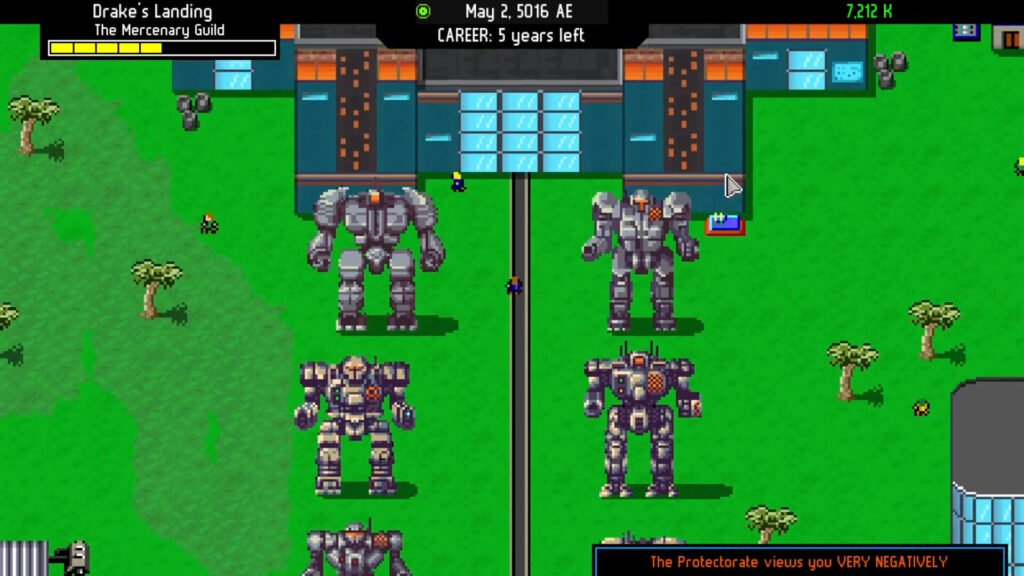

If you’ve ever sat in front of a modern AAA game with its photorealistic ray-tracing and thought to yourself, “This is cool, but I really miss the blocky, 8-bit charm of my Apple II,” then MetalMercs by RetroAction Games is basically a love letter written specifically for you. It is a retro-inspired Mercenary Simulator that takes the high-concept fantasy of piloting a walking tank and strips away the over-complicated 3D bloat. Instead, it returns to the high-stakes, tactical roots of the late ’80s and early ’90s, where your imagination did half the work and the difficulty curve was steep enough to break your shins.
A Spiritual Successor to the Classics
While the 2018 BattleTech game was a modern tactical masterpiece, MetalMercs feels like it was unearthed from a time capsule. It is a spiritual successor to the absolute legends of the genre—think BattleTech: The Crescent Hawk’s Inception or Revenge. The game is developed by Gaming Jay under the RetroAction Games banner, and it is clear from the first menu screen that this is a project born of pure passion.
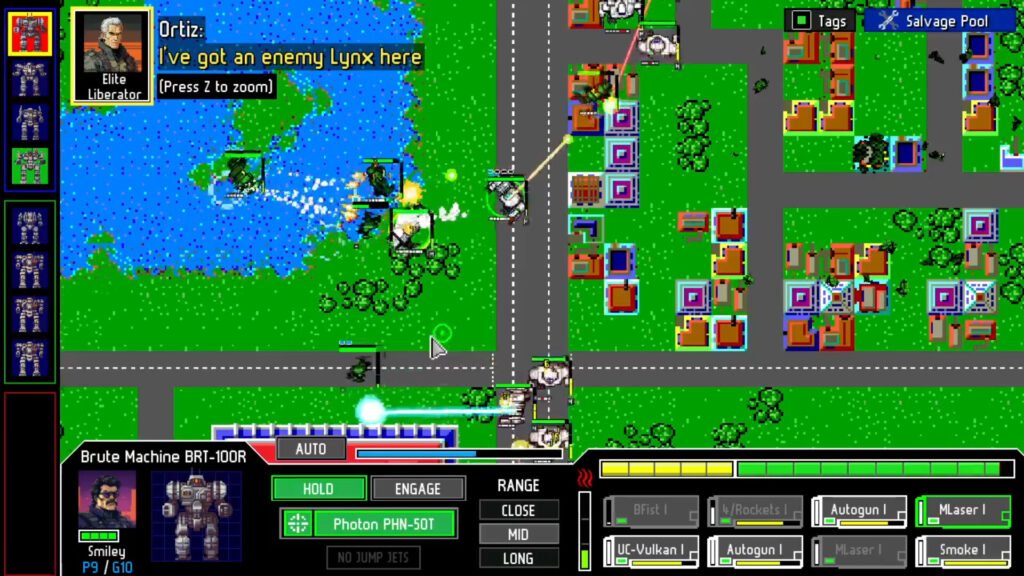
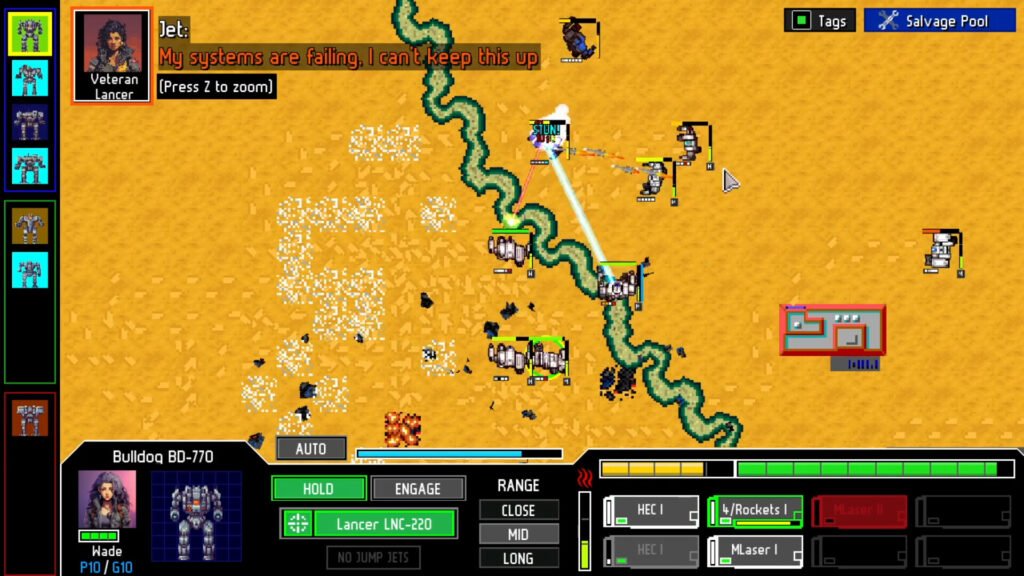
The aesthetic is pure nostalgia. We are talking about top-down Pixel Art, a chunky UI that looks like it belongs on a CRT monitor, and a soundscape of beeps and boops that trigger deep-seated memories of gaming in a basement in 1989. But don’t let the “simple” graphics fool you into thinking this is a casual mobile game. Underneath that lo-fi hood, this thing has more moving parts and tactical “crunch” than most big-budget shooters could ever dream of.
The Brutal Loop of Mercenary Life
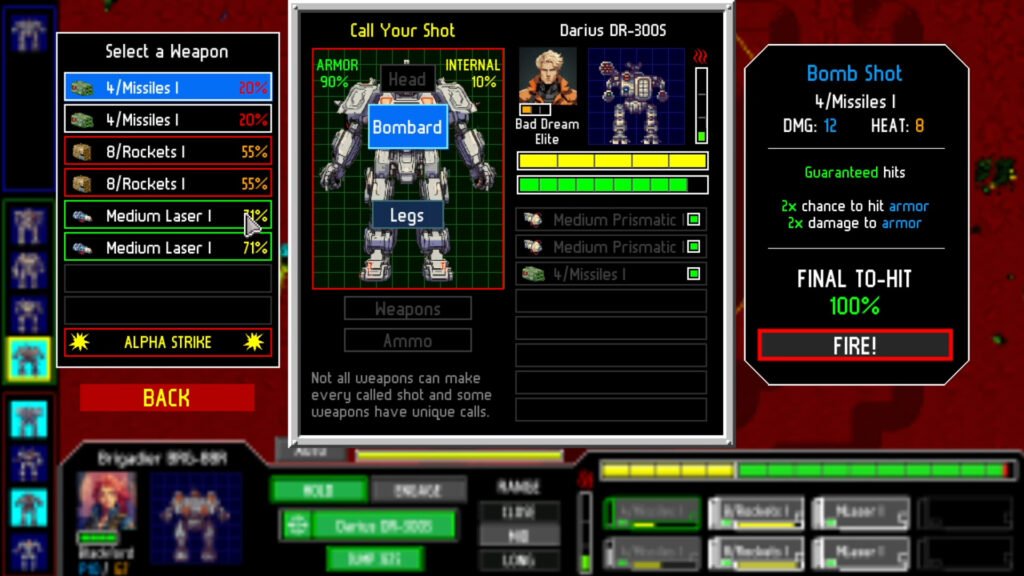
The core gameplay of MetalMercs operates on a simple but utterly brutal mantra: Destroy, Salvage, Repair, and Profit. Unlike the turn-based grid system found in many modern tactical games, this title leans into a Real-Time with Pause style of combat. This choice adds a layer of frantic energy to the battlefield. You aren’t just clicking a hex and waiting for an animation; you are managing Heat Levels, checking your firing arcs, and prioritizing targets on the fly.
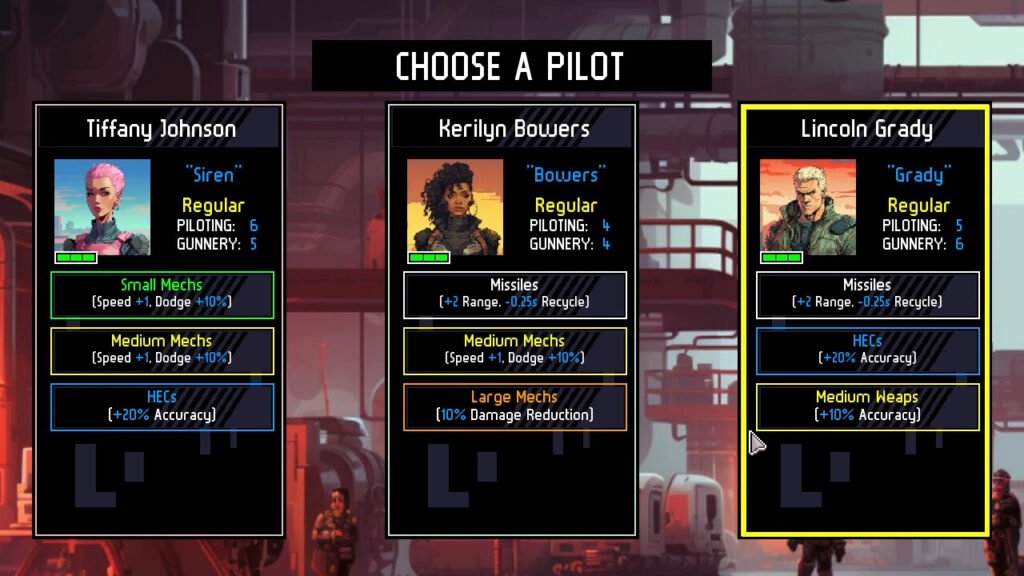
The management side of the game is just as demanding as the combat. You play as the leader of a fledgling mercenary company, and that means you are effectively an Interstellar Accountant who happens to own heavy weaponry. Between missions, you have to balance the books. You have to pay your pilots’ salaries, buy fuel, and decide if you want to spend your last few C-Bills on a shiny new Autocannon or on patching up the gaping hole in your Lead Mech’s center torso. This financial pressure makes every choice in the field feel heavy. Taking a risky shot that might overheat your engine isn’t just a tactical gamble; it’s a potential financial disaster that could leave your crew stranded.
Customization and Procedural Chaos
One of the most impressive feats of MetalMercs is its Procedural Mission Generation. Rather than following a strictly linear path that ends after twenty hours, the game is designed as an endless sandbox. You travel between various planets in a region known as The Core, picking up contracts that fit your current strength level. One day you might be defending a remote research outpost from raiders, and the next you might be conducting a high-stakes Assassination Run against a rival corporate executive.
The level of customization available for your machines is staggering. Even with its retro presentation, the game allows you to tinker with Hardpoints, engine types, and specialized internal components. You can build a “Glass Cannon” that moves like lightning but dies if someone sneezes on it, or a slow-moving mountain of armor designed to soak up damage while your allies flank the enemy. Your MechWarriors also grow over time, gaining perks and skills that turn them from rookie recruits into legendary aces—assuming you can keep them alive long enough to retire.

The Indie Frontier and Beyond
Because MetalMercs started its life with strong ties to the fan community, the game has a very “open” feel to it. The developer has been incredibly transparent throughout the process, and the game is built to be Mod-Friendly. Even though it has moved away from its original fan-project roots to become its own unique IP, that spirit of community-driven content remains. Players are already finding ways to tweak the game files, adjust the difficulty, and imagine new units to add to the fray.
The game is currently in a state where it feels both complete and infinitely expandable. It captures that specific “just one more mission” feeling that defines the best Strategy RPGs. It doesn’t hold your hand, it doesn’t apologize for its difficulty, and it rewards players who take the time to learn the nuances of its systems. If you want a game that respects the history of the genre while providing a fresh, addictive sandbox to play in, this is the drop pod you want to be in.