
Release Date: September 30, 2014 Developer: Monolith Productions
Get It On: GOG
A Surprise Hit from the Black Gate
Back in 2014, the gaming landscape was in a bit of a weird transitional phase. We were just getting used to the new console generation, and licensed games were still carrying a bit of a “buyer beware” stigma. Then along came Middle-earth: Shadow of Mordor, a game that many people initially dismissed as a simple mash-up of Assassin’s Creed parkour and Batman: Arkham combat. But as soon as players actually got their hands on it, everyone realized that Monolith Productions had captured lightning in a bottle. It wasn’t just a generic stroll through Tolkien’s backyard; it was a gritty, innovative, and surprisingly personal take on the Legendarium that introduced a mechanic so good it’s honestly a crime we haven’t seen it in every single open-world game since.
Two Souls, One Grudge
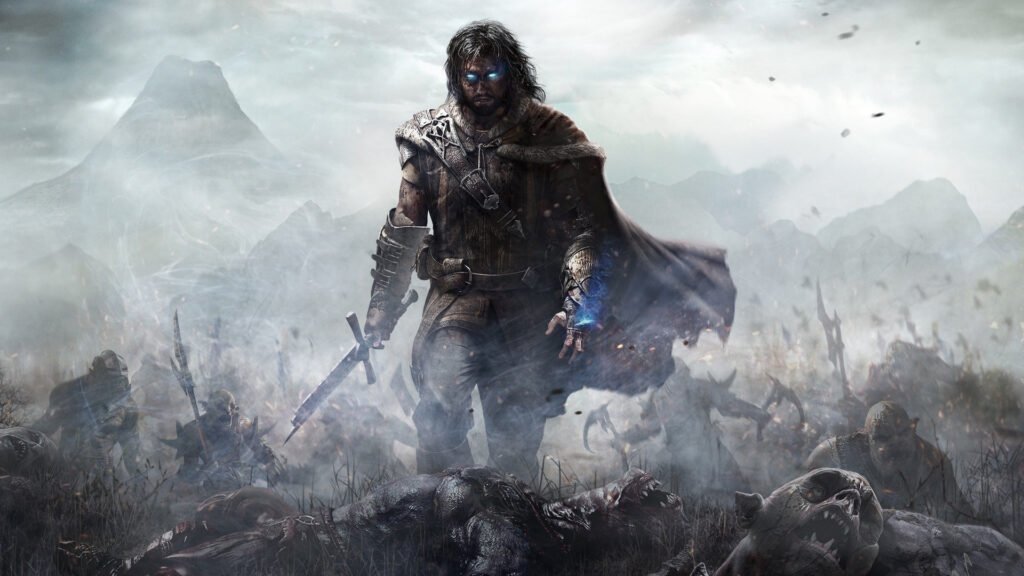
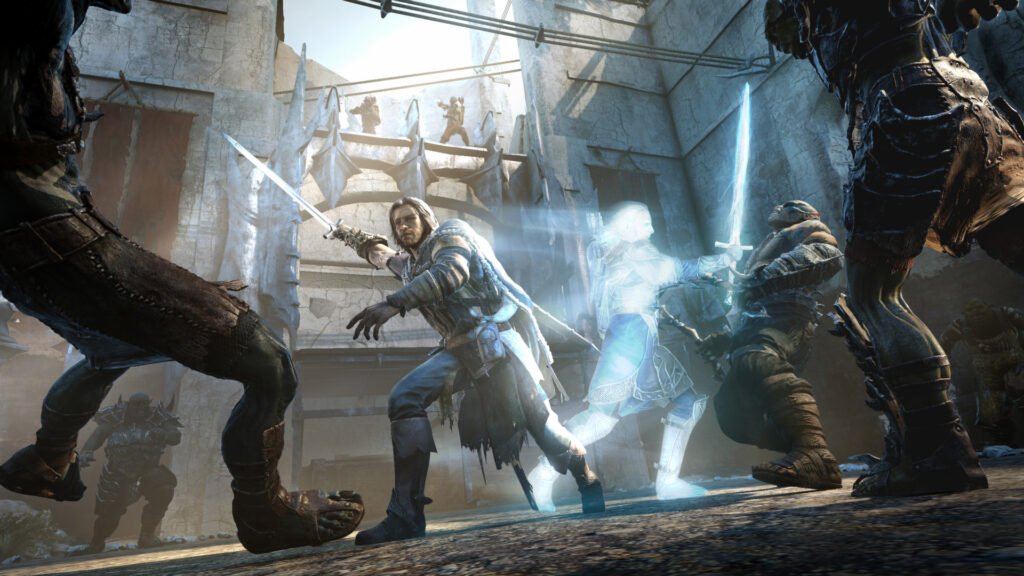
The story kicks off with a heavy dose of tragedy. We follow Talion, a Captain of the Rangers of Gondor stationed at the Black Gate. Things go south very quickly when the forces of Sauron return, resulting in the brutal death of Talion and his family. However, instead of passing on to whatever afterlife awaits the Men of Middle-earth, Talion finds himself inhabited by a mysterious Wraith. This isn’t just any ghost; it’s eventually revealed to be Celebrimbor, the legendary Elven smith who actually forged the Rings of Power. This “two-minds-one-body” dynamic is the engine that drives the entire narrative. They are bound together by a shared desire for revenge against the Black Hand of Sauron.
The writing takes some pretty bold liberties with the established Tolkien lore, which might make some die-hard Silmarillion readers twitch, but for the sake of a video game, it works perfectly. You aren’t playing as a heroic member of the Fellowship on a quest to save the world. You’re playing as a Gravewalker, a vengeful spirit haunting the dark corners of Mordor, systematically dismantling Sauron’s army from the inside out. It’s dark, it’s violent, and it feels much more grounded and “metal” than your typical fantasy adventure.
The Magic of the Nemesis System
If we’re talking about why this game is a masterpiece, we have to talk about the Nemesis System. This is the absolute crown jewel of Monolith’s design. In most games, enemies are just nameless fodder meant to be mowed down. In Shadow of Mordor, the Uruks have names, personalities, strengths, and most importantly, memories. If a random grunt manages to land a lucky killing blow on you, he doesn’t just disappear. He gets promoted. He gains a title like “The Man-Hunter” or “The Bone-Licker,” gets a power boost, and remembers exactly how he gutted you the next time you cross paths.
This creates a dynamic hierarchy within the Orc army that is unique to every single player’s playthrough. You might develop a blood feud with a specific Orc captain who has survived three different executions and now sports a metal plate on his head because you tried to burn him alive. They taunt you about your past failures, and they react to your playstyle. If you keep using stealth to pick off their guards, they might become “Fearful of Caragors” or “Invulnerable to Stealth,” forcing you to adapt. It turns a standard open world into a playground of procedural storytelling where the most interesting narratives aren’t the ones the writers wrote, but the ones you created yourself by failing to kill a guy named Ratbag.
Dancing Through the Fray
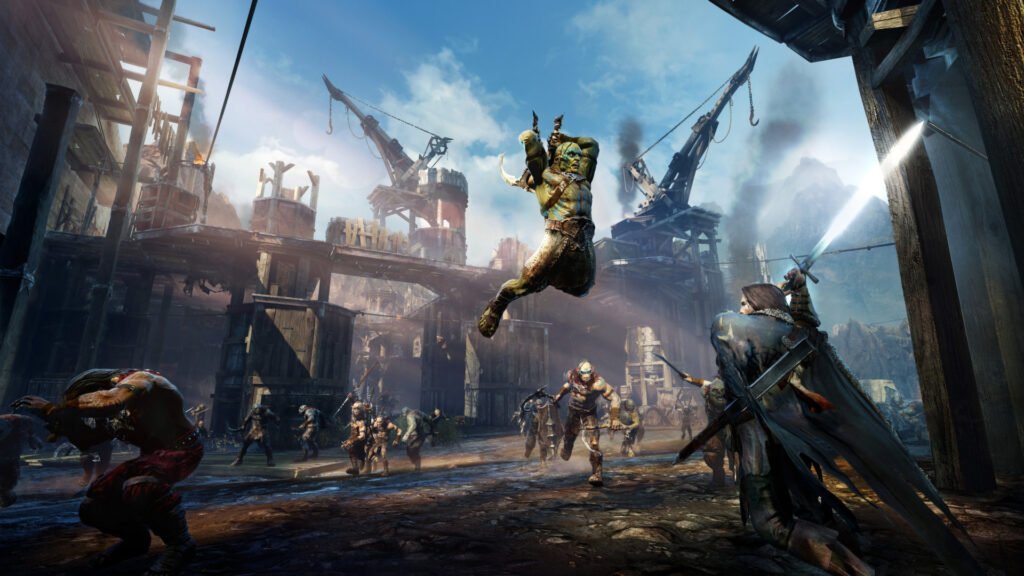
The gameplay loop is incredibly satisfying because it borrows the “freeflow” combat style perfected by the Arkham series and cranks the brutality up to eleven. As Talion, you are a whirlwind of steel and spectral energy. You can seamlessly transition from decapitating an Uruk with your sword, Acharn, to slowing down time with your bow and pinning another Orc’s foot to the ground with an arrow. Because you have the powers of a Wraith, you can Shadow Strike across the battlefield, teleporting instantly to an enemy for a lethal strike.
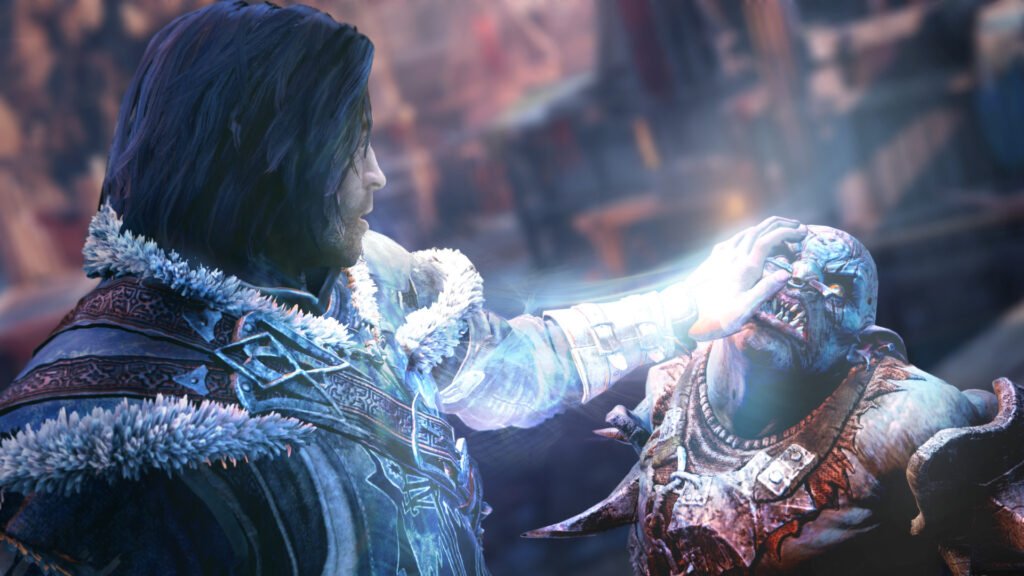
As you progress and earn Power and Ability Points, you become an absolute god on the battlefield. You eventually unlock the ability to Brand or Drain your enemies, which is where the game really opens up. Instead of just killing Captains, you can dominate their minds and turn them into your own personal spies. You can command your branded Orcs to infiltrate a higher-ranking War Chief’s inner circle and betray them during a fight. There is a genuine sense of being a guerrilla warfare specialist, orchestrating a civil war among the Uruks while you watch from the shadows.
A Gritty Vision of Mordor
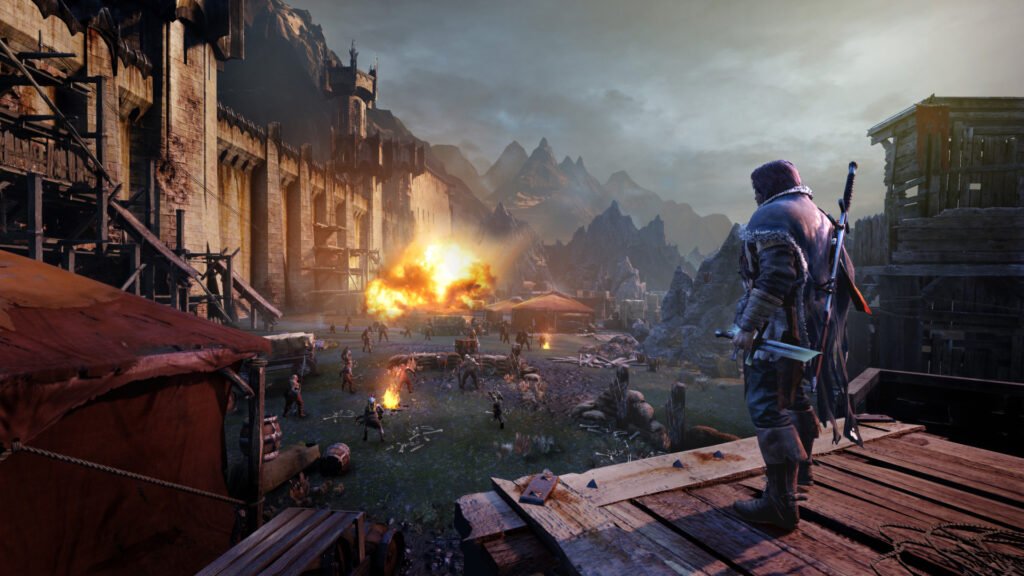
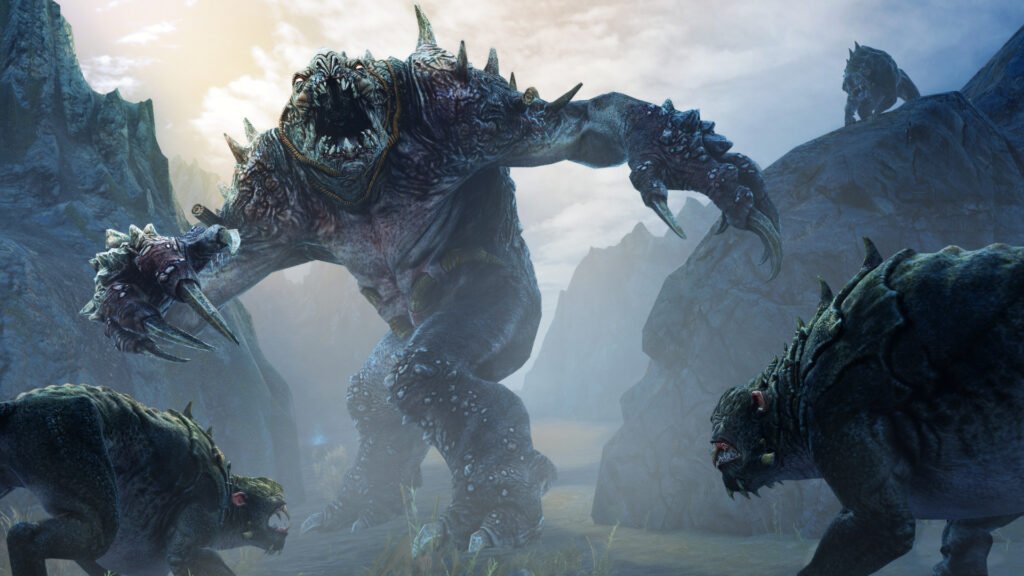
While some might complain that the environments are mostly “brown and grey,” Monolith did an excellent job of making Mordor feel like a living, breathing (and rotting) place. This isn’t the barren wasteland we see at the end of The Return of the King. This is a land being actively colonized and industrialized by Sauron’s forces. You’ll explore the jagged cliffs of Udûn and the lush, surprisingly green sea of Nurn. The atmosphere is thick with the sounds of Orc chants, the growls of wild Caragors, and the looming presence of the dark tower of Barad-dûr in the distance.
The sound design and voice acting also deserve a massive shout-out. Troy Baker provides a weary, determined performance as Talion, while Alastair Duncan brings a cold, regal intensity to Celebrimbor. The Uruks themselves are the stars of the show, though, with hundreds of lines of unique dialogue that range from hilarious to genuinely intimidating. They feel like a society of thugs rather than just mindless monsters, which makes manipulating them all the more fun.
Why You Should Still Play It Today
Despite being over a decade old, Middle-earth: Shadow of Mordor holds up remarkably well. The visuals are still sharp, the combat is still some of the best in the genre, and the Nemesis System remains a gold standard that few games have even attempted to replicate. It captures the feeling of being an overpowered superhero in a world that hates you, providing a power trip that is balanced by the fact that your enemies are constantly growing and evolving alongside you. The game has since received a sequel, titled Middle-earth: Shadow of War, which expands and refines many of the features found in this game and adds a ton of new stuff, that make it an even better game in many regards.
Whether you are a massive fan of the Lord of the Rings or just someone who enjoys a tight, well-crafted action-adventure game, this is a must-play. It’s a rare example of a licensed property that respects the source material enough to build something entirely new and exciting within it. You’ll come for the Wraith powers and the fluid combat, but you’ll stay for the personal vendettas against Orcs who just won’t stay dead. It is a brilliant, bloody, and endlessly entertaining journey into the heart of darkness.