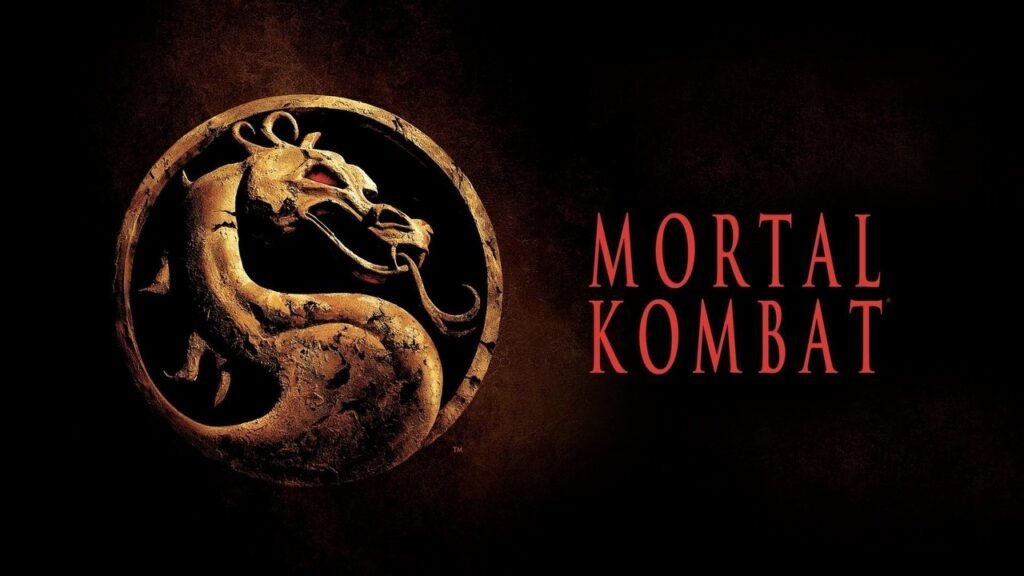

Paul W.S. Anderson’s Mortal Kombat, released in the summer of 1995, was the thunderous realization of what a video game movie should be. For decades, the “video game movie curse” has haunted Hollywood, with most adaptations falling into the trap of being either too embarrassed by their source material or too incompetent to translate it. Yet, thirty years later, Mortal Kombat remains the gold standard—a film that understood exactly what its audience wanted: spectacular fights, iconic characters, and a theme song that could power a small city.
The Plot: A Tournament of Realms
The premise is deceptively simple, mirroring the 1992 arcade phenomenon. Every generation, a tournament known as Mortal Kombat is held between the champions of Earthrealm and the dark forces of Outworld. If Outworld wins ten consecutive tournaments, the Emperor Shao Kahn will be allowed to invade and enslave Earth.
We follow three primary heroes: Liu Kang (Robin Shou), a Shaolin monk seeking revenge for his brother; Sonya Blade (Bridgette Wilson), a Special Forces agent hunting the international criminal Kano; and Johnny Cage (Linden Ashby), a Hollywood action star desperate to prove he isn’t a “fake.” Under the guidance of the thunder god Raiden (played with a delightful, dry wit by Christopher Lambert), they travel to a mysterious island to face off against the sorcerer Shang Tsung (Cary-Hiroyuki Tagawa) and a gallery of supernatural killers.
What sets Mortal Kombat apart from disastrous peers like Street Fighter (1994) is its commitment to the bit. The film doesn’t apologize for its magical realism or its over-the-top lore.
- World Building: Shot on location in Thailand and on massive, practical sets, the movie feels tangible. The derelict ships, the torch-lit temples, and the eerie “Living Forest” provide a sense of scale that CGI simply couldn’t replicate at the time.
- The Casting: While not all of the actors look exactly like their 16-bit counterparts, they inhabit the spirit of the characters. Linden Ashby’s Johnny Cage provides much-needed levity, while Robin Shou brings genuine martial arts pedigree to Liu Kang. However, the standout is Cary-Hiroyuki Tagawa. His portrayal of Shang Tsung is so definitive that the game franchise eventually brought him back to play the character in Mortal Kombat 11. When he snarls, “Your soul is mine!” it isn’t just a catchphrase; it’s a cinematic moment.
- The Music: You cannot discuss this movie without mentioning “Techno Syndrome” by The Immortals. The pulsating, industrial-techno beat—punctuated by a man screaming “MORTAL KOMBAT!”—is perhaps the most recognizable theme in gaming history. It set the tempo for the entire film, turning every fight scene into a high-energy music video.
Challenges and Triumphs
Was it perfect? By modern standards, the CGI for the four-armed Shokan prince, Goro, and the digital effects for Scorpion’s spear are showing their age. Yet, the film’s reliance on practical puppetry for Goro (a million-dollar animatronic) gives the creature a physical presence that modern pixels often lack.
The film was also famously rated PG-13, which initially worried fans of the ultra-violent game. However, Anderson managed to capture the “Fatality” energy through clever choreography and environmental finishers (like Johnny Cage’s fight with Scorpion in the fire-breathing woods) without descending into the kind of gore that would have limited its box-office reach.
Legacy: A Flawless Victory?
Mortal Kombat (1995) succeeded because it respected the fans. It didn’t try to “fix” the game’s story; it just tried to give it a cinematic heartbeat. For a kid in the mid-90s, seeing Scorpion and Sub-Zero face off on the big screen felt like a historical event.