
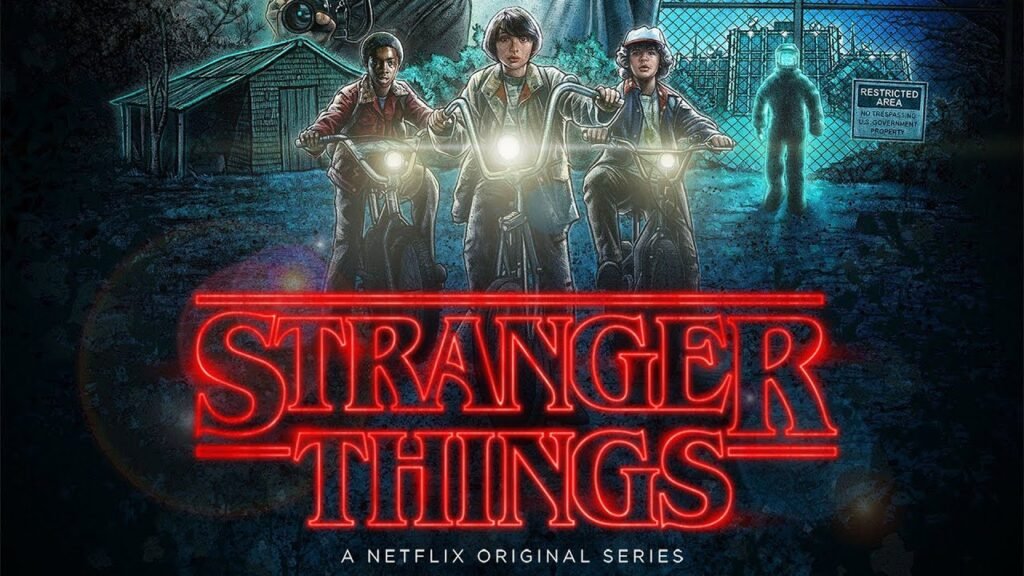

Nearly a decade after it first redefined the landscape of streaming television, Stranger Things has finally reached its end. Released in high-stakes volumes throughout late 2025, Season 5 is an ambitious, messy, and deeply emotional conclusion to the Hawkins saga. While it struggles at times under the weight of its massive cast and a pivot toward dense supernatural exposition, it ultimately delivers a finale that prioritizes the heart of its characters over the spectacle of its monsters.
Season 5: Review
The final season picks up eighteen months after the “earthquake” that tore Hawkins apart. The town is now a militarized quarantine zone, the Upside Down is bleeding into the Rightside Up, and our heroes are fractured. The Duffer Brothers clearly aimed for a “return to roots” feel, specifically echoing Season 1’s mystery and Season 2’s focus on Will Byers.
The season’s greatest strength is its production value. With a scale that dwarfs previous years, the visual effects of the “Abyss” and the creature designs are breathtaking. However, the season faces a “Game of Thrones” dilemma: with so many characters to service, some fan favorites—like Robin and Jonathan—occasionally feel sidelined until the final hours. Despite some pacing issues in the middle episodes, the season succeeds because it never forgets that the show began with a group of friends in a basement. It is a love letter to the power of shared trauma and the resilience of youth.
Episode 1: “The Crawl”
The premiere serves as a somber re-introduction to a broken Hawkins. We find Eleven and Hopper living in a high-tech bunker, while the “Party” operates as a guerilla resistance. The episode excels at showing the toll of the war—Dustin is still reeling from Eddie’s death, and the town’s atmosphere is claustrophobic. It’s a slow burn that culminates in a chilling realization: Vecna hasn’t just been healing; he’s been recruiting a “hive mind” of the town’s displaced citizens.
Episode 2: “The Vanishing of Holly Wheeler”
In a direct homage to the pilot, Mike’s younger sister Holly goes missing. This narrative choice raises the stakes for the older characters and forces the Wheeler family into the spotlight. The search for Holly reveals that Vecna is targeting the younger siblings of the original group, intending to use their innocence to tether the two worlds together. The horror elements here are top-tier, reminiscent of classic 80s slasher films.
Episode 3: “The Turnbow Trap”
This episode leans into the show’s comedic roots before taking a dark turn. The gang attempts to use a new character as bait to trap a Demogorgon in the ruins of the Turnbow Landfill. It introduces a new threat: the military’s “sonic blast” weapons designed to neutralize Eleven. The cliffhanger—Holly finding a conscious but trapped Max in a dreamscape—provided the season’s first true “water cooler” moment.
Episode 4: “Sorcerer”
The mid-season peak for Volume 1. This episode reveals that Kali (Eight) has been held captive in a clandestine military lab. The highlight, however, is the shocking revelation that Will Byers has developed supernatural abilities of his own, rooted in his long-term connection to the Mind Flayer. It ends with a brutal military ambush that sets the stage for the final conflict, cementing Will as the “Sorcerer” of the party.
Episode 5: “Shock Jock”
Volume 2 begins with a slight dip in momentum but a boost in style. The group utilizes the local radio station, WSQK, to broadcast coded messages across Hawkins, leaning into the “80s pirate radio” aesthetic. while the “Shock Jock” sequence is fun, the episode spends a bit too much time on exposition regarding the nature of the “Abyss,” a dimension even deeper than the Upside Down that threatens to consume the world.
Episode 6: “Escape From Camazotz”
Named after the Mayan bat god, this episode is a psychological horror masterclass. We follow Max and Holly as they navigate “Camazotz”—a labyrinth of Henry Creel’s darkest memories. The highlight is a long-overdue heart-to-heart between Nancy and Jonathan, who finally address their drifting relationship while fighting for their lives against a swarm of demo-bats.
Episode 7: “The Bridge”
The most emotionally heavy episode of the season. It focuses on Will’s internal struggle, culminating in a sequence where he finally confronts the shadow of his past. While a pivotal character moment, the pacing feels frantic as the show tries to move all its chess pieces into place for the finale. The episode ends with the Hawkins gang entering the Abyss for a final, desperate mission to save the kidnapped children and close the gates for good.
Episode 8: “The Rightside Up”
The feature-length series finale is a spectacle of CGI and raw emotion. Eleven enters a “mental tank” to battle Vecna in his mind, while the rest of the group fights a massive, spider-like manifestation of the Mind Flayer in the real world.
The show opts for a bittersweet ending: the Upside Down is seemingly destroyed, but at a great cost. The final scene—a group of kids playing D&D in the Wheeler basement, now older and scarred but together—beautifully brings the series full circle. It’s an ending that reminds us that while monsters are real, they are no match for a party that stays together.