
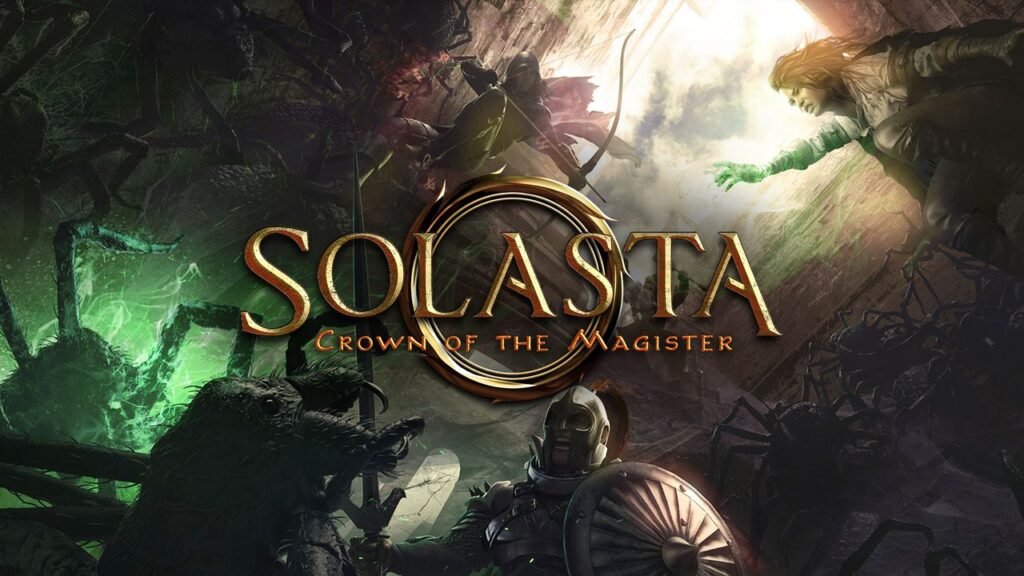

For decades, video game developers have tried to capture the elusive “lightning in a bottle” that is a tabletop Dungeons & Dragons session. While titles like Baldur’s Gate 3 opted for cinematic grandeur and branching narratives, Tactical Adventures took a different, more disciplined path. Their debut title, Solasta: Crown of the Magister, isn’t just a fantasy RPG; it is a meticulously crafted digital translation of the System Reference Document (SRD) 5.1 ruleset. It is a game that cares deeply about verticality, light, and the literal roll of the dice. And Solasta II is just around the corner in 2026.
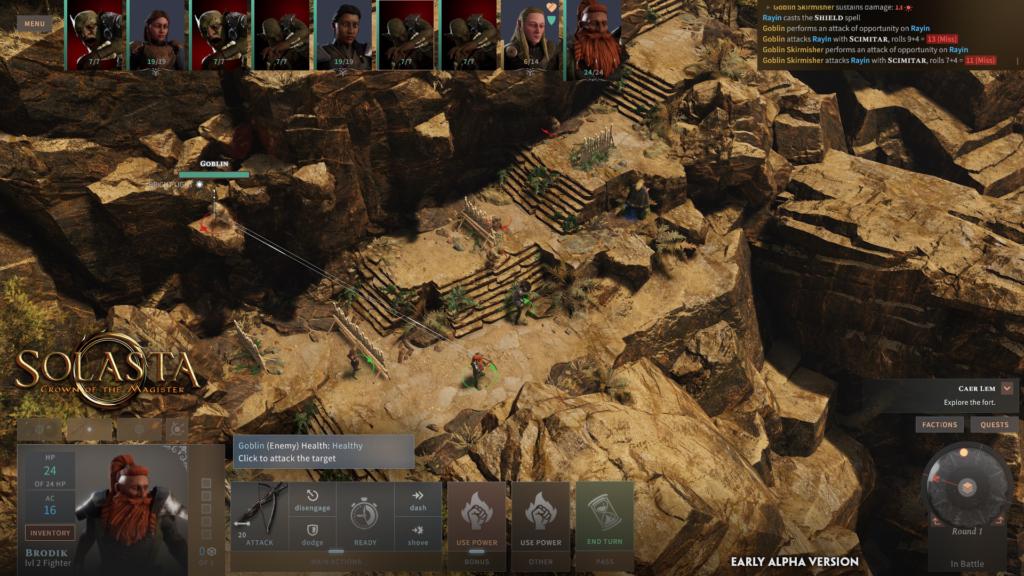
The Tactical Masterclass: Combat and Mechanics
The heart of Solasta beats with a twenty-sided die. Unlike many RPGs that “gamify” tabletop rules until they are unrecognizable, Solasta embraces the crunch. If you are a fan of 5th Edition D&D, you will feel immediately at home. Every reaction, bonus action, and concentration check is represented with startling clarity.
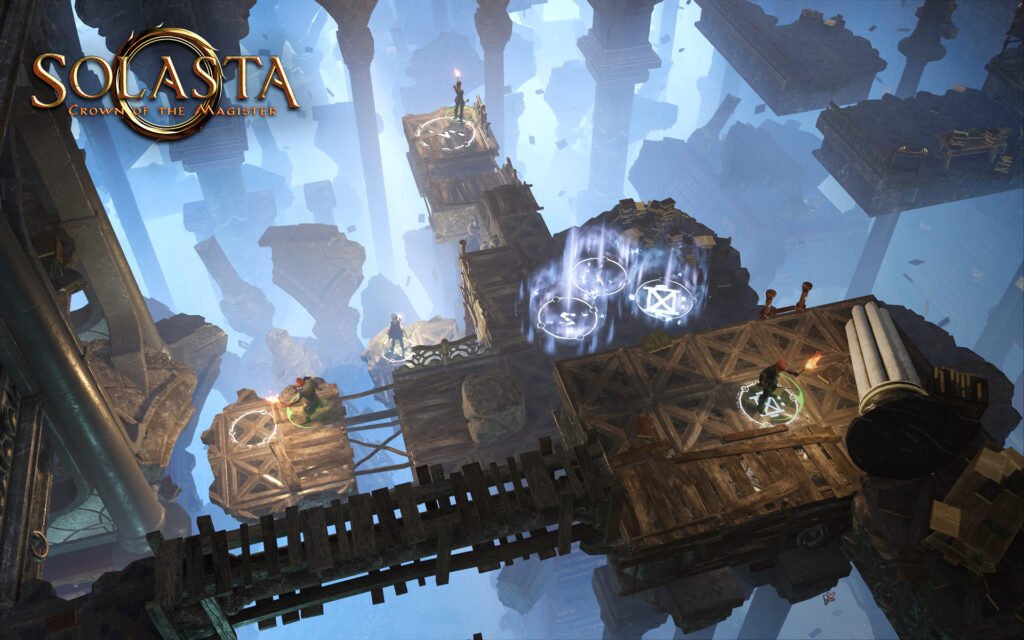
The game’s standout feature is its use of verticality. Combat isn’t tethered to a flat grid. Spiders crawl on ceilings, sorcerers fly to rafters to gain “high ground” advantages, and fighters can shove enemies off precarious ledges to their doom. This three-dimensional battlefield forces you to think spatially in a way few other cRPGs require.
Equally important is the Light System. In Solasta, the dark is a tangible enemy. Moving through a cavern without a torch or the Light cantrip doesn’t just look dim—it imposes a “disadvantage” on your attack rolls. Managing your party’s light sources becomes a mini-game in itself, adding a layer of survival tension to every dungeon crawl.
The Party Dynamic: Your Characters, Your Voice
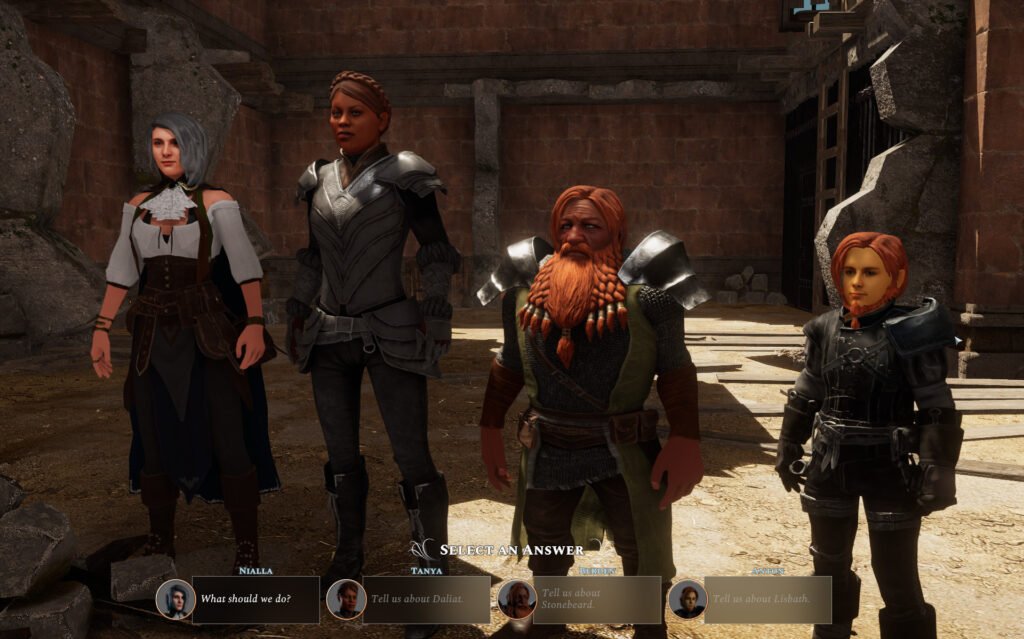
One of the most charming, if occasionally clunky, aspects of Solasta is the party creation. You don’t just create a protagonist; you create a full four-person squad. During the character creator, you choose their race, class, and—crucially—their personality flags (such as “Cynical,” “Altruistic,” or “Greedy”) based on their backgrounds.
This feeds into the game’s unique dialogue system. Instead of one “Main Character” speaking for the group, the party engages in dynamic conversations. The “Cynical” rogue might make a sarcastic comment about a quest-giver’s reward, while the “Lawful” paladin interjects to uphold their oath. While the voice acting can be “B-movie” at times, it creates a palpable sense of camaraderie. You aren’t playing a hero and their sidekicks; you’re playing a table of friends.
The Narrative: A Classic Quest for the Crown
The story follows your party as they are deputized by the Council of the Principality of Masgarth to investigate a mysterious incursion at a border fort. This leads to the discovery of the Crown of the Magister, an ancient artifact that requires several magical “gems” to reach its full potential.
Admittedly, the plot is standard high-fantasy fare. You won’t find the morally grey complexities of The Witcher or the world-altering choices of Dragon Age. However, the narrative serves its purpose: it provides a sturdy hook to hang brilliant tactical encounters on. The lore of the “Cataclysm” and the Manacalon Empire provides enough flavor to keep you pushing forward through the various biomes, from frozen wastes to overgrown jungles.
The Dungeon Maker: Infinite Adventures
Perhaps the most enduring legacy of Solasta is its Dungeon Maker tool. Tactical Adventures gave the community the keys to the kingdom, allowing players to build their own campaigns using the game’s assets and logic systems.
This has resulted in a massive library of community-created content that rivals the main campaign in quality. Some modders have even recreated classic D&D modules like Keep on the Borderlands or original 40-hour epics. If you finish the main story, the game is far from over; it becomes a platform for infinite tabletop-style adventures.
The Visuals and Performance
Let’s be honest: Solasta is not a “graphical powerhouse.” The character models are often stiff, and the facial animations during cutscenes can be awkward. However, the environmental design is excellent. The way light flickers against stone walls and the sprawling, multi-leveled dungeon layouts are visually clear and atmospheric.
The user interface (UI) is perhaps the best in the genre. It manages to convey a massive amount of information—dice rolls, status effects, line-of-sight—without feeling cluttered. It is a “function over form” approach that pays dividends during complex battles where knowing exactly why you missed an attack is vital.
Is It for You?
Solasta: Crown of the Magister is a love letter to the math of D&D. It ignores the cinematic Hollywood-style presentation of its peers to focus on being the most accurate tactical simulator on the market.
- Pros: Perfect 5E rules implementation, incredible tactical depth, innovative use of light and verticality, and a robust level editor.
- Cons: Average story, stiff character animations, and a smaller budget compared to AAA RPGs.
If you are the type of player who loves theory-crafting builds, obsessing over positioning, and seeing the literal d20 roll across the screen, Solasta is an essential purchase. It captures the “soul” of the tabletop experience—the thrill of a lucky crit and the despair of a natural 1—better than almost any game before it.
Expanding the Experience: DLC and Beyond
Since its release, the game has been bolstered by several major expansions:
- Lost Valley: A non-linear campaign that introduces new subclasses and a faction-based reputation system.
- Palace of Ice: A high-level campaign (taking characters up to level 16) that concludes the story of the original party.
- Inner Strength: Adds the Monk, Bard, and Warlock classes, rounding out the classic D&D roster.
Each piece of content has refined the engine, making the “Crown of the Magister” not just a crown, but a throne for tactical RPG fans.