
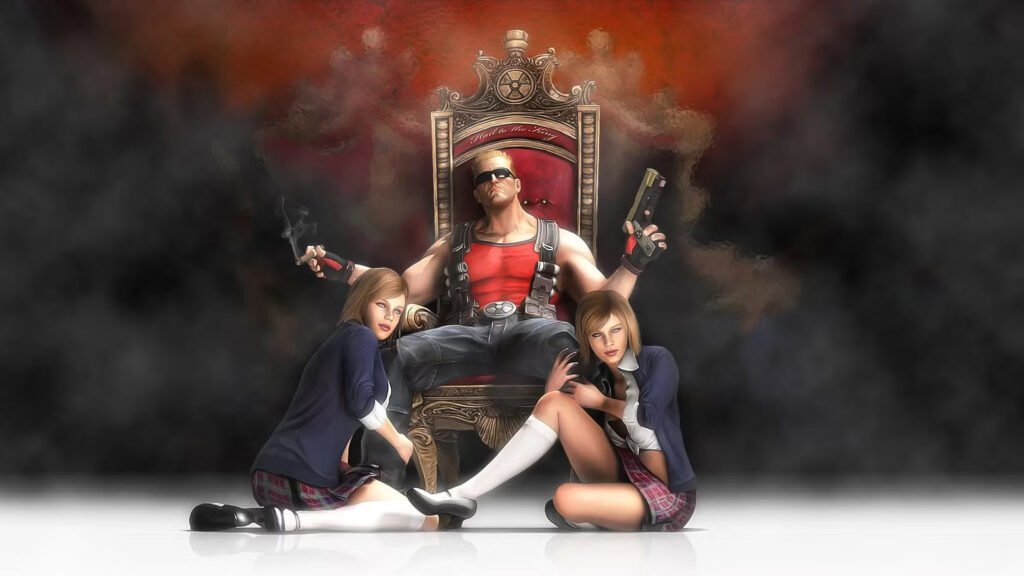

Initially announced way back in 1997, Duke Nukem Forever became the poster child for what happens when perfectionism, engine swaps, and developmental chaos collide over a staggering fourteen-year period. When the game finally staggered onto store shelves in 2011, the world didn’t exactly greet it with unconditional love. It was a bizarre artifact from a bygone era, wrapped up in modern mechanics that felt heavily conflicted. Yet, looking back at Duke’s grand, messy return, it is impossible to deny that the game has a strange, undeniable charm that remains incredibly fun to talk about.
The Fourteen-Year Itch of Development Hell
To truly appreciate Duke Nukem Forever, you have to understand the sheer madness of its creation. The team at 3D Realms, led by George Broussard, originally envisioned the game as a relatively swift follow-up to the massively successful Duke Nukem 3D. However, the gaming landscape was evolving at a breakneck pace. Every time a groundbreaking new engine hit the market, the developers scrapped their hard work and started over to keep up with the competition. They jumped from the Quake II engine to the original Unreal Engine, and then customized things further and further until the project became a sprawling, multi-million-dollar phantom. It was the ultimate case of feature creep, where the goalposts were constantly being moved by the creators themselves.
By the time the late two-thousands rolled around, money ran dry, lawsuits flew back and forth, and the studio had to lay off the core development team. It looked like Duke was officially dead. Enter Gearbox Software and Randy Pitchford, who stepped in to salvage the remaining fragments of the game. They stitched the scattered pieces together like a digital Frankenstein’s monster, polished up the shooting mechanics, and finally pushed it out the door. The gaming community received a title that was part late-nineties shooter, part mid-two-thousands military clone, and completely ridiculous from top to bottom.
The Development Myth: The length of time Duke Nukem Forever spent in production was so severe that it actually earned a Guinness World Record for the longest development period for a video game, a title it held proudly until modern developmental giants finally surpassed it years later.
Hail to the King, Baby?
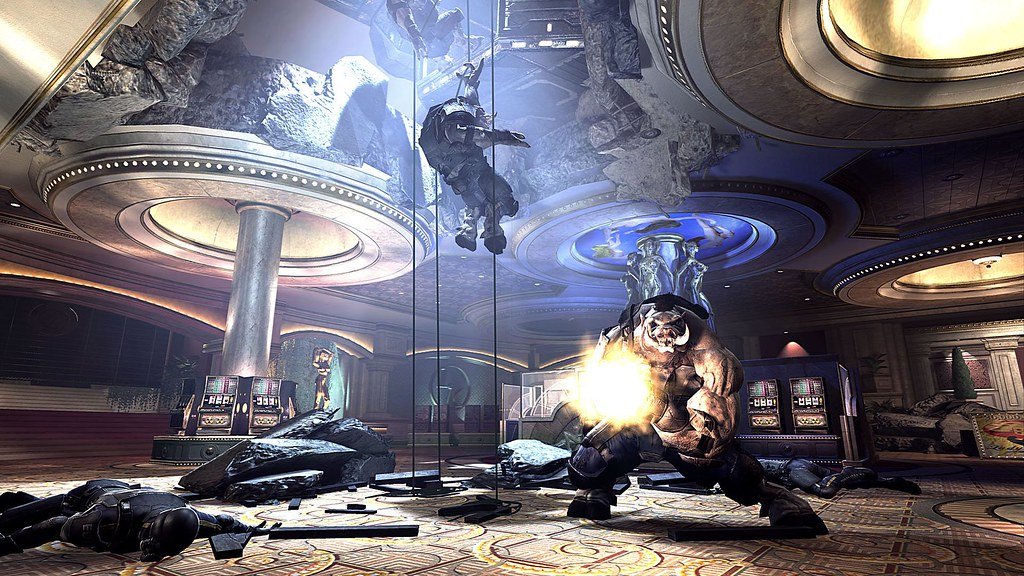
When you actually sit down and play through the main campaign of Duke Nukem Forever, you are treated to a fascinating time capsule of historical game design trends. The game struggles with its identity, desperately trying to balance old-school action with the contemporary shooter trends of 2011. Instead of carrying an entire armory of heavy weaponry like he did back in the nineties, Duke was suddenly restricted to a two-weapon limit. This mechanical shift deeply annoyed purists who wanted to carry a shotgun, a rocket launcher, a freeze gun, and a shrink ray all at the exact same time. On top of that, your health pool was replaced by an Ego meter. Duke’s shield was literally powered by his own massive self-esteem, which would recharge if you took cover and avoided damage for a few moments.
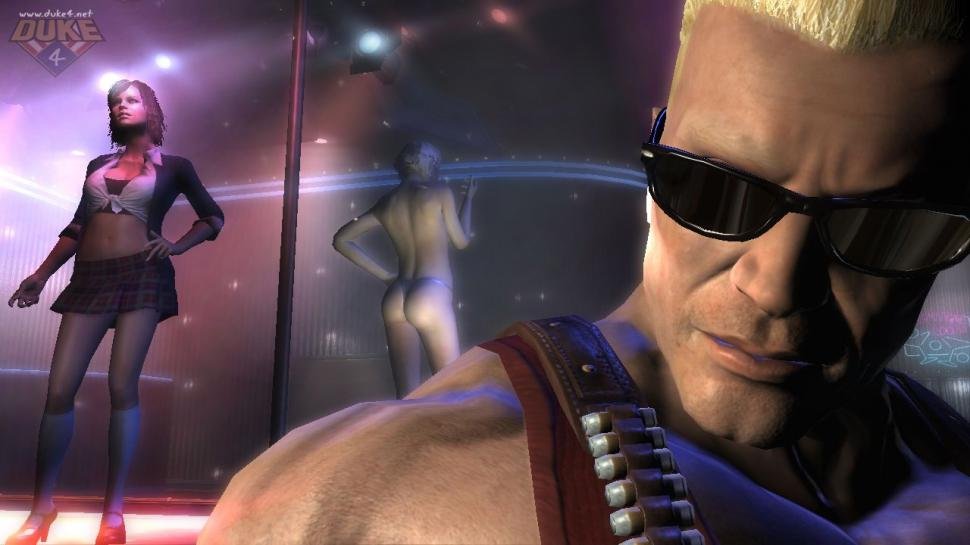
Despite these strange structural choices, the game retained a heavy dose of the interactive environmental gags that made the franchise famous. You could walk up to a stray whiteboard and draw whatever you wanted on it, play interactive games of pool, use working toilets and throw turds onto the wall, and microwave random items for a quick laugh. These interactions weren’t just for show either, because completing these goofy little tasks would permanently expand your Ego bar, making Duke much more durable in combat. The narrative itself was exactly what you would expect from the character, featuring an alien invasion that targets Earth’s pop culture, hot tubs, and Duke’s personal stash of merchandise, forcing the blonde action hero out of retirement to exact violent, crude revenge.
The Multiplayer Parody Extravaganza
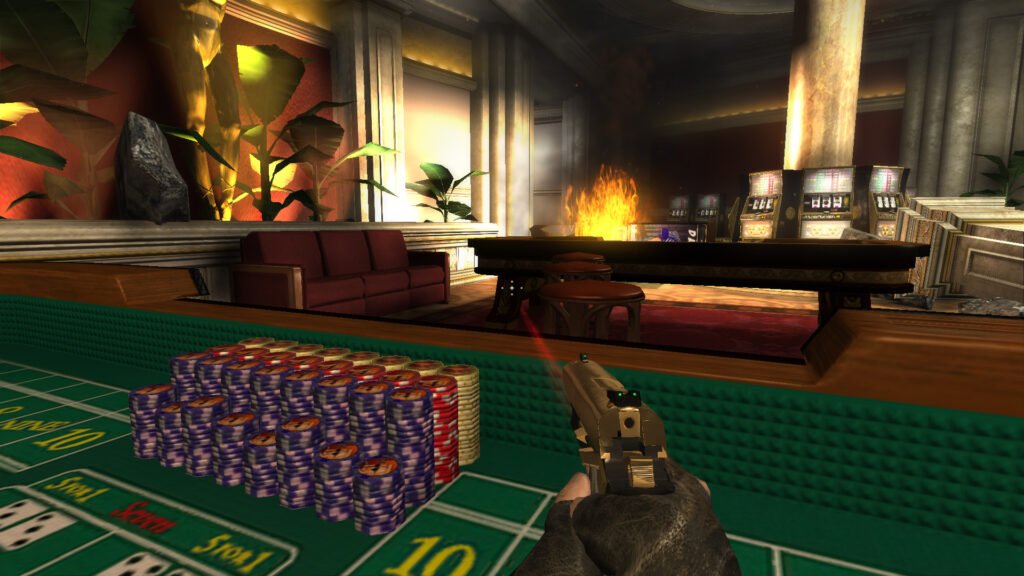
The multiplayer mode of Duke Nukem Forever was a chaotic affair that tried to capture the fast-paced nature of classic arena combat while heavily leaning into direct parody. This aspect of the game was expanded significantly with the release of the Hail to the Icons Parody Pack DLC. This add-on was a blatant, hilarious roast of the major gaming franchises dominating the industry at the time. It introduced several new maps that directly spoofed the competition. There was a map called Call of Duke, which was a brilliant, mud-brown mockery of realistic modern military shooters, complete with ridiculous automated killstreaks and a highly satirical atmosphere.
Another map in the collection took a jab at the iconic puzzle-platformer Portal, featuring sterile white rooms and test environments that contrasted beautifully with Duke’s high-octane violence. There was even a miniature map set in a giant sandbox, giving players a nostalgic throwback to classic Micro Machines-style layouts where oversized household items became defensive cover. The multiplayer modes included variants like Capture the Babe instead of the traditional flag variant, forcing players to literally carry a cheering woman across the map while occasionally slapping her when she grew panicked. It was incredibly immature, entirely politically incorrect, and perfectly suited to the specific brand of humor the series had cultivated since the mid-nineties.
The Doctor Who Cloned Me
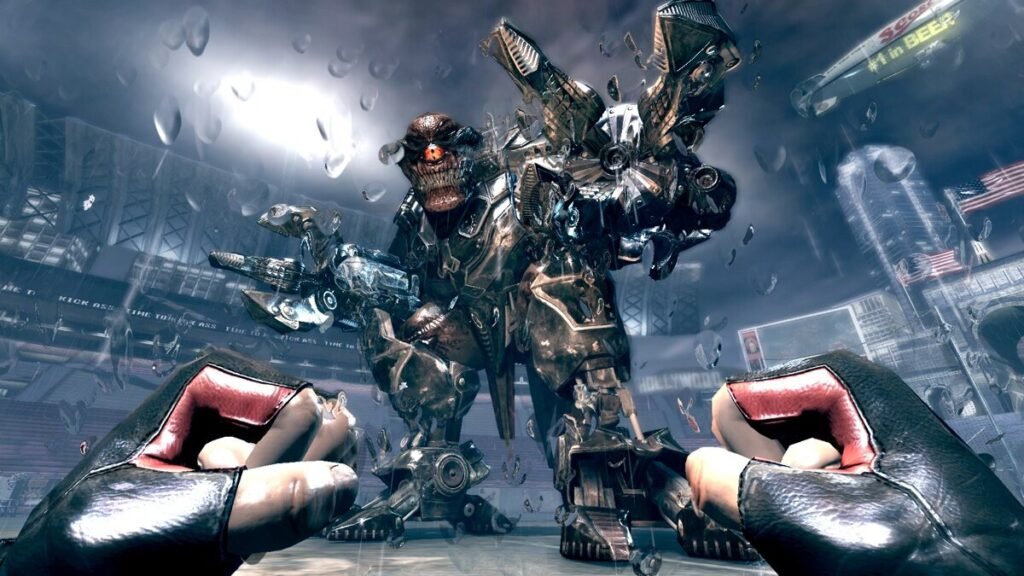
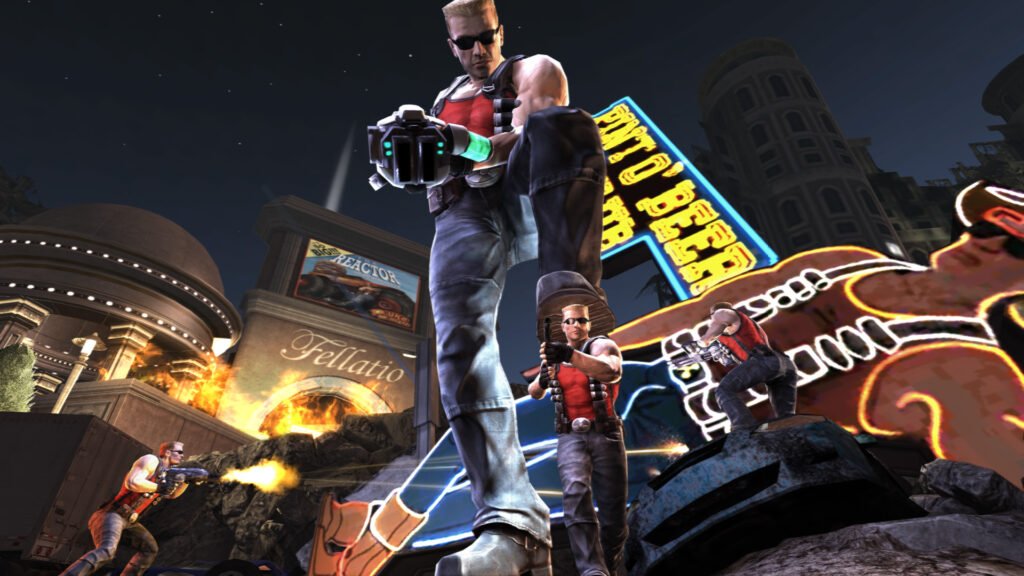
While the multiplayer updates were fun diversions, the absolute crowning achievement of the post-launch support was the single-player campaign DLC titled The Doctor Who Cloned Me. Many fans and critics actually argue that this specific expansion pack is significantly better than the entire base game combined. The narrative brings back a classic villain from Duke’s very first 2D side-scrolling adventures, the maniacal Dr. Proton. Deep within the mysterious confines of Area 51, this mad scientist has been busy creating a massive army of robotic Duke clones designed to conquer the planet, forcing the real, authentic Duke to fight his way through a highly concentrated blast of action.
What made this DLC stand out so much was its pacing. The development team at Gearbox clearly listened to the feedback from the main release, opting to trim away the tedious puzzle sections and long driving sequences that slowed down the core campaign. Instead, they focused entirely on massive firefights, creative new boss battles, and a barrage of classic weapon options. Duke got to dual-wield weapons during specific vehicle sections, fight giant cybernetic bosses, and explore bizarre underground laboratories that felt cohesive and fast. It captured the exact essence of what a modernized Duke Nukem game should have been from the start, proving that the character still had plenty of life left in him when handled with a focused, action-first design philosophy.
The Modern Verdict on an Infamous Legend
So, how does Duke Nukem Forever stand up today, long after the internet rage and the crushing weight of fourteen years of hype have completely evaporated? Honestly, it is a blast to play if you go into it with the right mindset. If you are expecting a flawless, revolutionary masterpiece that alters the landscape of first-person shooters, you are going to be deeply disappointed. However, if you treat it as a B-movie style, casual action game filled with ridiculous shootouts, corny one-liners, and a fascinating historical legacy, it becomes an incredibly entertaining ride.
The combination of classic weapons like the devastator and the shrink ray, alongside the superb campaign design found in the clone-centric expansion, makes it a highly memorable journey. It represents a specific turning point in gaming history where the old world of PC shareware shooters ran headfirst into the corporate console era. It is loud, it is completely obnoxious, and it makes absolutely no apologies for what it is. In a world where many modern video games feel sanitized, overly safe, and focus-tested to death, revisited classics like this stand out as beautiful, unhinged reminders of a much weirder time in digital entertainment.