
Krush, Kill ‘N Destroy (KKND 1) Release Date: 1997 | Developer: Beam Software / Melbourne House
Buy It On: GOG
Krush, Kill ‘N Destroy 2: KrossfireRelease Date: 1998 | Developer: Beam Software / Melbourne House
Buy It On: GOG
Welcome to the Grimy World of the Post-Apocalypse
If you grew up during the golden age of real-time strategy games, you probably remember the big hitters like Command & Conquer or StarCraft. But for a select group of us who preferred our post-apocalypse with a side of extra grit and a heavy dose of Australian attitude, there was only one franchise that truly mattered: Krush, Kill ‘N Destroy. Developed by the wizards at Beam Software, KKND arrived at a time when the RTS genre was exploding. While other games were trying to be clean and sci-fi, KKND leaned into the dirt, the rust, and the radioactive mutations. It was a game that didn’t just want you to win; it wanted you to pulverize the opposition until there was nothing left but a grease stain on the cracked desert floor.
The premise was simple yet effective. The world had ended in a nuclear firestorm in the year 2079, and the survivors of humanity had split into two distinct, warring camps. You had the Survivors, who were basically the military remnants who hid underground and kept their tech polished, and the Evolved, who were the mutants who stayed on the surface, embraced the radiation, and started riding giant mutated crabs and beetles into battle. The title literally told you your mission parameters: Krush, Kill, and Destroy. The asymmetrical gameplay between these two factions provided the backbone of a classic RTS experience that remains addictive even decades later.
The Original Carnage: KKND 1 and the Struggle for Oil
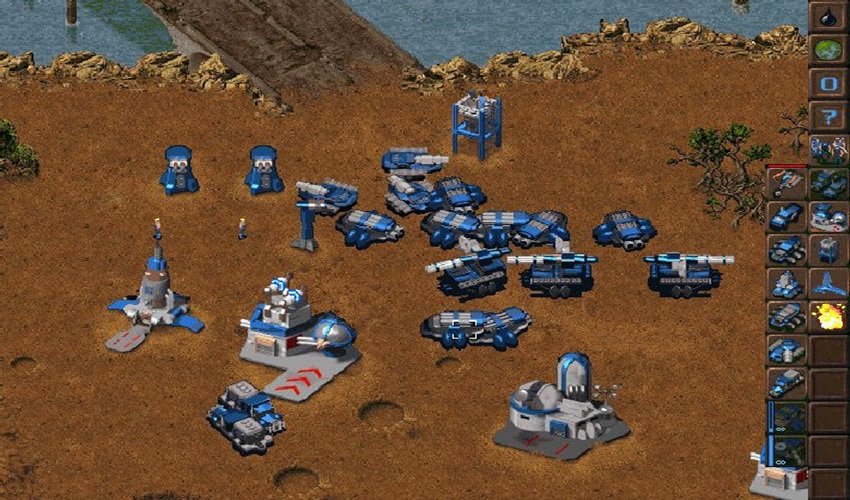
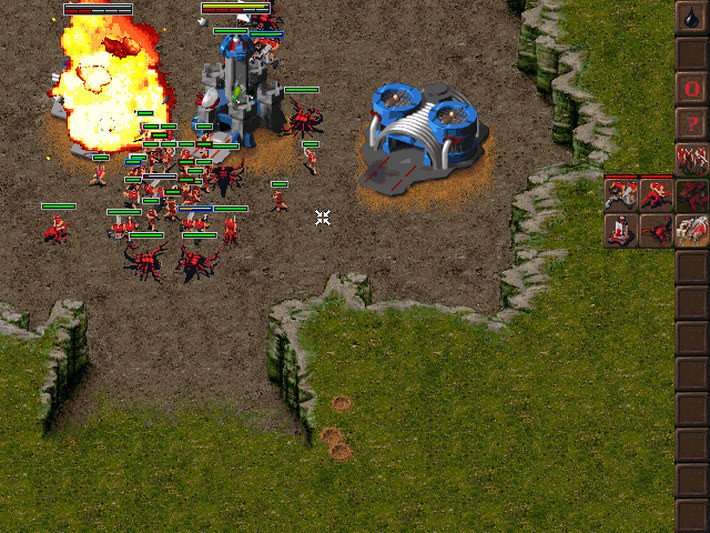
The first game in the series was a masterclass in challenging RTS design. If you think modern games are hard, you clearly haven’t faced the KKND AI on a bad day. The computer felt like it actively hated you. The core loop revolved around securing Oil Patches. In the world of KKND, oil is the only currency that matters. You build your mobile oil rig, find a seep, and start pumping. This created natural choke points and constant skirmishes because if you lost your oil supply, you were basically a sitting duck. The game focused heavily on micro-management and unit positioning, rewarding players who could effectively use the terrain to their advantage.
The units were the stars of the show. For the Survivors, you had your standard grunt infantry, but the real power lay in the Anaconda Tanks and the devastating Mobile Artillery. These machines felt heavy and powerful, with sound effects that made every shot feel impactful. On the flip side, the Evolved were just cool. Instead of tanks, they used Giant Mutated Beetles and Wasp Bombers. There was something uniquely satisfying about sending a swarm of oversized insects to take down a high-tech laser turret. The veterancy system was also a key highlight. As your units survived combat and gained kills, they would level up, gaining better fire rates and health. Keeping a veteran unit alive was often the difference between victory and a very messy defeat.
Going Above and Beyond: The KKND Xtreme Expansion
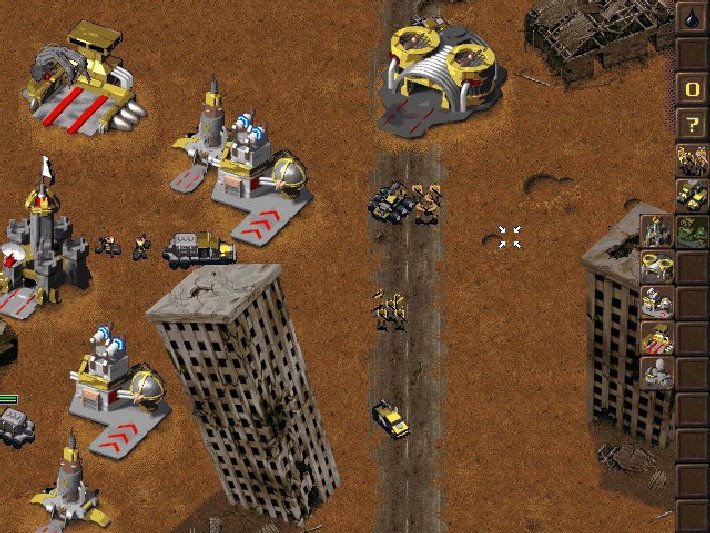
Because the first game was such a sleeper hit, the developers eventually released KKND Xtreme. Now, back in the late 90s, expansion packs were meaty additions that often fixed balance issues and added hours of content. Xtreme took the original game and polished it to a mirror finish. It added twenty new missions for each side, bringing a total of forty fresh challenges to the table. These missions were notoriously difficult, often starting the player with very limited resources and forcing them to navigate through a meat-grinder of enemy defenses.
Beyond just more levels, Xtreme introduced the Skirmish Mode, which allowed players to set up custom battles against the AI outside of the campaign. For many of us, this is where we spent hundreds of hours. Testing out different build orders and unit combinations became a ritual. The expansion also refined the UI and pathfinding, making the game feel much more responsive. It was the definitive version of the first game, and it solidified the franchise’s reputation as a cult classic. If you’re going to play the first game today, the Xtreme version is the only way to go, as it captures the raw intensity of the original while adding the polish needed for longevity.
The Sequel That Doubled the Chaos: KKND 2 Krossfire
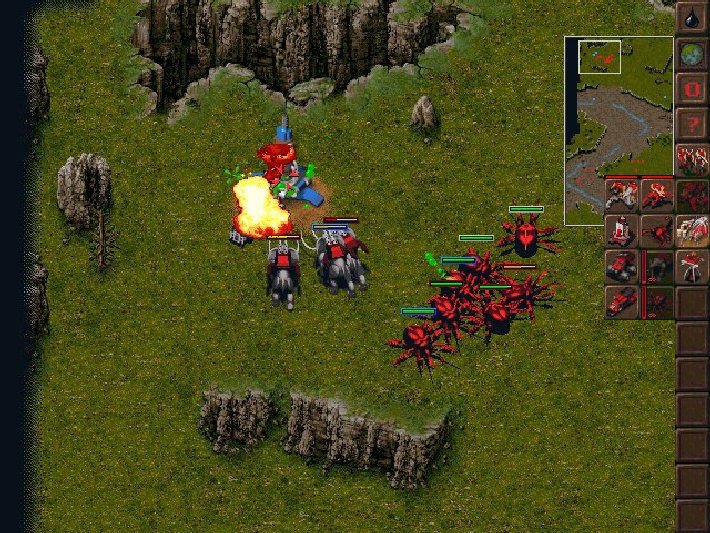
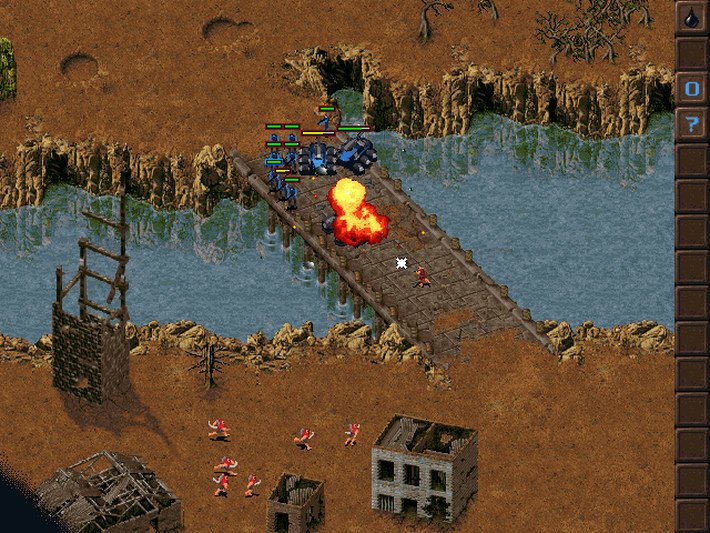
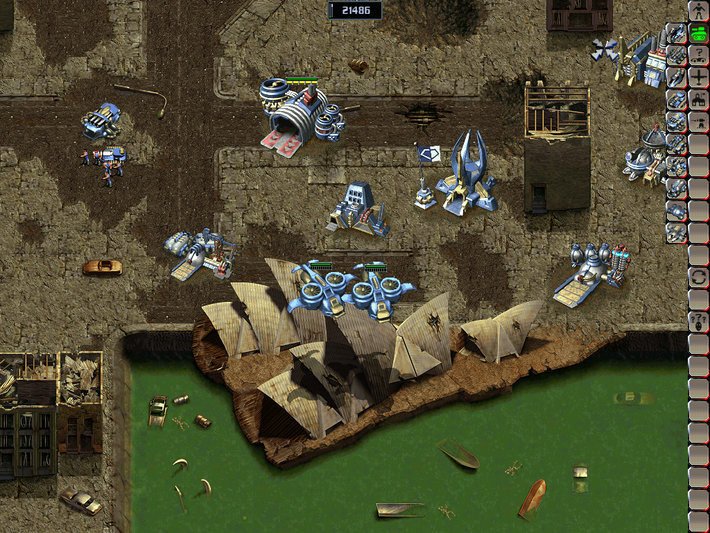
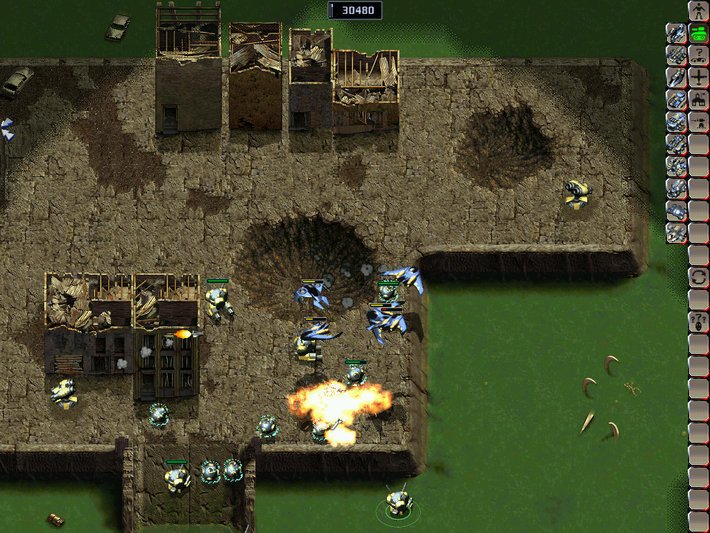
In 1998, the world was treated to KKND 2: Krossfire, and it was an evolution in every sense of the word. The graphics moved from the muddy browns of the first game to a much more vibrant and detailed isometric style. The terrain now had multiple elevations, meaning you could park your tanks on a cliff to gain a range advantage over the poor souls in the valley below. But the biggest change was the introduction of a third faction: the Series 9. These were agricultural robots that had achieved sentience and decided that both the humans and the mutants were pests that needed to be exterminated. Their aesthetic was incredibly distinct, featuring shiny, farm-equipment-inspired machinery that looked out of place yet perfectly suited for the wasteland.
The three-way war in Krossfire changed the dynamic of the campaign entirely. Missions were no longer just head-to-head brawls; they were chaotic scuffles where you might find yourself caught between a Series 9 harvester and an Evolved Mastodon. The unit variety was also expanded significantly. The Survivors gained access to high-tech energy weapons, the Evolved leaned even harder into organic monstrosities, and the Series 9 utilized weird and wonderful robotic tech. The music also saw a massive upgrade, with a driving industrial soundtrack that perfectly matched the fast-paced action on screen. Krossfire felt like a more mature, confident game that knew exactly what it wanted to be: a loud, violent, and incredibly fun RTS.
The Mechanics of Mayhem: Why KKND Still Holds Up
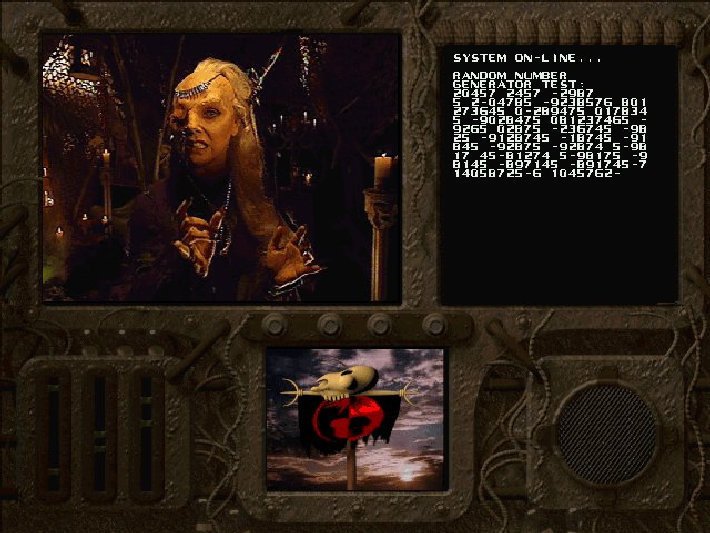
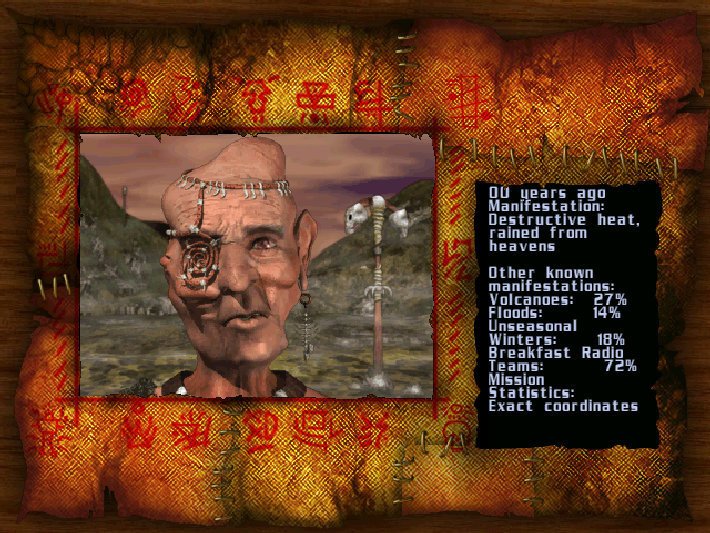
So, why are we still talking about these games almost thirty years later? It comes down to the personality. KKND didn’t take itself too seriously. Between the intense missions, you were treated to FMV (Full Motion Video) cutscenes that were absolute gold. The drill sergeants for the Survivors and the bizarre mutant leaders for the Evolved were played with such over-the-top campiness that they became iconic. These cutscenes gave the world a sense of character that many modern, hyper-realistic games lack. You actually cared about the ridiculous world you were fighting for because the game wasn’t afraid to be weird.
Mechanically, the game was also ahead of its time in some subtle ways. The resource management was streamlined, allowing you to focus on the combat, but the building placement was crucial. You had to protect your power plants and oil rigs with layers of turrets and walls. The AI aggression meant that you could never just sit in your base and build up an unbeatable army; the enemy would constantly poke at your defenses, looking for a weakness. This created a sense of constant pressure that made every victory feel earned. It was a “pure” RTS experience—no complicated hero units or leveling systems, just you, your army, and a whole lot of high explosives.
The map design in KKND 2 was also a standout feature. In many RTS games of the era, the map was just a flat plane with some trees or rocks scattered around. In Krossfire, the world felt lived-in. You would fight through the ruins of shattered cities, navigate through dense jungles, and cross volcanic plains. The destructible environment allowed for some tactical creativity, as you could clear paths through trees or blow up bridges to stall an enemy advance. These environmental factors added a layer of strategy that made every map feel like a unique puzzle to solve.
The Evolution of the Expansion: Mission Packs and Beyond
While KKND 2 didn’t receive a standalone expansion pack in the same way Xtreme functioned for the first game, the community and the subsequent re-releases have treated it with the same level of reverence. The map editors provided with the games allowed fans to keep the fire burning for years. Even when the official developers moved on, the fans were there to create custom campaigns that pushed the engine to its absolute limits. The longevity of KKND isn’t just due to the original code, but to the passion of a community that refused to let the wasteland die.
The transition of these games to digital storefronts like GOG was a turning point. For a long time, getting KKND to run on modern Windows was a nightmare of compatibility layers and community patches. The GOG releases brought them back into the hands of the public, but even then, there were limitations. The resolution was locked to old-school standards, and the multiplayer was largely broken. We loved the games, but we were playing them through a haze of nostalgia and technical workarounds. However, that is all about to change in a very big way.
A Closer Look at the Factions: Survivors, Evolved, and Series 9
To truly appreciate the depth of KKND, you have to look at how different the factions feel. The Survivors are the “good guys” in the most traditional sense, but they are just as ruthless as anyone else. Their tech is built on the remnants of 21st-century military hardware. If you like tanks, APCs, and jets, this is your faction. Their units are generally tougher and have longer range, making them great for defensive play and slow, methodical advances. They represent the order and discipline of the old world trying to reclaim a planet that has moved on.
The Evolved are the complete opposite. They are chaotic, organic, and terrifying. Instead of using metal and oil to build their machines, they have mastered the art of selective breeding and mutation. Their heavy hitters are giant animals, like the War Mastodon, which functions as a living tank. They rely on numbers and speed, often overwhelming the enemy before they can set up a proper defense. Playing the Evolved feels primal; it’s about the fury of nature striking back at the technology that destroyed the world.
Then there is the Series 9. These robots were originally built to help humans farm and maintain the planet, but after the nukes fell, they were abandoned. They spent decades in silence before their logic processors decided that the best way to “save” the planet was to remove the biological life forms causing all the trouble. Their units are incredibly specialized. They use harvesters that look like futuristic tractors and combat units that hum with clean, efficient energy. They are the ultimate wildcard in the Krossfire war, bringing a sense of cold, calculated logic to a conflict defined by hot-headed aggression.
Mastering the Wasteland: Tips for the Modern Commander
If you are diving into these games for the first time, or returning after a twenty-year hiatus, there are a few things you need to keep in mind. First, speed is everything. In KKND, the player who grabs the oil patches first usually wins. Don’t be afraid to send a small squad of scouts out immediately to find where the resources are. Second, don’t neglect your defenses. The AI is famous for its “suicide runs” where it will send a massive wave of cheap units directly into your base. If you don’t have a few turrets ready, they will chew through your production buildings in seconds.
Another crucial tip is to watch your unit pathfinding. Because these games were made in the late 90s, your units can sometimes get bunched up in narrow passages. Always move your army in small groups rather than one big blob to avoid getting stuck. And finally, use the high ground. In KKND 2 especially, having the elevation advantage is a literal game-changer. Your units will hit harder and take less damage if they are firing down on the enemy. It sounds simple, but in the heat of a three-way battle, it’s easy to forget the basics.
The Dawn of a New Era: The 2026 Modernizations
We are currently standing on the edge of the most exciting moment in the franchise’s history since the 90s. Ziggurat Interactive has officially announced a massive modernization project for both KKND Xtreme and KKND 2: Krossfire, scheduled for a full release in June 2026. This is a full-scale overhaul led by the legendary community developer IceReaper, who is famous for his work on the Krossfire fan patches. This update is going to bring these classics into the modern age with 4K resolution support, a fully restored online multiplayer system with crossplay between Steam and GOG, and a host of balance tweaks that will finally fix some of those decades-old bugs. They are even restoring the high-definition audio that was lost in previous re-releases. The best part? If you already own the games on Steam or GOG, this massive update will be completely free. It is a love letter to the fans who have kept the oil flowing for all these years, and it ensures that a whole new generation of gamers will get to experience the pure, unadulterated joy of krushing, killing, and destroying their enemies.