

For a solid decade, grand strategy games have followed a pretty sacred, unwritten rule: you claim a patch of dirt, you paint the map your color, and you defend those borders until the bitter end. But Paradox Interactive is celebrating its ten-year milestone for its flagship space opera by throwing that entire rulebook right into a supernova. The Stellaris Nomads DLC completely upends the core loop of galactic domination. Instead of anchoring yourself to a home planet and micromanaging starbases, this expansion lets you pack up your entire civilization into a fleet of massive megastructures and live a life entirely on the move.
The immediate game-changer here is the elimination of traditional borders. When you roll a nomadic empire, you do not paint the map. You do not lock down choke points with heavy bastions. While the classic, settled AAA AI empires are squabbling over lines on the map and gridlocking the Galactic Community, your people recognize a different truth: space is infinite, so why stand still? It shifts the vibe of the game from a traditional, territorial 4X strategy game into a dynamic, shifting odyssey where your ultimate strength is your mobility.
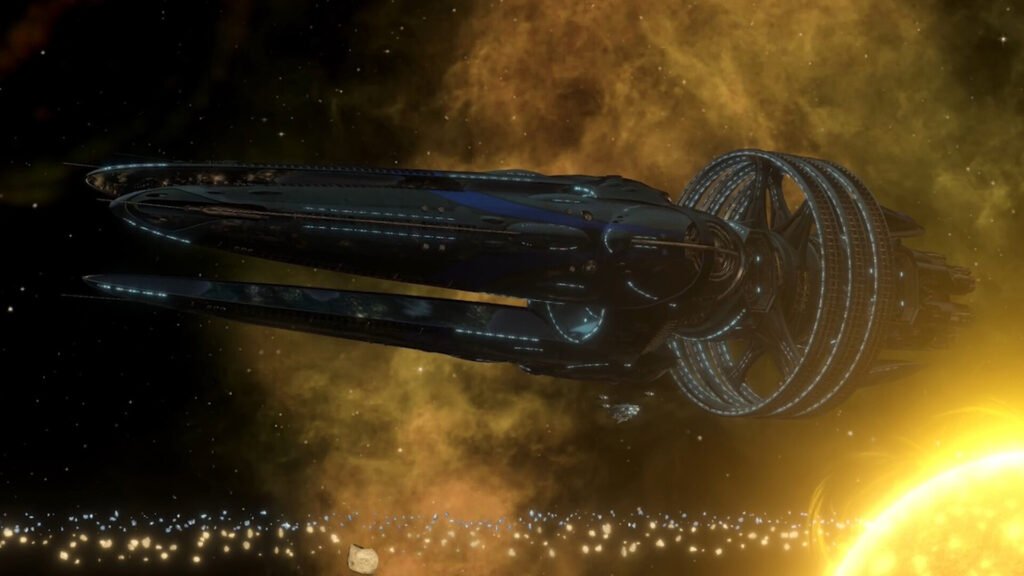
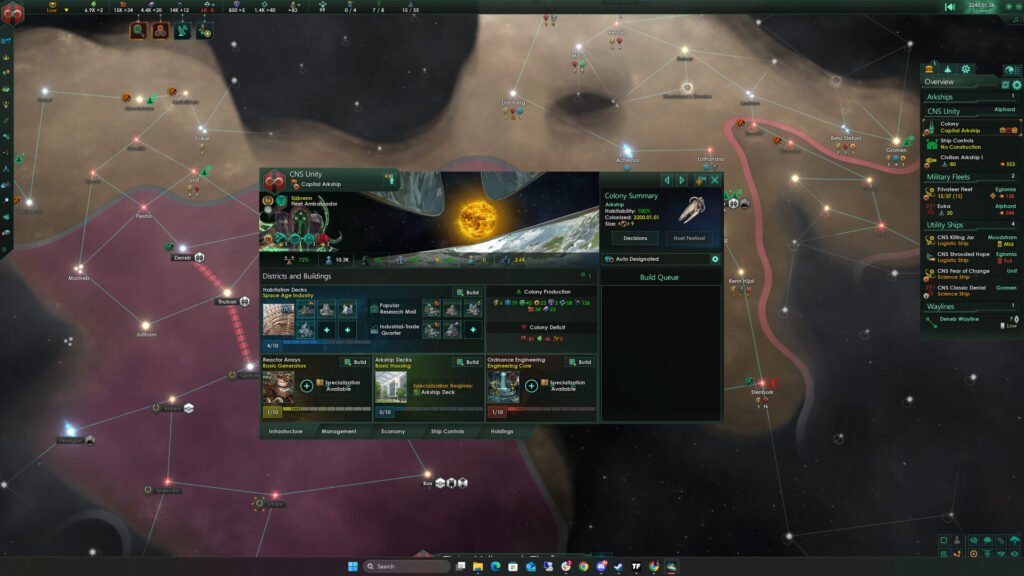
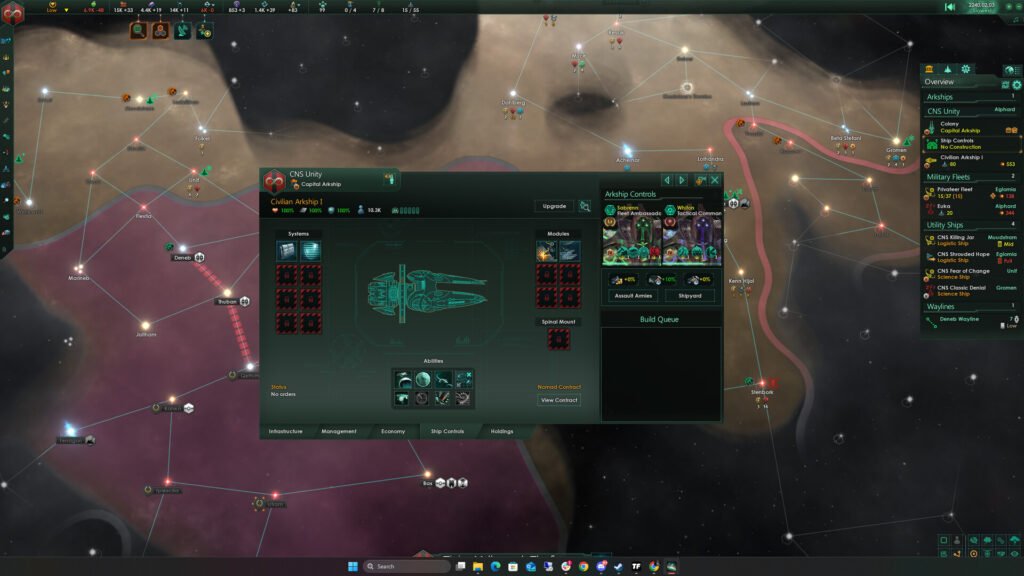
Since you do not have a capital world, your entire civilization lives, works, and breeds inside a colossal, mobile megastructure known as The Arkship. This thing is your capital, your shipyard, your resource hub, and your frontline fortress all rolled into one beautiful, upgradeable package. Instead of managing planetary districts, you are managing modules and systems inside these wandering behemoths.
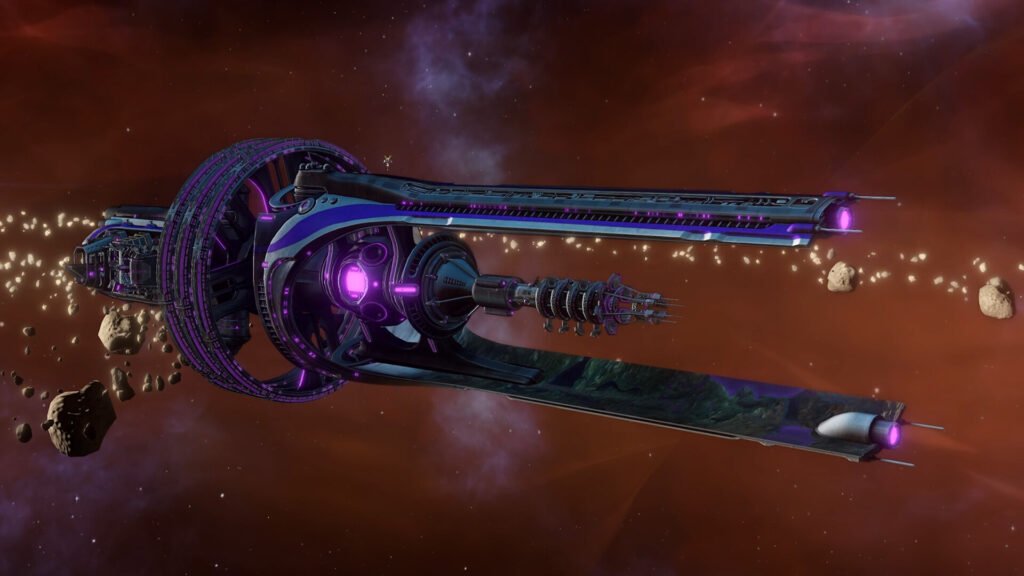
The developer lets you tailor your nomadic society right from the jump by specializing your Arkship into three distinct classes. Choosing the Civilian Class turns your fleet into a roaming industrial powerhouse, which is perfect if you want to strip-mine asteroid belts, efficiently extract raw materials from deep space, and run a hyper-efficient mobile economy. If you prefer a deeper scientific focus, selecting the Scientific Class provides a deep-space laboratory on tracks that scans the anomalies of the void, executes deep subspace imaging, and unlocks the secrets of the universe while constantly outrunning your rivals. For the aggressive players, the Military Class acts as a massive, terrifying flagship designed to project raw force, functioning as a mobile doomstack and deployment center that lets you bring your entire planetary military defense infrastructure directly to your enemy’s doorstep. As you progress through the mid and late game, you can upgrade these ships through multiple tiers, slapping on specialized modules and eventually unlocking devastating Spinal Mount weapons. If things get too hot in a sector, you don’t fight a grinding war of attrition—you simply spin up your engines and execute an Exodus Jump to the other side of the galaxy.

How exactly do you run a space-faring empire without holding territory to generate energy credits and minerals? The expansion solves this with a brilliant two-prong system consisting of Waylines and Contracts. Instead of building full outposts to claim systems, nomads construct Waystations, which are little outposts that allow you to quietly harvest resources from a sector without officially claiming the system as your own territory. When you place adjacent Waystations, they automatically link together to form permanent, interstellar trade routes tracing your path through the stars. These routes generate massive trade value and economic modifiers that benefit both you and any static, settled empires you happen to be passing through, effectively turning your fleet into the vital, roaming merchant vein of the entire galactic economy.
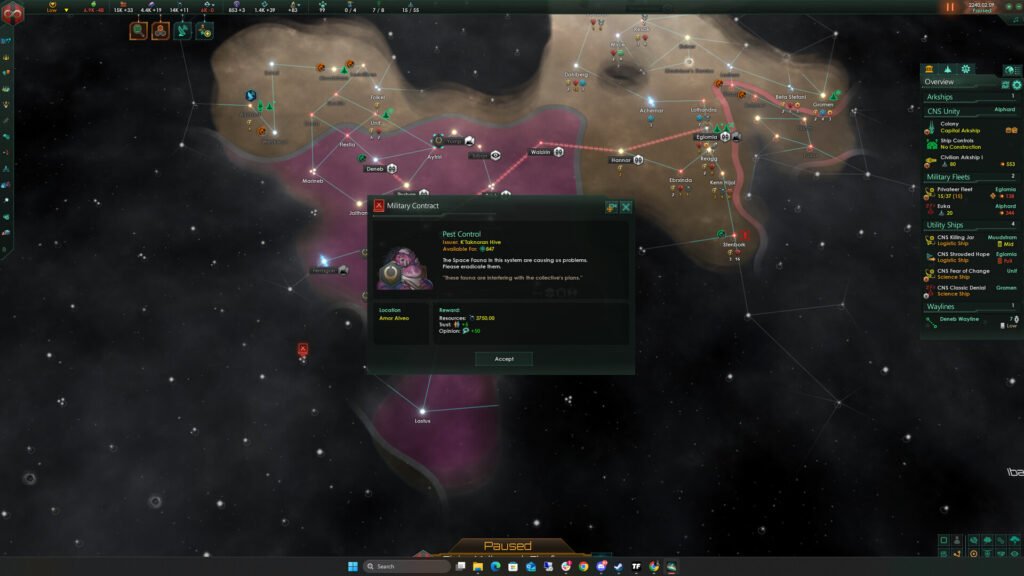
When you aren’t blazing trade trails, you are acting as the ultimate galactic freelancer through the new Contract System. Fixed, planetary empires can hire your nomadic fleets to do their dirty work, whether that means issuing a military contract to eliminate a pesky pirate fleet or sending a science contract to survey a distant, dangerous nebula. Fulfilling these tasks rewards you with massive payouts of resources, influence, and diplomatic favor. It completely changes the diplomatic landscape; instead of being a rival empire competing for space, you are a valuable, flexible asset that the big galactic players actively want to keep happy and well-funded.
The roleplay potential in this DLC is off the charts, largely thanks to the fantastic new narrative origins that dictate how your wanderers ended up in the void to begin with. The Voidfarers origin serves as the baseline, flexible standard, making it excellent for players who want a clean slate to build their custom wandering culture without being locked into a rigid backstory. For a much more dramatic setup, the Heirs of the Khan origin lets you play as the direct successor of a recently assassinated Great Khan, forcing you to start the game weak, fractured, and actively hunted by relentless Marauder hit-squads. You have to use trickery, bribery, and tactical hit-and-run military contracts to stay alive in the deep void until you are strong enough to return and reclaim your rightful throne.
Alternatively, players can choose The Sacred Path to embark on a deeply spiritualist, faith-based odyssey where your fleet of pilgrims chases down ancient, ancestral holy sites scattered across the stars, triggering unique events and tough moral choices along the way. Finally, the Forever Cruise origin offers a hilarious and stressful balancing act where your primary Arkship is divided into two distinct social classes: an incredibly pampered, wealthy elite demanding top-tier entertainment and sightseeing, and an overworked, exhausted crew doing the actual mechanical labor to keep the engines running. You have to manage a unique internal situation mechanic, because if you spoil the elite too much, the crew launches a mutiny, but if you overwork the crew, the elites force a permanent planetfall settlement and ruin your nomadic lifestyle.
If you think playing defensively as a nomad sounds weak, Paradox included some serious late-game muscle to prove you wrong. Enter the Stellar Cannon, a purely offensive megastructure that you can hook up to a neutron star or pulsar. Instead of using energy to build megastructures, this absolute monster lets you weaponize your entire imperial energy stockpile, discharging a terrifying, cross-galaxy beam that inflicts massive fleet damage and planetary devastation on enemy systems without you ever having to fly a single ship into their territory. Fire it with enough juice, and you will literally dry out the climate of every planet in the targeted system.
For those who prefer a more honorable style of combat, you can interact with Champions Forge Live, a brand-new, roving gladiatorial enclave. Every twenty years, this enclave hosts massive, galaxy-wide fleet combat tournaments. You can enter your best designs into different weight classes, compete against rival empires in spectacular arenas, and bring home the ultimate Trophy relic along with permanent galactic glory. Ultimately, the expansion feels like a breath of fresh, cosmic air for veteran players. It brilliantly flips the script on the entire genre, turning a game about drawing rigid lines in the sand into a fast-paced, high-stakes road trip across a dynamic universe.